



Lebanon-Israel: Trump announces, Beirut denies
Contact Lebanon Israel: Beirut said that it was not aware of anything after Donald Trump announced an exchange scheduled for Thursday.
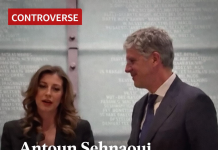
Antoun Sehnaoui, the gift that shockes Beirut
The presence of Antoun Sehnaoui at the Holocaust Museum in Washington rekindled a lively controversy in Lebanon. His philanthropic gesture, displayed alongside Morgan Ortagus, is re-read through the banking crisis, frozen deposits, Israeli bombings and the increasing rejection of financial elites in Lebanese opinion.
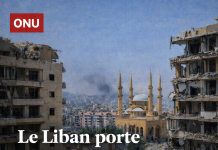
8 April and more than 300 dead later, Lebanon files UN complaint against Israel
Lebanon filed an urgent complaint with the Security Council and the Secretary-General of the United Nations following the Israeli strikes of 8 April 2026, which targeted several parts of the country, including Beirut. More than just a gesture of protest, Beirut seeks to gain legal recognition of the gravity of the bombings, document the human record and prevent this day from being absorbed by the broader narrative of the war. The complaint is part of a strategy of diplomatic pressure as well as official memory.
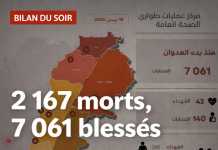
Israeli bombardments: the balance goes up
Israeli bombings in Lebanon continue to increase the human balance. According to the Ministry of Public Health, 2,167 people were killed and 7,061 injured between 2 March and 15 April. The latest NNA dispatches report new Israeli strikes in Harouf, Qadmous, Qlaila and Bint Jbeil Caza. The article goes back to the daily accumulation of losses, the pressure on hospitals, the criticisms of the United Nations and the need to clearly name Israel when the strikes are attributed to it.
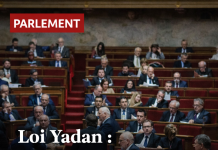
Yadan law: petition stopped in the assembly
The petition against the Yadan law exceeded 700,000 signatures, a level rarely reached on the platform of the National Assembly. However, the Law Committee decided to classify it, excluding the hypothesis of a specific debate in the Chamber. The decision is based on a procedural argument: the bill will be considered the next day in a public sitting. But the episode goes beyond parliamentary technique. He again raised the question of the real place accorded to citizen petitions and revived the controversy over a text accused by his opponents of threatening freedom of expression.
Iran: Bargaining and Enrichment · Global Voices
By repeating that its right to enrich uranium is "indisputable" while ensuring that the level of this enrichment remains negotiable, Iran has clarified its line for further trade with Washington. Tehran does not seek to close the door, but to prevent the resumption of dialogue from being read as a renunciation imposed by American war and pressure. Pakistan is now serving as a channel for diplomatic survival, while the United States continues to demand a much harder and more lasting framework for Iran's programme.
Lebanon: Negotiating without the ability to yield
Lebanon enters into direct discussions with Israel without genuine freedom of negotiation. Beirut first calls for a ceasefire, the return of internally displaced persons and relief from the humanitarian crisis, while Israel demands progress on Hezbollah before any truce. This asymmetry is aggravated by the Israeli election period, which pushes Benyamin Netanyahu to post a hard line to convince his base. Between internal divisions, weakened institutional mandate and increased financial dependence, the Lebanese State seeks less a global agreement than a space to save time.
Netanyahu trapped by the Iranian war
The war against Iran was to put Benjamin Netanyahu back at the centre of the Israeli political game. Above all, she revealed the limits of her strategy. The latest polls show a weakened prime minister, unable to convert the hardness of opinion into a stable majority. Between the disputed ceasefire, the Lebanese front still active, the high economic cost and the resumption of the trial for corruption, the October legislative campaign promises less as a security plebiscite than as a credibility test on its ability to govern a country under constant tension.
Israel and Lebanon launch historic direct negotiations in Washington under exclusive American mediation
Israel and Lebanon initiated their first direct negotiations in Washington since 1993, under exclusive American mediation. Despite the absence of a truce, the discussions concerned the southern border, the implementation of resolution 1701 and the future of Hezbollah, in a context of war, displacement and acute humanitarian crisis.
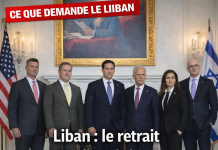
Lebanon: Israeli withdrawal first
Joseph Aoun placed the Israeli withdrawal at the heart of the Lebanese position before the opening of the discussions in Washington. For Beirut, no lasting stability is possible as long as Israel occupies territories in southern Lebanon. The President wants the Lebanese Armed Forces to redeploy to the recognized borders and become solely responsible for the security of the area. This line collides directly with the Israeli agenda, focusing on Hezbollah, military pressure and a future security architecture favourable to Israel.
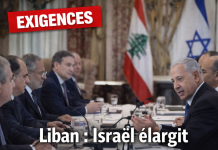
Lebanon: Israeli requirements
In Washington, Israel is not negotiating a simple ceasefire with Lebanon. His public agenda aims at the disarmament of Hezbollah, refuses any prior truce and already opens a debate on the place of the movement in the Lebanese state. The discussion now extends far beyond the southern border today.
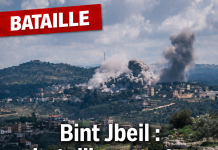
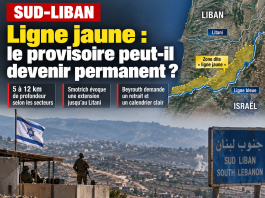
Bint Jbeil: take or battle open?
Bint Jbeil is at the heart of a military and symbolic battle. Israel shows clear signs of progress, with encirclement, visible presence in the city and taking a site highly charged in memory. However, the fighting does not seem to be closed: Israeli casualties are still reported, Lebanese sources indicate continued active resistance and access to certain areas remains impossible. Beyond this city, it is the whole South Lebanon that remains under strike and pressure.
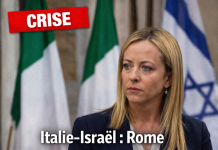
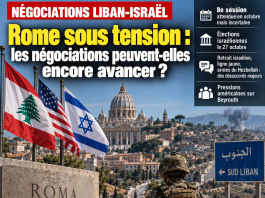
Italy-Israel: Rome freezes defence agreement
The announcement by Giorgia Meloni to suspend the automatic renewal of the defence agreement between Italy and Israel marks a more important diplomatic turning point than it seems. Israel assures that this decision will have no effect on its security, minimizing the operational scope of the text. Yet Rome's gesture reflects a real political deterioration, fuelled by the war in Lebanon, the incident involving an Italian UNIFIL convoy and the rising pressure in Europe on military relations with Israel.

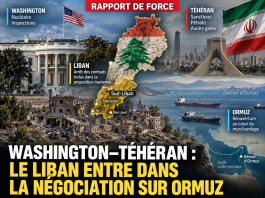
Ormuz Strait: American Trompe-Ioeil Demining
Washington displays a recapture of the Strait of Ormuz, but public events tell a more fragile story. The United States has launched a security mission and may open a temporary passage under protection, with drones and escorts. On the other hand, they have withdrawn their former mining dredgers from Bahrain, rely on LCS whose transition remains incomplete and are gradually emerging from the logic of specialized helicopters. The real issue is therefore not the entry of two destroyers into the Strait, but the gap between a demonstration of presence and the real ability to demine the entire gully in a sustainable manner.



