


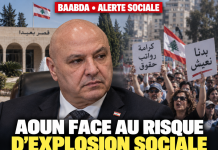
Joseph Aoun facing the specter of social explosion: what Baabda really fears
In Baabda, the social crisis is now seen as a risk likely to compete with security threats. Inadequate wages, fuel, strikes and taxation can bring together still dispersed anger. For Joseph Aoun, the danger begins when household distress turns into a collective mobilization against institutions.
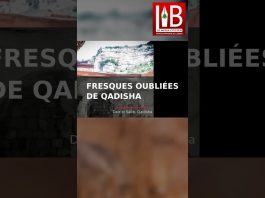
Our Lady of Qannubin, refuge of the patriarchs
Our Lady of Qannoubine, refuge of the patriarchs Tailed in the rock of the Qadisha valley, the monastery Our Lady of Qannoubine was founded in the 5th century by Theodosius the Great. From 1440 to 1823..
At the UN, Nawaf Salam presents Lebanon’s road map
At the United Nations, Nawaf Salam defended Lebanese sovereignty based on two parallel demands: Israeli withdrawal from all territory and State monopoly of arms. He also called for the reconstruction of the South, the strengthening of the army and a transition after UNIFIL without lasting security vacuum.

– Balamand: the millennial orthodox monastery
* Balamand: The Millennial Orthodox Monastery On a cliff overlooking Enfeh and the sea, south of Tripoli, the Cistercian Abbey of Bellmont has been watching over the spiritual heritage of Lebanon since 1157.
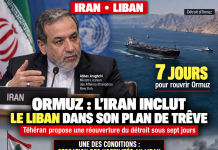
Ormuz: Iran includes Lebanon in its truce plan
Iran proposes to reopen Ormuz within seven days in exchange for several conditions, including a cessation of hostilities in Lebanon.
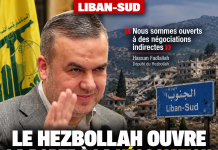
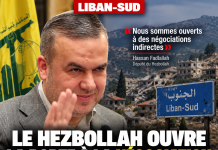
South Lebanon: Hezbollah Open to a Political Solution
MP Hassan Fadllallah claims that Hezbollah and the Amal movement are not opposed to a political solution in South Lebanon and are open to indirect negotiations with Israel. The parliamentarian, however, sets several conditions: to secure Israeli withdrawal, to allow the return of the inhabitants and to rebuild the affected areas. At the same time, he criticized the framework agreement supported by the government of Nawaf Salam and confirmed the retention of Hezbollah ministers in the cabinet.

Aoun: « Your weapons are the only legitimate ones »
Joseph Aoun claims that the army's weapons are the only legitimate ones in Lebanon and insists on his mission of protecting all citizens.
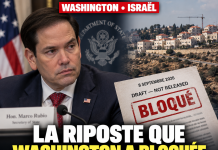
Washington has prepared a response against European measures against Israeli settlements… before blocking it
Washington had prepared a statement attributed to Marco Rubio condemning French, British and Canadian measures against Israeli settlement products. The text should denounce actions hostile to Israel and refer to anti-Semitism. But the White House and the management of the State Department did not ultimately support it, preventing its publication.

Baril at more than $105: Energy war directly threatens Lebanese portfolio
The Brent exceeds 105 dollars due to war and tensions around Ormuz. In Lebanon, each increase directly affects households: petrol, generators, transport and food. With inflation already close to 17% and low incomes, the energy shock threatens to dramatically worsen the current social crisis.

Conditional Lebanese Army: Why Western aid is no longer automatic
Western partners continue to support the Lebanese army, but their aid is becoming more conditional. Washington is demanding concrete results on the arms monopoly, while Paris is preparing for the post-Final era. At a time when its missions are increasing, the army must demonstrate its capabilities before obtaining all the means necessary for their sustainable exercise.
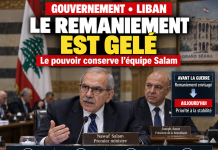
The cabinet reshuffle comes out of the agenda: why power prefers to keep the...
For the time being, the Lebanese government is excluding any reshuffle of the government of Nawaf Salam. Considered before the war, the project is now considered too risky in the face of negotiations with Israel, the social crisis, the arms issue and the post-Final era. Priority is given to the continuity of the current executive.

After the Final, the battle of the mandate: Paris and Rome seek a force...
Paris and Rome are preparing an international force to succeed Finul in Lebanon, but its mandate divides partners. Europeans prefer surveillance and military support, while Washington wants a more offensive weapons mission. Behind the replacement of peacekeepers is the security future of the South.

Riad Salameh remains in detention: behind the new refusal to release, a judicial file...
Riad Salameh remains in detention after a new request for release has been rejected and the appeal to the indictment chamber has been unsuccessful. The former Governor of the Bank of Lebanon remains at the heart of a sensitive judicial case, separate from bank restructuring and 70 billion financial losses.

Salam-Pezeshkian: behind the scenes of an appointment that reveals the tensions of the new...
In New York, Nawaf Salam agreed to meet Masoud Pezeshkian despite reservations within the Lebanese delegation. Behind the interview, Beirut seeks to redefine its relationship with Tehran: state-to-state dialogue, non-interference, sovereignty and arms monopoly, while Hezbollah remains at the centre of bilateral tensions.



