



Aoun and Netanyahu invited to the White House in 4 to 6 days
Donald Trump says he wants to meet Joseph Aoun and Benyamin Netanyahu at the White House in four or five days. This announcement, made after the 10-day ceasefire between Lebanon and Israel, opens a spectacular diplomatic perspective, but Beirut has yet to confirm the format and political acceptance of such a summit.
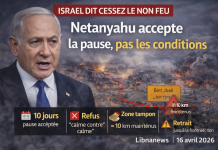
Ceasefire: Netanyahu does not accept Hezbollah conditions
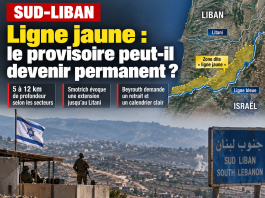
Benjamin Netanyahu accepted the ten-day break in Lebanon, but rejected Hezbollah's conditions. It refuses to withdraw to international borders and rejects any truce based on the principle of calm against calm. Behind the ceasefire announced by Trump, Israel therefore maintains its logic of a durable buffer zone.

The ceasefire between Lebanon and Israel will include Hezbollah (Trump)
Donald Trump now states that the ceasefire in Lebanon "will include Hezbollah", a formulation that changes the political scope of the announced truce. It confirms that no halt to the fighting can hold without the main armed actor of the southern front. Hezbollah had already established its condition: to respect the truce only if Israel put an end to all its hostilities, including targeted strikes. Iran also called for the inclusion of the Lebanese front in any regional de-escalation. Now remains the only test that counts in Lebanon after the 2024 precedent: the field test.
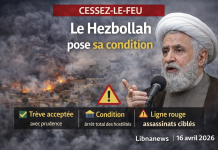
Stop fire in Lebanon: Hezbollah sets its condition
Hezbollah claims that it will respect the ceasefire in Lebanon, but under a clear condition: that Israel cease all its hostilities, including targeted strikes against its members. This caution refers directly to the experience of the November 2024 truce, experienced in Lebanon as largely unilateral after months of Israeli strikes continued despite the agreement. While the land remained on fire until the last hours, especially around Bint Jbeil, Tebnine and Qasmiyeh, the first night will tell whether the new truce really exists.

Trump announces a 10-day ceasefire
Donald Trump announced a ten-day ceasefire between Israel and Lebanon, which was scheduled to begin at 5 p.m. in Washington. But in Beirut, the Lebanese presidency did not confirm any direct calls between Joseph Aoun and Benjamin Netanyahu or wider political change. On the ground, Israeli strikes continued until the last hours before the announced entry into force of the truce, including around Bint Jbeil, Tebnin and several southern axes. Between American announcement, Lebanese prudence and war still active, the first test will be facts.

Stop fire in Lebanon at 7 p.m., announces the Haaretz
According to Haaretz, the Israeli army was preparing for a truce after 1900 in Lebanon. Between military alert, diplomatic confusion and prudence in Beirut, the day brought out a ceasefire window without yet producing full agreement.
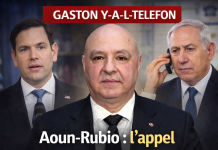
Aoun-Rubio: call without Netanyahu
The Aoun-Rubio call did take place, but no official contact between Joseph Aoun and Benjamin Netanyahu was confirmed.

Stop fire in Lebanon: Tehran insists
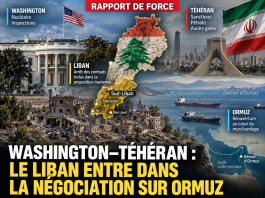
Tehran claims that a ceasefire in Lebanon is as important as in Iran, placing the Lebanese front at the centre of regional de-escalation. The statement by Mohammad Bagher Ghalibaf, after an exchange with Nabih Berri, highlights the differences between Washington, Israel, Iran and Beirut on the real scope of the truce.
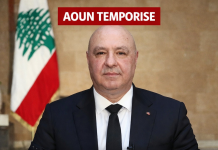
Stop it: Aoun salutes Washington and kicks off about Netanyahu’s phone call
Lebanese President Joseph Aoun thanked Marco Rubio for American efforts towards a ceasefire with Israel. But the Presidency communiqué did not resume Donald Trump's announcement of a possible exchange between Lebanese and Israeli leaders. This shift illuminates Baabda's strategy: to support American mediation without validating too quickly an explosive diplomatic sequence on the inside. Between institutional prudence, political calculus and military urgency, the Lebanese government is trying to impose the ceasefire as the only legitimate priority.

EU-Israel agreement: Brussels under pressure
More than 350 former European ministers, ambassadors and senior officials are calling for the suspension of the Association Agreement between the European Union and Israel. Their appeal marks a turning point, as it no longer comes only from NGOs or the most critical parties, but from the very heart of the old European diplomatic apparatus. These include Josep Borrell, Margot Wallström, Hans Blix and Jan Eliasson. Against the background of Gaza, the West Bank, the human rights clause and Brussels' continuing difficulty in transforming its findings into concrete measures.
New raid on Qasmiya bridge
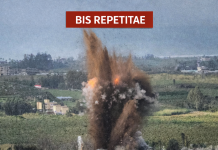
The Qasmiya bridge, a vital coastal axis linking the Tyre region to the rest of Lebanon, was again bombed on Thursday, 16 April. Prior to the strike, a Lebanese army post in the area had been evacuated after a threat. The project, which had already been planned in March and then in early April, had been returned to service for some humanitarian convoys. This new episode immediately revives the question of access to southern Lebanon, the state of the roads and the continuity of aid.
Joseph Aoun and Nawaf Salam facing the internal political trial
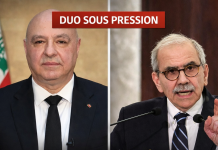
Joseph Aoun and Nawaf Salam are at the centre of an internal political trial in Lebanon. As negotiations with Israel advance under US pressure, their opponents suspect a reconfiguration of power to the detriment of Hezbollah. Between sovereignty, ceasefire and arms debate, the executive faces a crisis of legitimacy.

Call announced between Netanyahu and Joseph Aoun
After Trump, an Israeli minister said on Thursday 16 April that Benyamin Netanyahu had to speak with Joseph Aoun, in what would be an unprecedented exchange between the two countries at this level for decades. But Beirut quickly opposed a denial, claiming that it had no information about such contact. The episode sheds light on the current phase: diplomatic channels exist, but every gesture remains in a battle of communication, sovereignty and balance of power.
Israeli-Lebanese negotiations: fracture lines
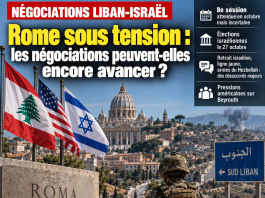
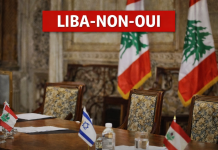
The Israeli-Lebanese negotiations opened in Washington caused Lebanon to react to the internal fracture lines. The Maronite League, Ibrahim Kanaan and Gebran Bassil all support, to varying degrees, the diplomatic path, but with different limits. Between the call for a cease-fire, the refusal of an imposed peace, the defence of sovereignty, the place of the state and the sensitive issue of Hezbollah's weapons, these positions illuminate a political moment when diplomacy progresses without dispelling the fundamental tensions.



