Bint Jbeil: take or battle open?
Bint Jbeil is at the heart of a military and symbolic battle. Israel shows clear signs of progress, with encirclement, visible presence in the city and taking a site highly charged in memory. However, the fighting does not seem to be closed: Israeli casualties are still reported, Lebanese sources indicate continued active resistance and access to certain areas remains impossible. Beyond this city, it is the whole South Lebanon that remains under strike and pressure.
Italy-Israel: Rome freezes defence agreement
The announcement by Giorgia Meloni to suspend the automatic renewal of the defence agreement between Italy and Israel marks a more important diplomatic turning point than it seems. Israel assures that this decision will have no effect on its security, minimizing the operational scope of the text. Yet Rome's gesture reflects a real political deterioration, fuelled by the war in Lebanon, the incident involving an Italian UNIFIL convoy and the rising pressure in Europe on military relations with Israel.
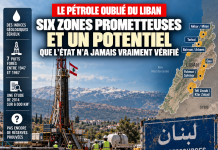
Fuels in Lebanon: Fuel oil leads up
The new fuel grid in Lebanon draws a very uneven movement. Gasoline 95 and 98 octane increased by 10,000 pounds, while fuel oil jumped by 53,000 pounds. Gas is down 20,000 pounds. Behind this tariff update, the most important signal is diesel, a central product for generators, part of transportation and many economic activities. For households, reading becomes more complex: slight increase for mobility, limited relief on gas, increased pressure on fuel oil uses.
Ormuz Strait: American Trompe-Ioeil Demining
Washington displays a recapture of the Strait of Ormuz, but public events tell a more fragile story. The United States has launched a security mission and may open a temporary passage under protection, with drones and escorts. On the other hand, they have withdrawn their former mining dredgers from Bahrain, rely on LCS whose transition remains incomplete and are gradually emerging from the logic of specialized helicopters. The real issue is therefore not the entry of two destroyers into the Strait, but the gap between a demonstration of presence and the real ability to demine the entire gully in a sustainable manner.
Lebanon: negotiating under Israeli strikes?
Lebanon is entering a rare diplomatic sequence, but deeply unbalanced. In Washington, a direct channel opens between Lebanese and Israeli representatives under American mediation. Yet, the strikes continue in the South and in the Bekaa, while Israel already places the security of its northern border and the disarmament of Hezbollah at the heart of the agenda. Beirut is trying to get a pre-ceasefire. Hezbollah rejects any negotiations conducted while the war continues to establish the balance of power.
Beijing and the New Deal in the Middle East
The crisis around Iran and Ormuz reveals a new regional situation: Beijing is gaining ground in the Middle East without replacing Washington militarily. China takes advantage of the flaws of the American system, maintains ties with Tehran and the Gulf, and transforms every tension into a major diplomatic, energy and commercial lever.
Lebanon: French mediation ousted
France does not participate in the new negotiating format opened in Washington between the United States, Israel and Lebanon. This absence contributes to the weakness of Lebanese diplomacy and marks a major break. However, Paris had co-sponsored the 2024 ceasefire, sat in its monitoring mechanism and attempted, until March, to defend a gradual exit from crisis. By accepting a framework without France, Beirut lost a Western diplomatic counterweight at a time when Israel imposed a military pressure discussion and UNIFIL was entering a scheduled phase of withdrawal.
Strait of Ormuz: sanctioned ships pass
The passage of the US-sanctioned Rich Starry and the approach of the Washington-targeted Murlikishan put the Ormuz Strait at the centre of a new credibility test. The U.S. system officially targets ships linked to Iranian ports, without fully closing transit to non-Iranian ports. This legal and military nuance already weighs on insurers, shipowners and energy markets in a corridor where a decisive share of world oil and LNG is still passing through.
Naïm Qassem rejects Washington talks
In a speech broadcast Monday evening on Al Manar, Naïm Qassem rejected the meeting scheduled for Tuesday in Washington between the ambassadors of Lebanon and Israel. The Secretary-General of Hezbollah called on the Lebanese State to cancel these discussions, which he considered unnecessary as long as Israeli bombing continued. He also reaffirmed the continuation of the confrontation, called for the implementation of the November 2024 agreement and sent a direct message to President Joseph Aoun and the government.
Israeli attack on Bint Jbeil: Army launches land offensive in South Lebanon on April...
On 13 April, the Israeli army launched a ground offensive on Bint Jbeil, a strategic bastion of Hezbollah in southern Lebanon. The assault, carried out after the complete encirclement of the city, took place on the eve of the Washington talks and was part of a regional war marked by a serious and persistent humanitarian crisis in Lebanon.
Ormuz: US blockade begins
The United States embargo against Iranian maritime flows entered into force on Monday, 13 April, in the Ormuz area. Washington claims not to close the Strait to all world trade, but the effect is already visible: the tankers slow down, the Brent returns to over $100, the physical market flies away and China, the first customer of Iranian crude, finds itself directly exposed. The article details Washington's strategic logic, the risks of Iranian retaliation, the immediate impact on financial markets and why Beijing could be one of the major economic victims of this new stage.
Israeli bombings in Lebanon: 2,089 killed since 2 March
The Lebanese Ministry of Public Health published on Monday 13 April a new cumulative assessment of the victims of Israeli bombings since 2 March. According to the Emergency Health Operations Centre, 2,089 people were killed and 6,762 injured. On 13 April alone, 34 people were killed and 174 injured. The information provided by the Ministry also details the impact of the conflict on the health sector, with ambulance workers, medical centres and hospitals affected.
Tyre: UNESCO site under shell
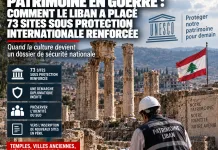
The bombardment reported on 13 April against the archaeological citadel of Tyre is not an ordinary collateral damage. According to the Lebanese public agency, the strike hit a UNESCO World Heritage site, already documented as vulnerable and covered by a strengthened protection regime. The stake is twofold: heritage, because Tyre concentrates an essential part of Mediterranean and Lebanese history; legal, because historical monuments and protected cultural property fall within a specific framework of international humanitarian law and can, depending on the circumstances, place the issue of war crime at the forefront.
Youssef Raji: Lebanon leaves Iran
The interview between Youssef Rajji and Johann Wadephul marks more than a 45 million euro aid announcement. It enshrines a diplomatic repositioning that Beirut assumes more and more clearly: to deal with the Lebanese issue in an autonomous framework, distinct from the Iranian trajectory, while direct discussions with Israel must open up in Washington. This line remains fragile because Lebanon is seeking a ceasefire while Israel maintains a broader agenda and Lebanese internal divisions persist.