

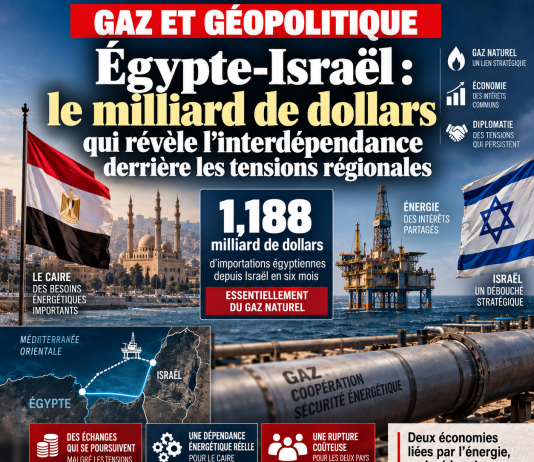





Carnage in Nabatiyah: Israel kills 11 civilians including children
Eleven people were killed and 19 injured in Israeli strikes in Ansar and Deir al-Zahrani, Nabatiyah district. Victims include children and women. These bombardments, carried out during the negotiations between Beirut and Israel, further weaken the diplomatic process and the Lebanese State already tried.

The Virgin Mary and Lebanon
The Virgin Mary and Lebanon, from Maghdouché to Harissa The only territory outside the Holy Land trodden by Christ, according to the Gospels. From the Attent cave in Maghdouché to the Harissa shrine..

Israel-Iran: CIA’s growing doubts
The CIA's low confidence in an Israeli alert that an Iranian project against Donald Trump is relaunching a much broader debate in Washington. Since 2025, United States services have repeatedly diverged from Israeli assessments of Iran's nuclear programme, the damage caused by the bombings and the chances of regime change. These disagreements also fuel the accusations that Benjamin Netanyahu had exerted excessive influence on Donald Trump's decision to engage the United States in the war against Iran.

14 august 2006, end of the july war
At 8 a.m. the cessation of hostilities under UN Security Council resolution 1701, ending 33 days of war between Israel and Hezbollah, will enter into force. Check..

Iran: United States reportedly lost 45 Reaper
The US Army reportedly lost 45 MQ-9 Reaper drones since the beginning of the war against Iran, about a quarter of its available fleet before the conflict. While the Pentagon has not published a detailed balance sheet confirming each loss, several US officials report an unprecedented attrition for this iconic device. The bill may exceed one billion dollars, but the main issue is elsewhere: Washington must now determine how long it can sustain this rate of loss while the Reaper remains essential to intelligence, surveillance and strike missions.
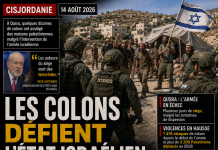
West Bank: settlers challenge Israeli state
In Qusra, in the occupied West Bank, a few dozen Israeli settlers managed to besiege Palestinian houses for several days and resist army intervention. The incident goes well beyond this village south of Nablus. It reveals the growing influence of the settler movement on Israeli territory, administration and policy. Sign of a new malaise in Washington, US Ambassador Mike Huckabee, a historical defender of the settlements and Israel's particularly strong support, went so far as to call the perpetrators of the siege "terrorists".
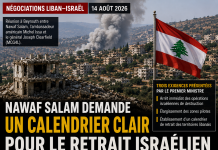
Lebanon: Salam calls for Israeli withdrawal schedule
Lebanese Prime Minister Nawaf Salam received on Friday 14 August 2026 US Ambassador Michel Issa, General Joseph Clearfield and a military delegation. At the centre of the meeting: the military component of the negotiating framework and the situation in southern Lebanon. Beirut made three specific demands: stopping Israeli destruction operations, expanding pilot areas and establishing a clear timetable for Israeli withdrawal from Lebanese territories. No agreement on these three points has yet been announced.

Lebanon: Tax pressure threatens recovery
Lebanon has significantly increased its public revenues after their collapse, but this improvement is also based on an increase in the tax burden. VAT, customs, fuel and tax recovery affect an economy whose real GDP remains well below its pre-crisis level. For households, the consequence is a decline in disposable income. For businesses, it takes the form of higher costs and potentially deferred investments. The real challenge now is to increase revenues through growth, formalization and recovery rather than a succession of new taxes.

Israel: Mike Huckabee’s spectacular turn
Mike Huckabee, American Ambassador to Israel and historical support of the Israeli right, described the siege of Palestinian families by settlers in Qusra, the occupied West Bank, as an "act of terror." His change of tone came after a series of disagreements between Donald Trump and Benjamin Netanyahu over Iran, Gaza and Lebanon. The strategic alliance remains strong, but Washington now shows much more openly its limits in the face of Israeli government choices.
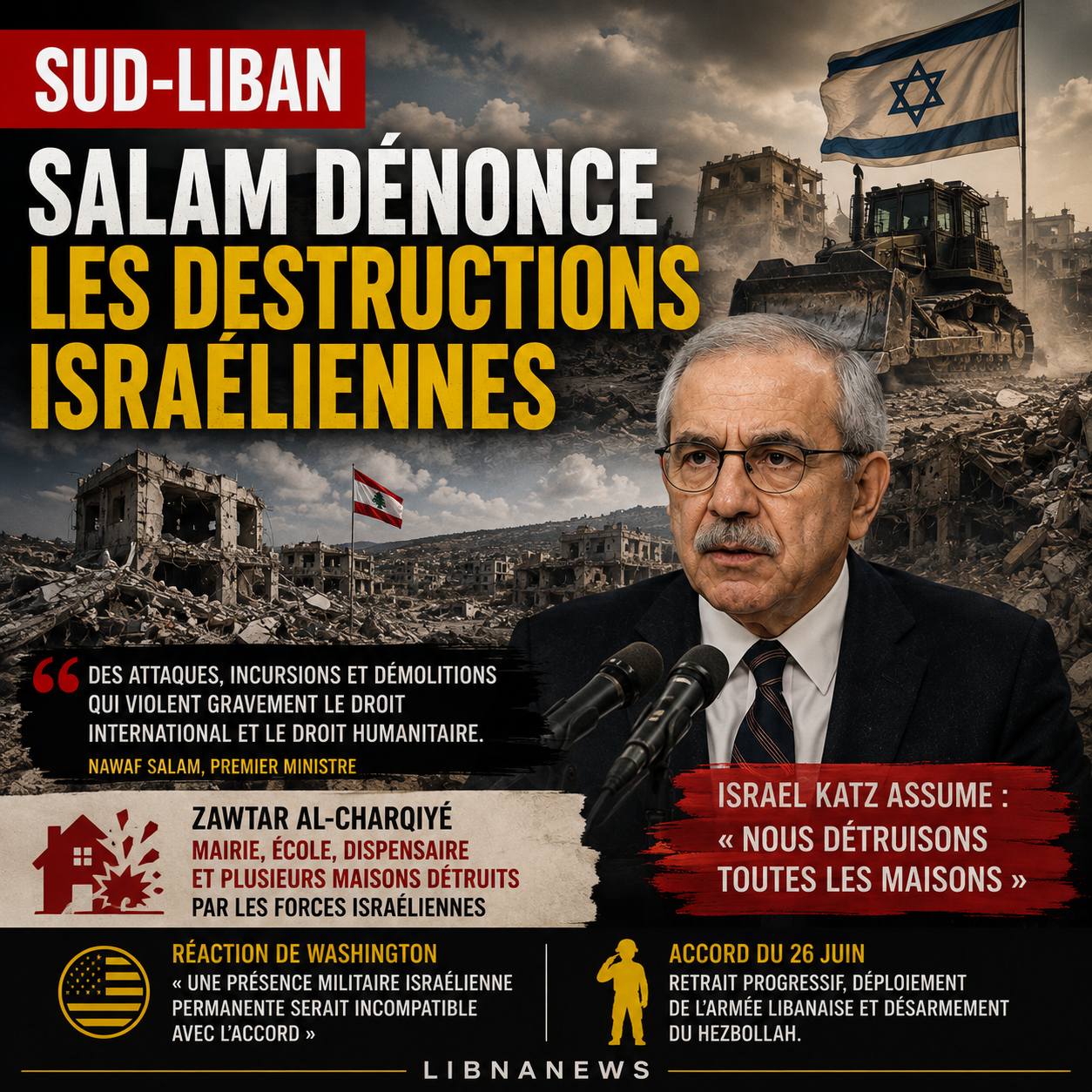
South Lebanon: Salam denounces Israeli destruction
Nawaf Salam accuses Israel of "systematic destruction" in southern Lebanon and believes that the demolition of homes, public infrastructure and places of worship violates international law. His statements were made while Israeli Defense Minister Israel Katz claimed that his army destroyed "all houses" in certain areas. At the same time, Washington recalls that a permanent Israeli military presence would be incompatible with the agreement reached in June.

Lebanon: Menassa Defends Army Voice · Global Voices
Lebanese Defense Minister Michel Menassa apologized to the families of the soldiers who had fallen into service after the crisis caused to Parliament by the General Amnesty Act. He claims that he was unable to make the Lebanese Army's position heard and assures him that the 11 August episode will not remain unanswered. His statement came the day after the law was passed, despite the reservations expressed about cases concerning crimes committed against military personnel.

The CIA doubts Israeli information about an Iranian threat; Trump’s assassination
The US intelligence services had little confidence in the Israeli alert about an Iranian project targeting Donald Trump on his trip to Turkey. Despite CIA reservations, the Secret Service organized an exceptional operation in Ankara on 8 July: the president publicly boarded Air Force One before secretly leaving the aircraft in a catering truck and joining a military C-32A to win the UK.
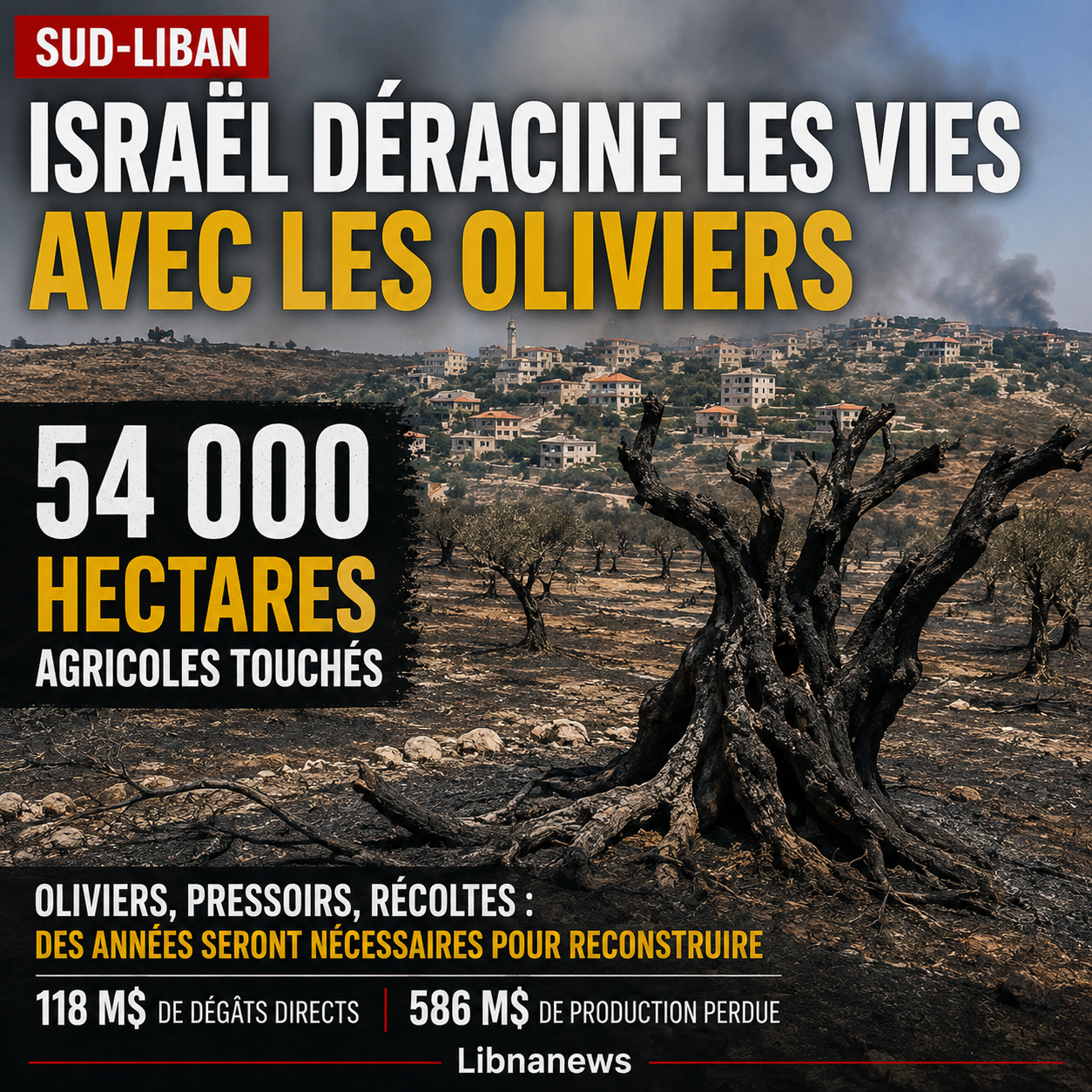
In southern Lebanon, Israel uprootes lives with olive trees
In South Lebanon, the destruction of olive groves reveals a lasting dimension of war. Approximately 54,000 hectares of agricultural land were allocated nationwide, while 47,000 olive trees had already been identified as destroyed in the early months of the conflict. In the South, which provides around 40% of Lebanese olives, damage also affects presses, cooperatives, nurseries and water systems. For displaced families, rebuilding a home will not be enough if the land that provided their income remains destroyed or inaccessible.

Real estate in Lebanon: the value that prices still refuse to admit
The Lebanese real estate market remains marked by high posted prices, almost no credit and weakened local demand. Behind this nominal resistance, the real value declines as a result of illiquidity, vacant housing, dollar inflation and a long-degraded purchasing power since the Lebanese banking crisis.



