






Missiles and drones: new regional weapons roads
Iraqi sources report an alleged missile and drone transfer network from Iran to Iraq, with possible extensions to Syria and Lebanon. Abbas Hussein Ali is presented by these sources as one of his leaders, without such accusations being considered to be judicially established. The case reveals above all a wider regional problem: sovereignty now depends as much on the control of arms as on the control of the borders they cross.
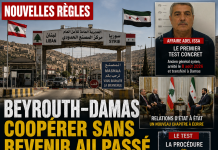
Beirut-Damas: the new relationship to the test
The transfer of Adel Issa to Syria is a first concrete test for the new relationship between Beirut and Damascus. One version describes the decision as the application of the 1951 Judicial Convention, while another refers to Syrian pressure to speed up the proceedings. Beyond this case, the two States must rebuild their cooperation mechanisms on detainees, fugitives, missing persons, security and the border, without replicating the asymmetrical reports of the past.
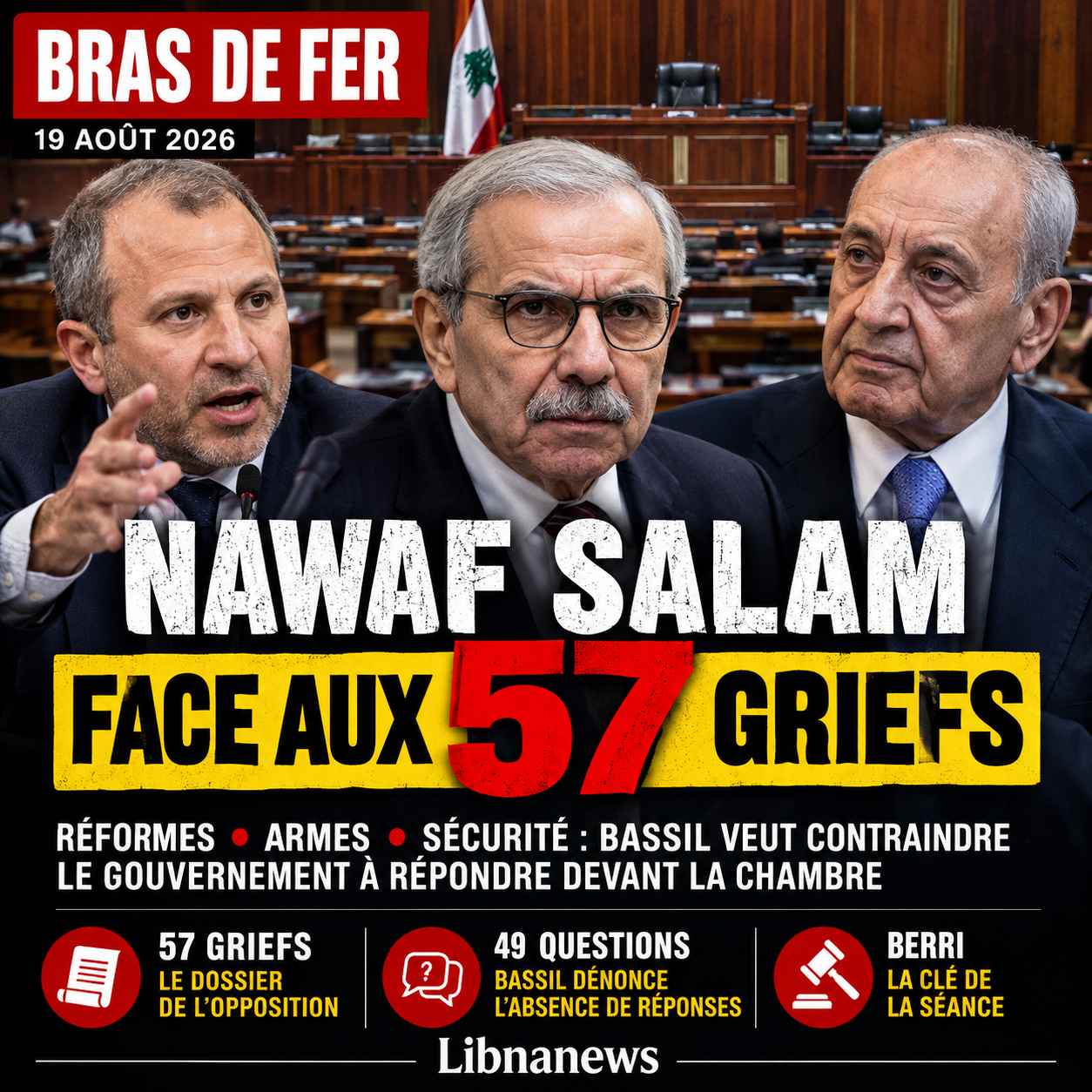
Nawaf Salam against the 57 opposition grievances
Gebran Bassil calls for a public monitoring session of the Nawaf Salam government around a 57-point file. Beyond the reforms, the President of the Free Patriotic Movement wants to obtain precise answers on war, weapons and documents related to security arrangements. The offensive recalls the July 2025 sitting, when Bassil asked for a vote of confidence and saw 69 MPs supporting the government. This time, the event will also focus on the opposition's ability to expand its ranks.

Press Review: Southern Lebanon Between the Battle of Ali al-Taher and the Diplomatic Race
Ali al-Taher crystallizes tensions in southern Lebanon between Israeli military threat, Hezbollah determination and diplomatic efforts. As Washington tries to preserve the Rome negotiations, Joseph Aoun mobilizes its international partners and UNIFIL is alerting to an increasingly fragile security situation on the border.

Beiteddine, the palace of the emirs of Mount Lebanon
30 years of construction, a mosque, a chapel AND a Druze place of worship under the same roof, Byzantine mosaics of the 6th century...

Trump claims Ormuz Strait for the United States
Donald Trump published on 18 August 2026 on Truth Social a map presenting the Strait of Ormuz as a "new American territory". This publication follows several statements in which the President of the United States stated that he had controlled the passage through the American naval device and intended to claim it. Iran immediately rejected this claim. However, there is no legal basis for stating that the territorial status of the Strait between Iran and Oman has been changed.

Lebanon: banks weigh on competitiveness
The loss of competitiveness of Lebanese products becomes more visible as demand from the Gulf countries declines. Producers combine expensive energy, poor infrastructure and, above all, severely reduced access to credit since the 2019 banking crisis. Six years after the financial collapse, banks still do not normally finance productive investment. This situation limits the modernization of firms and their ability to conquer new markets at a time when their traditional opportunities are becoming less dynamic.
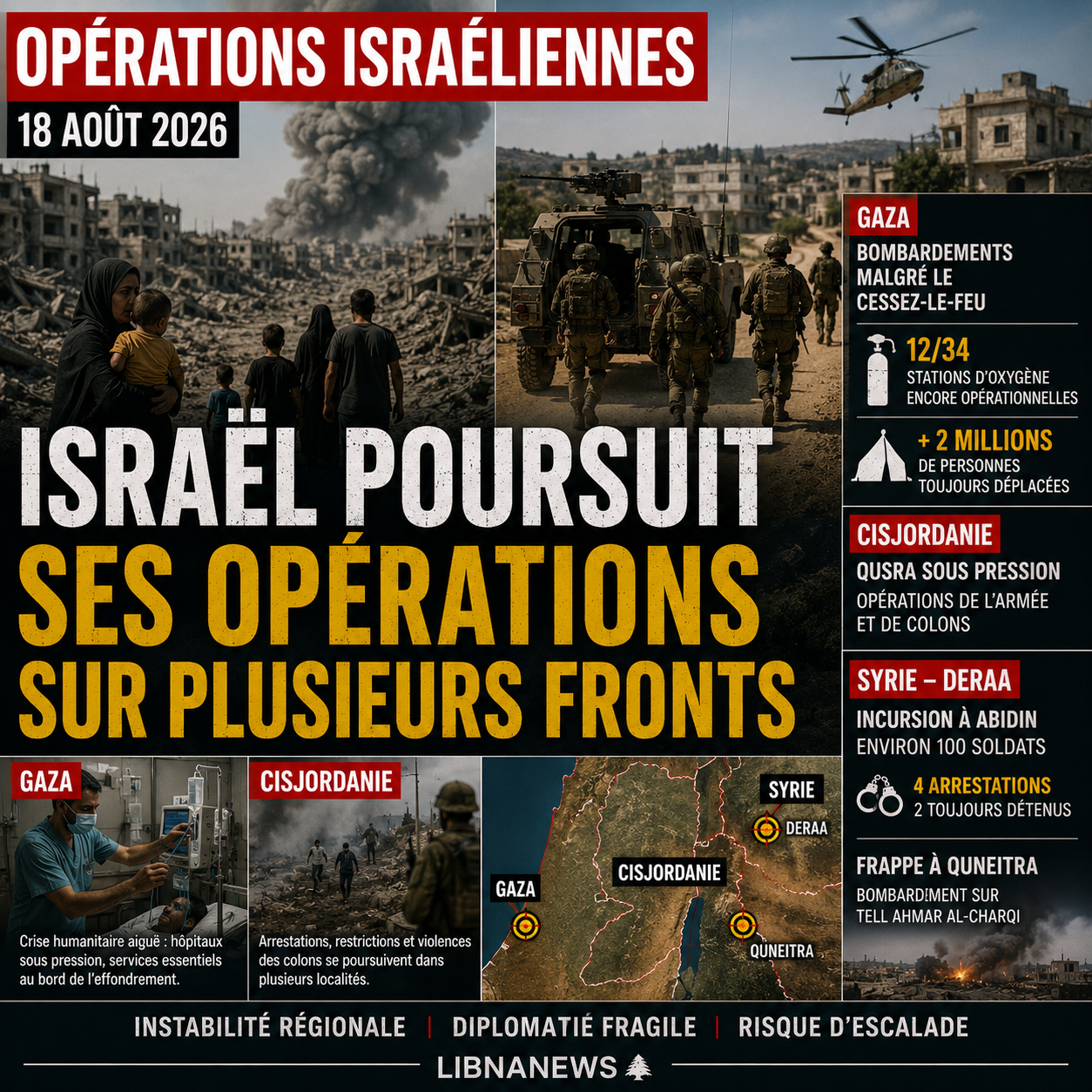
Israel continues operations on several fronts
Israeli operations continued on 18 August 2026 on several fronts. In Gaza, new bombardments and firings are reported despite the ceasefire, while only 12 out of 34 oxygen production sites remain operational and more than 2 million people are still displaced. In the West Bank, Qusra remains under pressure. In southern Syria, an Israeli force of about one hundred soldiers entered Abidjan and arrested four Syrians, two of whom remained in detention.
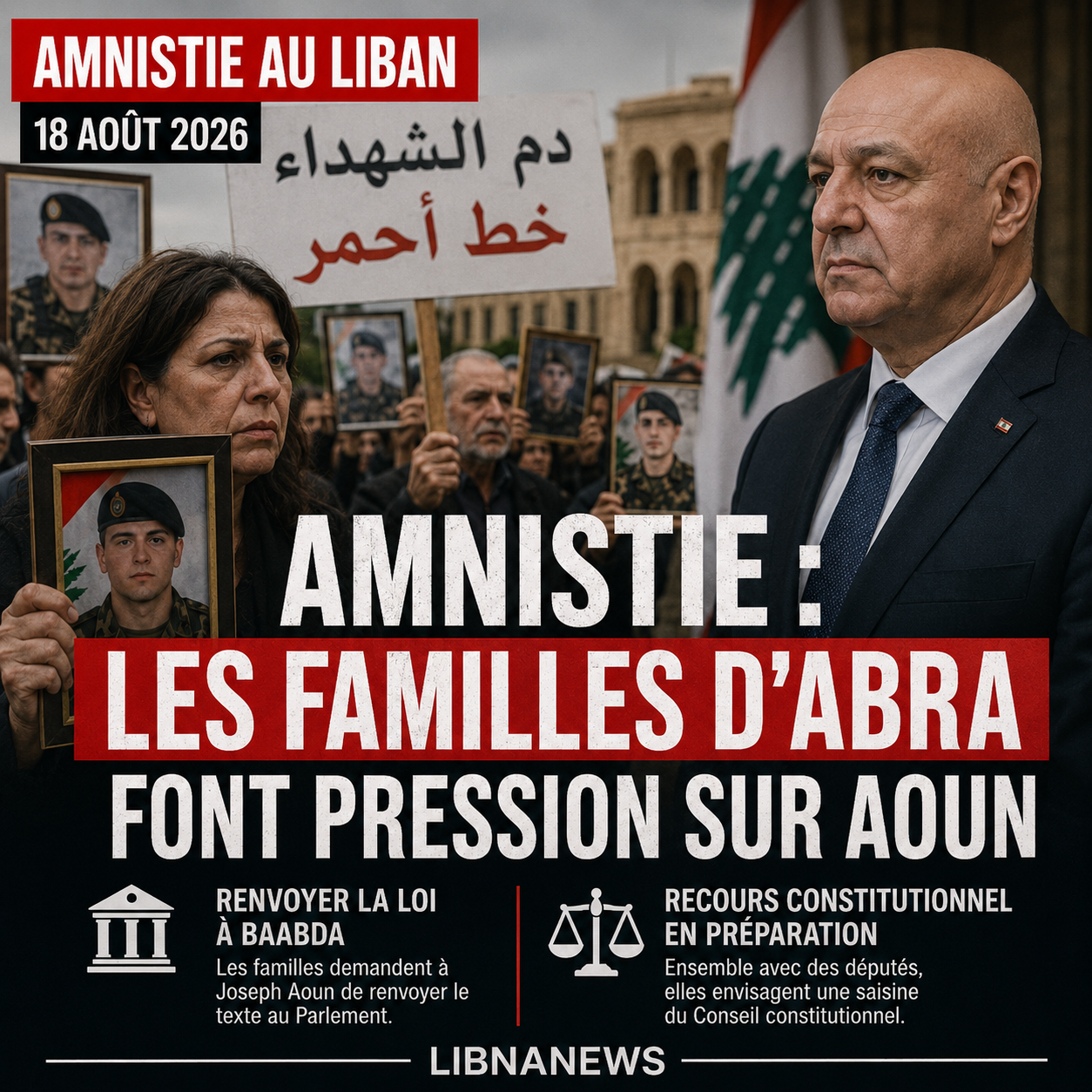
Amnesty: Abra families put pressure on Aoun
The families of the soldiers killed in the Abra clashes are preparing a mobilization against the general amnesty law adopted by the Lebanese Parliament on 12 August 2026. They want to ask Joseph Aoun to refer the text back to the deputies and, together with parliamentarians opposed to certain provisions, they are considering a referral to the Constitutional Council. Their approach comes after the reservations expressed by the army and the crisis which marked the vote on the text. At the centre of the conflict is the possibility that reductions in sentences may benefit those involved in attacks against military personnel.
Press Review: South Lebanon Between the Battle of Ali al-Taher, Israeli Pressure and Diplomatic...
In southern Lebanon, Ali al-Taher focuses on the risk of escalation between Israel and Hezbollah. The press of 18 August 2026 describes difficult negotiations, persistent bombings and the uncertainties surrounding UNIFIL. Joseph Aoun maintained the diplomatic bet, however, against the background of growing tensions between Washington and Tehran.

Joseph Aoun defends the maintenance of Finul in Lebanon
President Joseph Aoun defended Monday, August 17, 2026 the extension of the term of office of Finul in southern Lebanon, which is due to expire on December 31. With a parliamentary initiative and a petition for international force, he presented his renewal as Beirut's first choice. In the event of failure, the Head of State would like a new legal formula to keep international forces alongside the Lebanese army. His statement came as Israeli fire resumed in the South and the security situation remained fragile.

Lebanon permanently abolishes the death penalty
President Joseph Aoun promulgated Act No. 68 abolishing the death penalty in Lebanon on Monday, 17 August 2026, six days after its adoption by the Chamber of Deputies. This signature transforms the de facto moratorium observed since the last executions in January 2004 into a legal abolition. The death penalty now disappears from Lebanese law and leaves room for life imprisonment with aggravated forced labour. The reform also concerns persons already sentenced to death and opens a new phase of application for the courts.
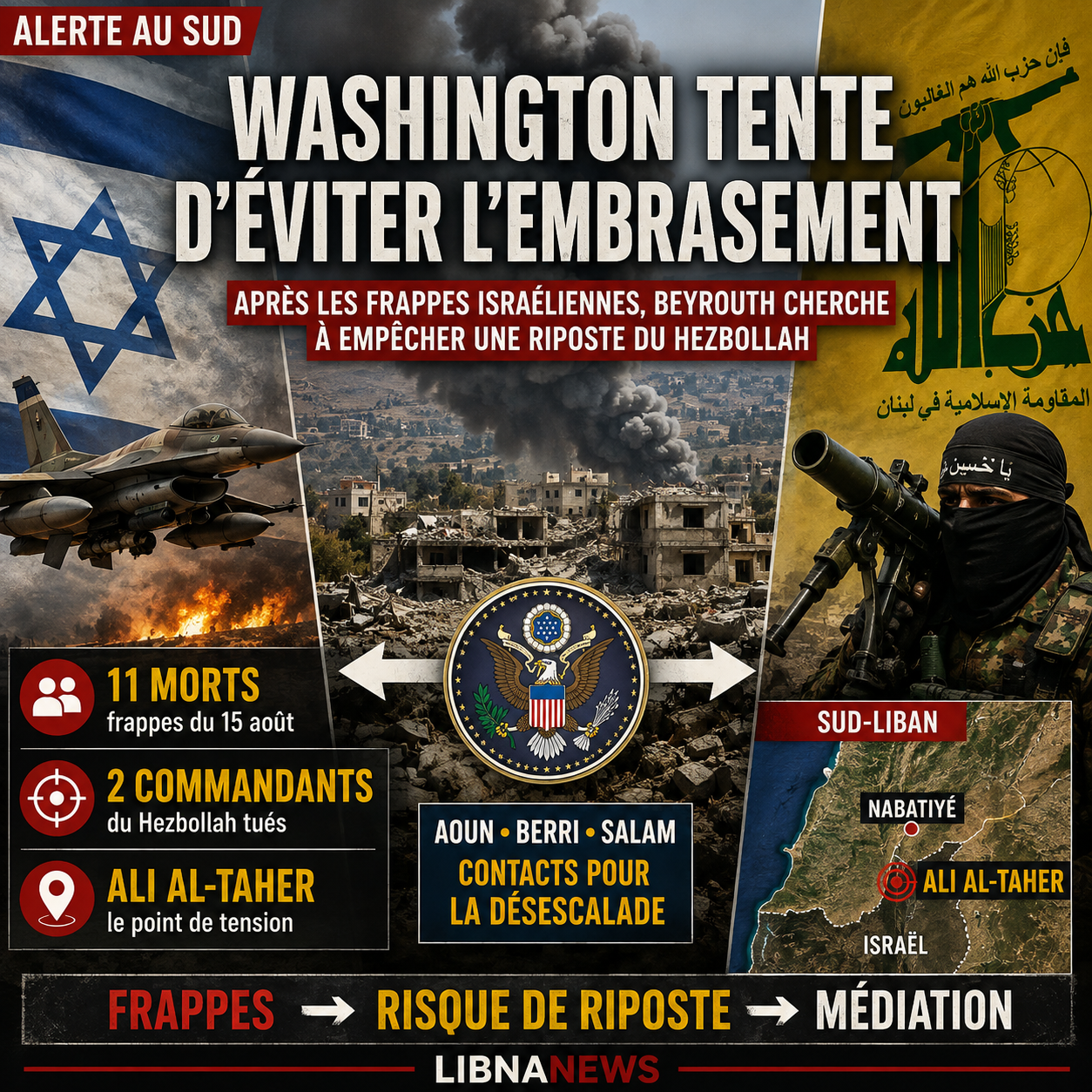
Lebanon: Washington tries to contain climbing · Global Voices
The Israeli strikes that killed two Hezbollah commanders in southern Lebanon were reportedly a severe warning to the movement, according to a diplomatic source. High-level contacts between Beirut and Washington would then have avoided an immediate response from Hezbollah. Joseph Aoun, Nabih Berri and Nawaf Salam were involved in de-escalation efforts. But the situation remains particularly fragile around the strategic heights of Ali al-Taher, near Nabatiyah, where an expansion of the fighting is now feared.

Carnage in Nabatiyah: Israel kills 11 civilians including children
Eleven people were killed and 19 injured in Israeli strikes in Ansar and Deir al-Zahrani, Nabatiyah district. Victims include children and women. These bombardments, carried out during the negotiations between Beirut and Israel, further weaken the diplomatic process and the Lebanese State already tried.



