Resumed displacement from southern Lebanon in the context of regional tensions

0

Civilian departures resumed from southern Lebanon to Saida and Beirut despite the ceasefire. Between targeted Israeli operations, destruction of homes and regional tensions, this new exodus reveals a continuing loss of confidence among the population in the face of a truce that is still unable to achieve real stabilization.

UNIFIL: French soldier killed in Lebanon

0

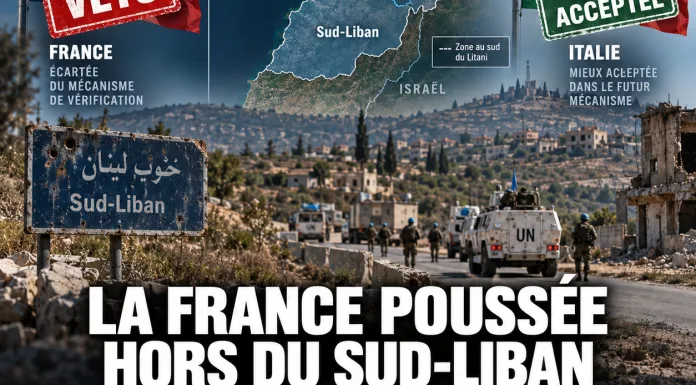
A French UNIFIL soldier was killed in southern Lebanon in an attack on the French contingent. Emmanuel Macron questions Hezbollah, while Nawaf Salam announces an immediate investigation. This tragedy weakens the truce and places security in the South at the centre of tensions.

Ormuz: Iran tightens again

0

Iran has placed the Strait of Ormuz under strict military control less than 24 hours after announcing its reopening. Oil tankers are still crossing, but under threat. Between reported fire, American blockade and maritime uncertainty, Ormuz is once again becoming a central lever of pressure on global energy and markets.

Les bailleurs reviennent, mais à quelles conditions

Donors return, but under what conditions

0

Donors return to Lebanon after the truce, but never without conditions. Transparency, hierarchy of priorities, reform, social targeting and absorption capacity already structure their return. The stakes are not just to get money, but to define a national line capable of using this money without undergoing its entire grammar.

Au Liban, l’armée israélienne accusée de désinformation

In Lebanon, the Israeli army accused of misinformation

0

The Ali Chouaib case goes far beyond mere visual controversy. Following the death of the Lebanese journalist in a strike in southern Lebanon, the Israeli army broadcast a visual designed to associate him with Hezbollah. However, this image proved to be altered, causing the reaction of a foreign press association and reviving a broader debate on war misinformation. The dossier sheds light on a mechanism now central to contemporary conflicts: after the strike, comes the battle of narrative, supposed evidence and public requalification of the dead.

Retour des déplacés : Salam coordonne l’après-trêve

Return of displaced persons: Salam coordinates post-treve

0

The daily ministerial meeting chaired by Nawaf Salam at La Sérail gave a concrete picture of the post-ceasefire this morning. The government has put at the forefront the return of the displaced, the reception centres still mobilized, the security conditions in the South, the repair of some bridges, the arrests after the air fire, the supply of fuel oil and the protection of journalists after the aggression of photographers. The executive thus tries to pass the truce of the military register to the administrative register.

Pentagone : la prière Pulp Fiction de Hegseth

Pentagon: Hegseth’s Pulp Fiction Prayer

0

The sequence first looked like a viral curiosity. It quickly turned into a political controversy. By conducting a Christian prayer service at the Pentagon, Pete Hegseth recited a text inspired by the false verse popularized by Pulp Fiction, in a context of war with Iran and strong religious rhetoric at the top of the American military apparatus. Controversy goes beyond mere film borrowing: it opens up a debate on the boundaries between personal faith, language of war, popular culture and the exercise of power within an institution supposed to represent all the military.

Électricité au Liban-Sud : les réparations commencent

Electricity in South Lebanon: repairs begin

0

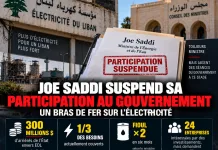
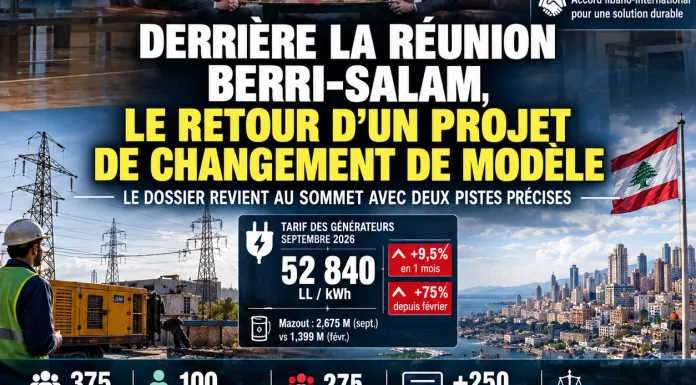
The public electricity establishment has announced the start of repairs on several damaged transmission and distribution lines in South Lebanon, in a context where the security of the land and the means available remain major limits. The Zahrani–Tyr, Tyre–Wadi Jilo and Nabatiyah–Tyr lines are among the affected axes, while the major processing stations south of the Litani have been isolated, except Marjeyoun. To avoid a total collapse of the service, the Tyre power plant was re-launched autonomously to power the areas connected to the main station of the city.

Tirs en l’air : l’armée arrête neuf personnes

Air fire: Army arrests nine people

0

As soon as the cease-fire came into effect, the Lebanese night was not only marked by relief or fireworks. In Beirut and the southern suburbs, air fire also accompanied the event, pushing the army to intervene quickly. Nine people were arrested, while the command pointed out that these practices directly endanger the inhabitants and cause damage to property. The episode sheds light on a persistent Lebanese contradiction: as the war slows down, the weapon continues to occupy public space.

هدنة مشروطة: ما تقوله الصحف اللبنانية والعربية حقا عن الاتفاق المعلن

A conditional truce: what the Lebanese and Arab newspapers really say about the announced...

0

The ten-day truce between Lebanon and Israel appears less like a clear agreement than a battle of interpretation. Between the return of the state, American pressure, regional reading, resistance and broken territory, the Lebanese and Arab newspapers describe a useful but deeply disputed ceasefire, fragile and conditional today.

Une trêve sans architecture de mise en œuvre peut-elle survivre au terrain ?

Can a truce without implementation architecture survive the ground?

0

The ten-day truce between Lebanon and Israel remains fragile for lack of implementation architecture. Without independent verification, clear rules, timetable, and humanitarian guarantees, the cease-fire is likely to be emptied by the ground, rival narratives and persistent ambiguity around Hezbollah and violations from hours to time.

Dès minuit, les déplacés reprennent la route du Sud

As early as midnight, displaced people return to the South Road

0

Upon the entry into force of the ceasefire at midnight, internally displaced persons resumed their journey to the South. The most visible point of this return was formed around the bridge of Qasmiye, partially reopened and already saturated by the cars, while the army organized traffic and extended access. This movement comes after weeks of war, with at least 1.2 million recent UN estimates of internally displaced persons, more than 2,000 dead and more than 7,000 injured. The return therefore began before the ground was fully stabilized.

Trêve au Liban : l’armée libanaise accuse Israël de violation

Lebanon: Lebanese Army accuses Israel of violation

0

The truce in Lebanon, which entered into force at midnight on the night of 16-17 April 2026, began in a climate of great uncertainty. The Lebanese Army accuses Israel of violating the agreement in the early hours, while the National Information Agency continues to report shelling and overflights of drones in the South. Hezbollah claims that no ceasefire can give Israel freedom of movement in Lebanon, while the Israeli press is already insisting on maintaining a safe area. In the background, Washington is trying to transform this fragile pause into a broader diplomatic sequence, including on the Iranian file.

Cessez-le-feu : Washington charge Beyrouth

Stop fire: Washington charges Beirut

0

The US State Department states that the Lebanese government will take "concrete measures" to prevent Hezbollah and any other non-State armed groups from carrying out attacks against Israel under the ceasefire in Lebanon. The text also places the Lebanese security forces at the centre of national sovereignty, while leaving Israel a claim to self-defence. This architecture redefines Beirut's expected role, but it comes into effect as Hezbollah sets its own conditions and Benyamin Netanyahu already refuses a simple "quiet against calm".