Full translation of the Islamabad memorandum
The Islamabad memorandum between the United States and Iran provides for a permanent ceasefire, including in Lebanon, the gradual lifting of sanctions, the reopening of Ormuz, a $300 billion fund and a nuclear mechanism under international supervision, before validation by the UN Security Council.
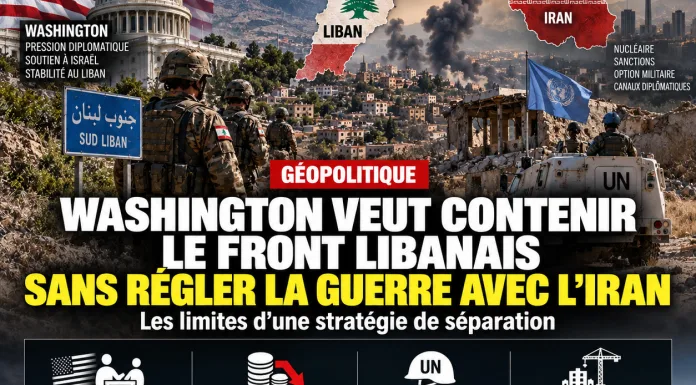
Memorandum from Islamabad: Lebanon at the heart of the Iran-USA deal
The Islamabad memorandum between the United States and Iran places Lebanon in the first clause of the draft agreement. The text provides for the permanent cessation of military operations on all fronts, including in Lebanon, and mentions the guarantee of Lebanese territorial integrity and sovereignty. But this formula must be translated into specific mechanisms: Israeli withdrawal, return of displaced persons, role of the Lebanese army and international surveillance.
Glyphosate in South Lebanon: Soils under Threat
Lebanon accuses Israel of spraying glyphosate with a high concentration on several border villages in southern Lebanon. Analyses cited by Beirut suggest levels up to 20-30 times higher than usual concentrations, with a reported peak of 22,750 micrograms per gram of soil. This contamination poses risks to crops, soils, water, pollinators and the return of displaced people.
Iran-USA Agreement: 14 points of a deal under tension
The draft 14-point agreement between Iran and the United States provides for a general ceasefire, a 60-day negotiating period, the reopening of the Strait of Ormuz, the gradual lifting of sanctions and an economic programme of $300 billion. But the Lebanese side remains one of the most sensitive points: Lebanon is well mentioned in the ceasefire, without clear public guarantees on the Israeli withdrawal from the South or on the return of the displaced.
Smotrich and Ben Gvir challenge Trump to occupy South Lebanon
Bezalel Smotrich claims that Israel will not withdraw from southern Lebanon after the expected signing of the US-Iran agreement. Itamar Ben Gvir defends the continuation of Israeli control and destruction, even against Donald Trump's opinion. For Lebanon, these statements place a major concern: can American diplomacy produce a real de-escalation if Israeli ministers assume a lasting occupation and prevent the return of the inhabitants?
Lesson of a lost war for the US or how Iran’s case has become...
The Montaigne Institute provides a serious analysis of the war against Iran. The operation was to weaken the Islamic Republic, reduce its nuclear programme and restore American deterrence. It would have had the opposite effect: a more central Iran, a more distrustful Gulf, a more tense American-Israeli relationship and a marginalised Europe. The Iranian file thus becomes a lesson on the limits of raw power.
Trump speaks to Damascus about Hezbollah
Donald Trump claims to have spoken with Syrian President Ahmed al-Charaa about the confrontation with Hezbollah. This statement, reported by Reuters, introduces Damascus into the Lebanese case as Washington seeks to preserve its agreement with Iran and contain Israeli strikes in Lebanon. For Beirut, this track is sensitive: it affects Lebanese sovereignty, the memory of Syrian tutelage and the risk of a regional arrangement without the Lebanese State.
The crime of meaning
I went walking alone in the night. Not to think. Not to find an answer. Not even looking for a little peace. I went walking to check out something much simpler. I wanted to see if the stars still existed. I wanted to see if the moon was still there. This may seem [...]
Will addiction lead to nothing?
A human process indicates the momentum, inspiration and, gradually, the management of moments and stages. The interactive dynamic, at various levels, is truly personalized when it is initiated by the intuitive-logical potential, from childhood to the precious seniors at the end of the journey. It is only a subjective, spontaneous and exclaimed impulse. It puts in [...]
Trump accuses Israel of killing civilians in Lebanon
Donald Trump sent a rare public criticism to Israel about his military methods in Lebanon. By denouncing the destruction of residential buildings to target Hezbollah members, the US President places the issue of Lebanese civilians at the centre of a sensitive diplomatic sequence. For Beirut, these statements confirm a reality that has been going on for months: Israeli strikes affect not only military objectives, but entire neighbourhoods.
Is Israel looking for escalation in southern Lebanon?
From Lebanon, the Israeli escalation in South Lebanon directly questions the strength of the agreement in preparation between the United States and Iran. Strikes, incursions and the continuation of Israeli forces are taking place as Washington seeks to conclude quickly with Tehran. Benjamin Netanyahu, subjected to electoral pressure and an Israeli opinion in favour of a hard line, risks developing his privileged relationship with Donald Trump.
South Lebanon: Iran-USA deal energized as Washington begins to pressure Tel Aviv
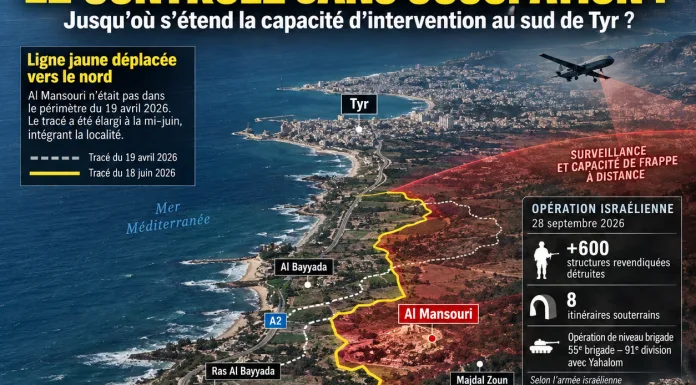
South Lebanon remains under high tension after a night of Israeli strikes and exchanges of fire with Hezbollah. Mifdoun, Choukin, Rihane, Hadatha-Haris and Kfar Tebnit are sectors affected or reported by Lebanese and international media. Iran warns that continued Israeli attacks could threaten the momentum with Washington. The United States, on the other hand, is multiplying the pressure signals on Israel before the expected signing of the agreement.
Is Lebanese tourism too vulnerable?
Lebanese tourism showed a strong rebound capacity, with more than 1.63 million visitors in 2025. But the war of 2026 revealed a structural vulnerability: short season, airport dependence, late bookings, security warnings and high exposure to regional shocks. The diaspora cushions crises, without replacing foreign visitors. To survive sustainably, the sector must extend its seasons, develop domestic tourism, secure events and improve its crisis communication.
South Lebanon: Towards an Israeli withdrawal?
The reported withdrawal of many Israeli vehicles from Khiam to Mazraat Sardah and Al-Amra revives the hypothesis of an early withdrawal from southern Lebanon. No global departure is confirmed, but the diplomatic sequence has changed. Iran claims that the end of the war in Lebanon is the central issue of the agreement with Washington, while the Israeli press refers to pressure on Netanyahu. The visa file of Itamar Ben Gvir adds a political signal to the tensions between Washington and Israel's hard wing.