



USA-Iran agreement: Lebanon between antagonistic readings
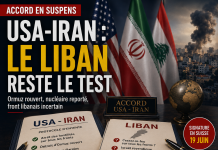
The US-Iran agreement announced in the night opens a major diplomatic phase, but its application to Lebanon remains uncertain. Washington highlights the reopening of the Strait of Ormuz and the end of the naval blockade against Iran. Tehran affirms that hostilities must cease on all fronts, including in Lebanon. Israel still claims its freedom of action against Hezbollah, at the risk of turning Beirut and South Lebanon into an immediate test of compromise.
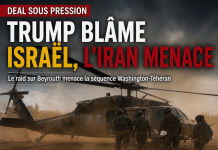
Trump blames Israel, Iran threatens to retaliate
Donald Trump strongly criticized Israel for his attacks on Beirut, according to Axios, while Washington and Tehran were trying to finalize an agreement. Iran is now threatening to respond, putting the risk of a resumption of regional war at risk. Israeli media also claim that Tehran rejected an offer of $12 billion not to attack Israel, an unconfirmed information.
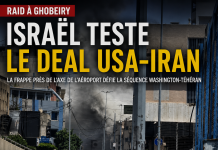
Raid on Ghobeiry: Israel tests US-Iran deal
The Israeli raid on Ghobeiry, near the airport road coming from Hadath, comes as Washington and Tehran attempt to finalize a regional agreement. Officially, Israel claims to be targeting Hezbollah infrastructure. But the timing and location of the strike raises another question: Does Tel-Aviv seek to provoke an Iranian or Lebanese reaction in order to weaken or even sabotage the compromise between Donald Trump and Tehran?

The CAPL announces the publication of the sixth issue of the Art and the...
The CAPL, a non-profit cultural association based in Beirut, is pleased to announce the publication of the sixth issue of Art and the World, its semi-annual magazine dedicated to art, culture and reflection. Through its activities, CAPL seeks to promote access to culture, encourage dialogue between [...]
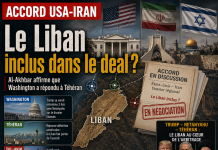
Lebanon: included in the US-Iran deal?
Is Lebanon included in the US-Iran agreement? While several Western readings still present this issue as uncertain or limited, Al-Akhbar claims that Tehran received a definitive response from Washington confirming the inclusion of the Lebanese file. According to the daily newspaper, it is not just a ceasefire, but the end of the state of war, with the cessation of operations, Israeli withdrawal, cessation of destruction and release of prisoners.

Lebanon: French soldier killed by accident
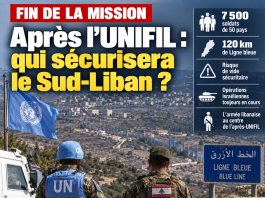
Florian Gillet, a 21-year-old French soldier, died in Lebanon after being hit by an accidental fire during the preparatory phase of a training, according to information reported by Le HuffPost from elements of the Army Ministry. The soldier was evacuated to the nearest hospital. The exact circumstances remain to be established. The death occurred while French forces participated in Operation Daman, within UNIFIL.

The MEA under audit in the midst of an air crisis
The MEA is the subject of a safety audit launched by the Lebanese civil aviation regulator following concerns expressed by international pilot associations. Concerns relate to increased military activity, incident reports and possible pressure on crews. The company rejects these charges and claims to respect the risk assessments. The file mainly questions the confidence, transparency and independence of Lebanese air control.

LFI moves to Lebanon with Rima Hassan and Manon Aubry
A delegation of four parliamentarians from Unsuspected France is in Lebanon from 8 to 12 June 2026. It includes Manon Aubry, Rima Hassan, Andrée Taurinya and Arnaud Le Gall. The mission, presented as a displacement of solidarity, provides for meetings with the Lebanese authorities, political groups represented in Parliament, UNIFIL and relief organizations. LFI wants to make several demands, including a lasting ceasefire, the Israeli withdrawal from Lebanon and the suspension of the EU-Israel agreement.

Mount Ramim: Israel in shock after infiltration from Lebanon
The Israeli media reported on Tuesday, June 9, 2026, an incident reported as an infiltration of Hezbollah fighters into northern Israel. The Israeli army claims that an armed man fired at his forces in the area of Mount Ramim before being killed. Relays citing Israeli military radio evoke an operation deemed exceptional, the concern of a cell still present and the possible deployment of special forces in the area.

South Lebanon: Israel orders the evacuation of Tyre, affected heritage
On Tuesday, June 9, 2026, the Israeli army issued a new evacuation order targeting Tyre, its camps and several surrounding neighbourhoods, including the Christian neighbourhood of the Old City. This measure comes after the official Lebanese denunciation of the damage caused by bombardments near the archaeological sites in Tyre, which are part of the UNESCO World Heritage Site. Artifacts, columns, capitals, column bases and mosaics were reportedly damaged by debris.

Washington contradicts Israel on interceptions
CNN reports, citing an American official, that the United States did not intercept any Iranian missile during the night. The same source finds the Israeli claim that Washington was involved in the interception of ballistic missiles launched by Iran to Israel unfounded. This denial comes after a sequence of cross strikes between Israel and Iran, while the United States seeks to contain escalation and preserve a negotiating space.

Michel Issa in Baabda and Serail
The US Ambassador to Lebanon, Michel Issa, was received in Baabda by President Joseph Aoun and then in the Grand Serail by Prime Minister Nawaf Salam. He confirmed that negotiations should resume in Washington and that Donald Trump followed the Lebanese case daily. Nawaf Salam recalled, for his part, that no one was negotiating on behalf of Lebanon outside the Lebanese state.

Israel: Europe tightens sanctions
Sanctions against Israel are at the centre of European diplomacy. France is preparing coordinated measures against individuals linked to settler violence in the West Bank, while Ireland, the Netherlands, Spain, Belgium and Slovenia are moving towards trade restrictions on settlements. The UK now appears ready to join a new E1 sequence. Ben-Gvir and Smotrich's comments on the West Bank and Lebanon could also push some of Israel's historical allies to support targeted sanctions.

Trump returns Israel and Iran back to back
Donald Trump returned Israel and Iran back to back after a night of cross-strike, asking the two countries to stop firing immediately. Tehran announced the suspension of its last wave of attacks, while making this pause conditional upon the cessation of Israeli operations in Lebanon. The sequence also reveals an increasing tension between Washington and Tel Aviv, aggravated by electoral interests opposed to the United States and Israel.



