





Within a few months of the announced end of the UNIFIL mission, concern is gaining behind the Lebanese diplomatic scenes. It no longer concerns only the departure of international soldiers. It’s about what will come next. In its September 29, 2026 edition, Al Joumhouria reports that no alternative formula is yet ready. A diplomatic source quoted by the newspaper goes further. It believes that the difficulties are such that the emptiness scenario in the South becomes a serious hypothesis.
This alert comes as the military situation remains tense. Israeli operations continue in several areas of the South. Discussions between Lebanon and Israel remain difficult. At the same time, the Lebanese army is called upon to expand its role. These three elements transform the end of UNIFIL into a strategic problem. The subject is no longer simply to replace several thousand soldiers. It is necessary to determine who will perform their duties, under what authority and with what means.
Two solutions sought, none yet acquired
According to Al Jumhouria of 29 September 2026, Lebanon is working on two possibilities. The first would be to maintain UNIFIL in its current form. The second would be to create a different system, but maintaining an international legal framework or a link with the United Nations. According to the newspaper’s diplomatic source, none of these tracks has yet obtained the necessary support.
The situation explains the concern expressed by several Lebanese officials. A departure without an alternative would leave a particularly sensitive area without the international arrangement that has been in place for years. Al Joumhouria thus reports the fears of a vacuum that could increase the risk of confrontation. The newspaper also refers to the possibility of such a situation extending Israeli freedom of action in the South.
The question therefore exceeds the number of soldiers present. UNIFIL is also an international framework. Its presence directly links the situation in the South to the Security Council and resolution 1701. The disappearance of this structure would raise the question of the mechanism to take over.
Al Akhbar, in its 29 September 2026 edition, reports similar concerns from another diplomatic sequence. The newspaper returns to a meeting held in Parliament with the UN Special Coordinator for Lebanon. This meeting took place as part of a parliamentary process supported, according to the newspaper, by 86 MPs in favour of maintaining UNIFIL.
According to information published by Al Akhbar, discussions focused on the risks of a vacuum after the withdrawal of international force. In particular, a United Nations presence in another form and with fewer staff would have been mentioned. However, the international representative would not have presented a specific solution to replace the current mission immediately.
The problem identified during these discussions would therefore be less the end of UNIFIL itself than the absence of a structure capable of performing the functions it currently performs. According to Al Akhbar, the international representative also insisted on the need to maintain Lebanon in a form of UN coverage.
A force of 7,500 soldiers difficult to replace
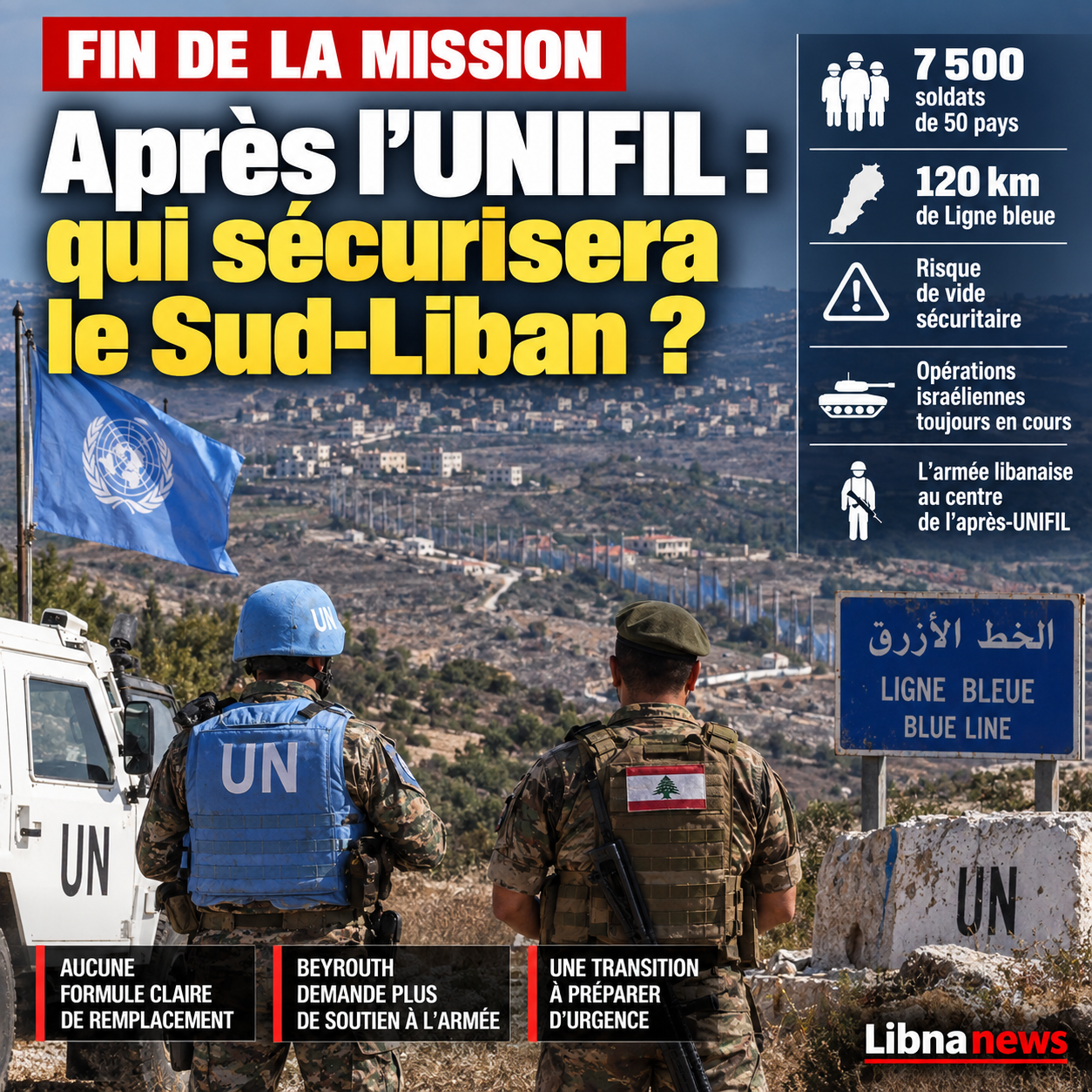
Al Quds Al Arabi, in its edition of 29 September 2026, provides a measure of the scale of the challenge. There were about 7,500 soldiers from some 50 countries in LUSIFIL. They are deployed in the South, including along some 120 kilometres of the Blue Line.
These figures show why the issue cannot be reduced to a simple transfer of responsibilities. Even if the Lebanese army became the main force after UNIFIL’s departure, it should resume missions so far carried out with the support of an important multinational mechanism.
The UNIFIL commander, Diodato Abagnara, himself approached the deadline. According to Al Joumhouria and Al Quds Al Arabi of 29 September 2026, he briefed the representatives of the countries participating in the mission on the situation in the South. He stressed the continued support for the Lebanese army and local communities, as well as the importance of an international presence to promote the implementation of resolution 1701.
Al Joumhouria also reports on the remaining period before the end of the year. The UNIFIL official considers that these months should be used to prepare the next phase and avoid a security vacuum.
However, the timetable offers a margin. The disappearance of the international presence should not necessarily occur in a single day. Al Joumhouria indicates that the organized withdrawal of forces could be gradual and spread over a much longer period. This transition could allow Lebanon and its partners to prepare an alternative formula.
But an additional delay does not solve the underlying problem. It only gives more time to find a solution.
The Lebanese army in the centre of the post-UNIFIL
In almost all the scenarios mentioned by the 29 September newspapers, the Lebanese army becomes the central actor.
Al Joumhouria quotes a senior official that, after UNIFIL’s departure, the army would be the main security force on the ground. This official also highlights the limitations of his equipment and resources. He therefore believed that partner countries, including the United States, should provide the necessary resources.
This question was also present at the meeting between Nawaf Salam and US Secretary of State Marco Rubio in Washington. Several corpus newspapers report that the Prime Minister insisted on the need to continue US support for the army. It linked this assistance to the ability of the military institution to carry out its responsibilities throughout the country.
Al Binaa of 29 September 2026 reports that Nawaf Salam called for concrete implementation of the tripartite framework. According to the positions presented at the meeting, the latter must move forward simultaneously on the Israeli withdrawal and on the extension of State authority. The Prime Minister also called for a clear timetable and a verification mechanism.
The strengthening of the army thus appears as the point of contact between two dossiers. The first concerns the post-UNIFIL period. The second concerns State authority and arms monopoly.
However, one difficulty remains. The replacement of an international force does not only mean an increase in military strength in the South. It must also be given the material means to occupy the ground, to monitor sensitive areas and to maintain a sustainable presence in a region always exposed to military operations.
This issue is all the more important as incidents continue.
A planned withdrawal as operations continue
The context of 29 September 2026 is not that of a stabilized border. Al Sharq reports several Israeli operations in the south. The newspaper mentions bombings, air strikes and destruction in various localities. It also reported tank movements in the Arnoun area and firing at Zawtar al-Sharqiya.
Al Sharq also reports that a Lebanese Army engineer unit dismantled an Israeli spy camera equipped with a solar power system near Wadi Zibqin in the Tyre district.
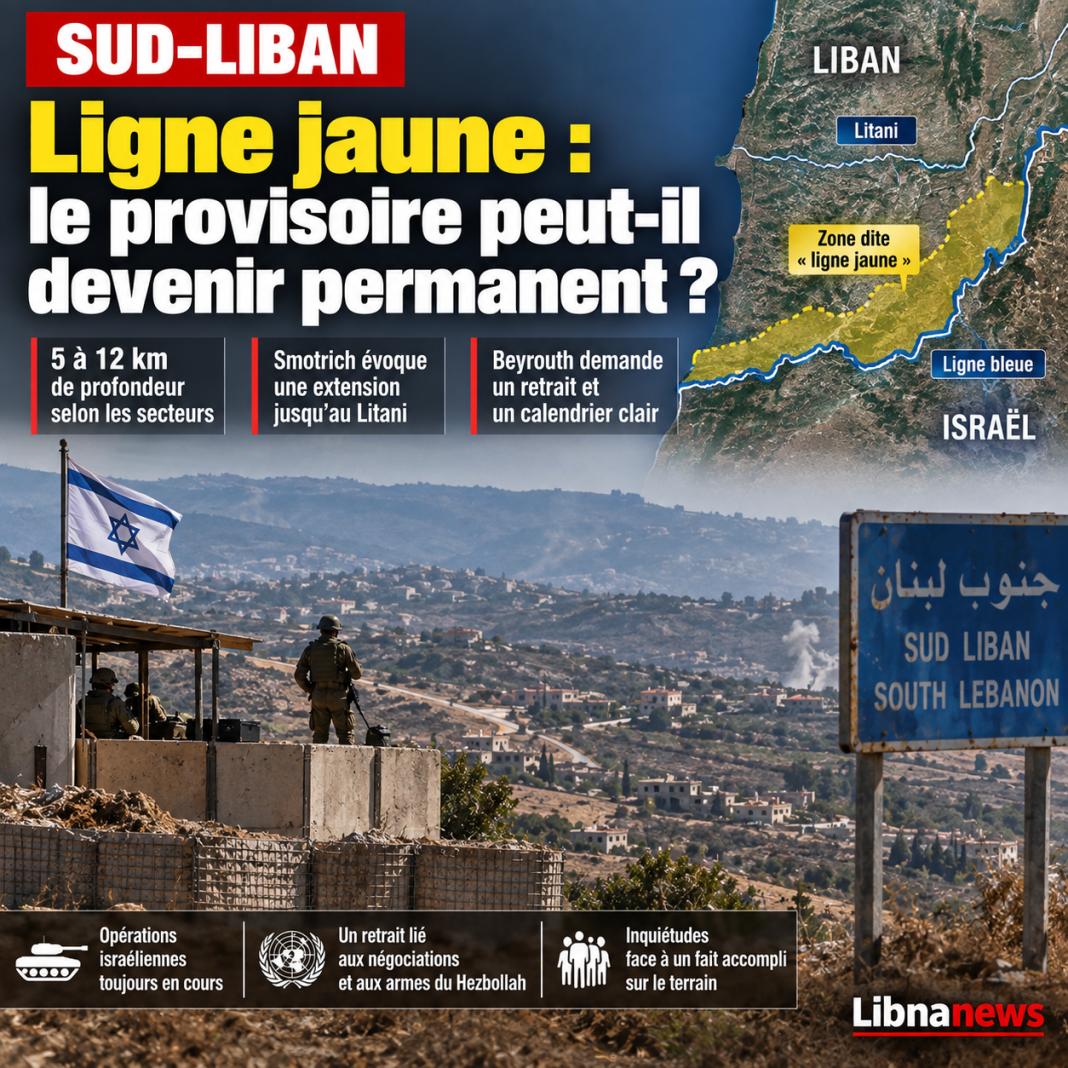
Al Araby Al Jadid also describes a situation of persistent tension. According to information gathered by the newspaper and published on 29 September 2026, Nawaf Salam received negative messages on his trip to New York about Israeli intentions. Israel would continue its operations and maintain the security zone it had established in the South.
This information is attributed to the newspaper’s sources. They are therefore not an official Israeli announcement. However, they make it possible to understand why the UNIFIL question is so concerned about Beirut.
A departure of the international force in a peaceful environment would primarily pose a question of institutional transition. His departure as military operations continue poses a much broader problem.
The risk would then be that an international mechanism would disappear before a new security balance was established.
The international role is not limited to soldiers
The population debate masks another UNIFIL function. Its presence creates an institutional intermediary in an area where the Lebanese and Israeli armies remain separated by an extremely sensitive border.
This dimension explains why Al Akhbar insists on the desire expressed in discussions with the UN representative to maintain international coverage. A smaller force could possibly maintain part of this function, even if it did not provide the same operational capabilities.
This hypothesis joins Al Jumhouria’s information on the interest shown by some countries already present in UNIFIL to continue to assist the Lebanese army. The newspaper thus mentions the possibility of a multinational framework. However, the key questions remain unanswered: what would its mandate be, who would authorize it and what specific missions would it carry out?
Legal status is decisive. A coalition of countries supporting the army is not necessarily equivalent to a UN-mandated force. The difference concerns both political legitimacy and coordination mechanisms.
That is why the discussions reported by the newspapers seem to seek a formula that maintains a link with the United Nations, even in the event of a profound transformation of the current system.
The European Union is also preparing for the next stage
The subject also appeared during a meeting between the army commander, General Rodolphe Haykal, and the ambassador of the European Union Sandra De Waele.
Al Sharq of 29 September 2026 stated that both officials had explicitly addressed the post-UNIFIL phase. The European diplomat confirmed the European Union’s continued support for the Lebanese army and praised its role in the stability of the country.
This meeting does not provide an alternative formula. However, it confirms that Lebanon’s foreign partners are already working on the post-UNIFIL issue.
The challenge is to turn these political supports into concrete capabilities. The army will have to have sufficient resources to maintain the ground. It must also be able to act in an environment where Israeli withdrawal remains incomplete and the issue of Hezbollah weapons remains open.
These files now cross directly.
The danger of a desynchronised calendar
Perhaps the main risk is the timing.
Lebanon is seeking an Israeli withdrawal. At the same time, it must strengthen the deployment of the army. Discussions on weapons must move forward. Reconstruction must begin. Finally, a solution must be found before the international presence disappears.
There is no guarantee that these processes will progress at the same pace.
If UNIFIL withdraws before an alternative device is put in place, the vacuum feared by Al Joumhouria sources may appear. If the army were to resume more missions without the necessary resources, the problem would simply be transferred. If Israeli operations continue, the military presence alone will not be sufficient to create a stable environment.
The maintenance of a reduced international structure could therefore serve as a transition. But the files of 29 September 2026 still show no agreement on this option.
This is precisely what makes the confidences published by Al Joumhouria important. They reveal a gap between the political approach and operational readiness. Everyone is discussing the post-UNIFIL, but there is still no clearly defined replacement in the available sources.
Three months to prepare an architecture still unknown
At this point, newspapers therefore describe a search more than a solution.
The Lebanese government wants to preserve an international presence or obtain a formula that can take over its main functions. Parliamentarians are calling for UNIFIL to be maintained. The United Nations warns about the risk of a vacuum. The European Union confirms its support for the army. Nawaf Salam asked Washington to strengthen the latter. However, the structure to organize the whole remains undetermined.
The central question then becomes that of transition.
Gradual withdrawal could provide the necessary time. But this deadline will have to be used to define responsibilities, staffing, funding and the legal framework. Without that, the timetable would only push the problem back.
After UNIFIL, therefore, the departure of the United Nations peacekeepers was not a mere departure. It obliges Lebanon to answer a much more difficult question: what security architecture can work in the South when the international presence decreases, when the conflict with Israel is not resolved and the military authority of the State remains at the heart of the internal debate?
The information published by Al Jumhouria and Al Akhbar on 29 September 2026 shows that this architecture does not yet exist. They also show that the risk of emptiness is no longer only mentioned publicly as an abstract concern. It is now discussed in the diplomatic and parliamentary meetings devoted to the preparation of the next stage.