






Behind the steles of the conquerors, another memory crosses the site of Nahr al-Kalb: that of a guard dog whose barks would have warned the inhabitants of the arrival of the invaders. An ancient legend, supported by material clues, but still surrounded by a true archaeological mystery.
In Nahr al-Kalb, history is not only read in books. It is engraved in the rock. Since ancient times, the armies that have crossed this natural lock on the Lebanese coast have wanted to leave their mark. The Pharaohs, the Assyrians, the Babylonians, the Romans, the Mamluks, the Ottomans, the French, the British, the Australians, and then the Lebanese inscribed their passage on the walls of the site.
These steles tell the great story: that of empires, conquests, military roads and foreign powers that crossed Lebanon. But another memory, less official, was attached to the place. She does not speak of a king or general. She’s talking about a dog.
According to local tradition, a dog once kept the Nahr el-Kalb passage. When an enemy army approached, it began barking, allowing the inhabitants to prepare for the attack. After his death, a statue was allegedly erected in his honour. And this statue, said the legend, would have continued to scream when the danger threatened.
The dog river
The very name of the site maintains this memory. Nahr al-Kalb literally means the dog river. In ancient times, the stream was known as Lycus, usually associated with the wolf. This double reading explains why sources sometimes speak of a dog, sometimes of a wolf. In both cases, the image remains the same: that of a guardian animal placed at the entrance of a strategic passage.
The place is ready. Before modern roads, tunnels and the coastal highway, Cape Nahr al-Kalb was a major natural obstacle between Beirut and the North. The mountain fell almost directly into the sea. The passage was narrow, difficult, controllable. An army had to pass it, or bypass it with difficulty. It was for this reason that the conquerors left their inscriptions: it was not only a decoration, but a military door.
Whoever crossed Nahr al-Kalb marked his entry into a strategic space. He who added his name to it proclaimed his power. So steles are not just memories. They are political acts.
The dog that warned the inhabitants
The dog’s legend fits into this geography of fear and defense. In its popular version, the animal is not a mere companion. He’s a sentry. His barking announces danger. He’s giving the alarm. It allows locals to prepare before the invaders arrive.
It is this function that gives history its strength. Nahr al-Kalb’s dog is not a decorative animal. It represents the vigilance of a country often crossed by armies. It embodies the instinctive defense of an exposed territory. Where the emperors grated their victories, the local memory kept the image of a guardian.
Several traditions report that a dog statue, or wolf statue, would have been placed on the heading. In the 17th century, the traveler Laurent d’Arvieux already evokes this memory of a carved animal linked to the passage. According to the tradition then reported by several authors, the Turks ended up destroying or overthrowing the statue, before it fell or was thrown into the sea.
As is often the case in ancient narratives, history probably mixes several layers: an ancient name, a popular tradition, a visible pedestal, a lost statue, and then explanations transmitted from generation to generation. But the heart of the story remained the same: an animal was watching over the passage.
A statue in the sea
The mystery does not stop at the legend. Ancient testimonies claim that an animal form would have been visible in the sea, at the foot of the Cape. The British writer H. Rider Haggard, who visited the site at the beginning of the 20th century, reports having seen in the water a great accephalic form, associated by local tradition with the dog or the wolf of Nahr el-Kalb.
A more precise element then appeared during World War II. In 1942, while Australian units were working on the Beirut-Tripoli coastal railway, an ancient accephalic statue was reported in the sea under Nahr el-Kalb’s cape. Lebanese heritage sources refer to a letter dated 11 July 1942, kept at the Directorate General of Antiquities, mentioning this discovery. TheNew York Timeson august 6, 1942, an article was also said to have been dedicated to this statue, which was presented as a stoneloup that once kept the passage.
The statue would have weighed several tons. She would have been deprived of her head. It was allegedly destined for the Beirut National Museum. Then his track gets lost. This is where another question arises:where did that statue go?If it was actually reported, moved or entrusted to the archaeological authorities of the time, why is it not today identified, inventoried and presented as one of the major elements of Nahr al-Kalb’s heritage? Was it destroyed, forgotten in reserves, moved without clear documentation, or simply confused with another vestige? The mystery of Nahr al-Kalb’s dog is therefore not just a legend. It also concerns the possible disappearance of an object which, if still exists, should have its full place in Lebanon’s archaeological memory.
That’s where the case becomes disturbing. Is this the statue mentioned by tradition? An ancient vestige reinterpreted as the dog of legend? A Roman sculpture, Phoenician or later? There is no definitive evidence available today.
An incomplete proof, but a persistent legend
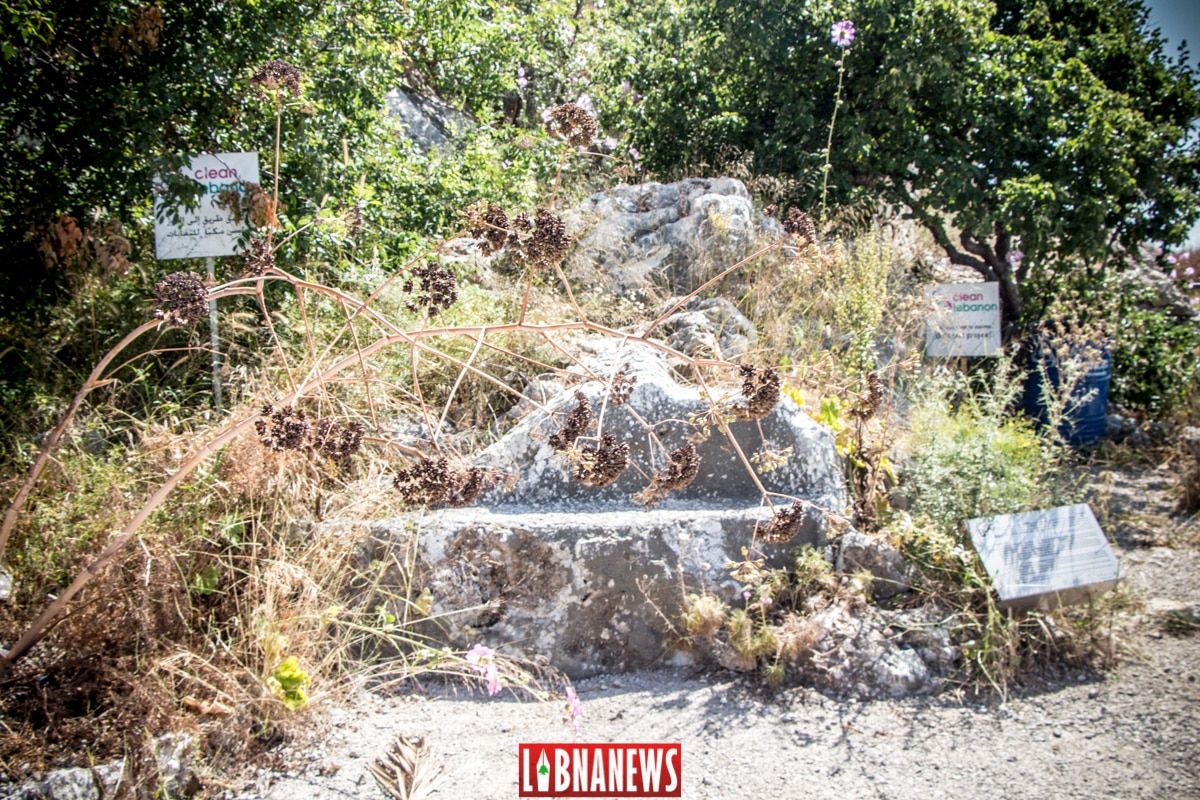
The pedestal exists. Tradition exists. Travellers reported it. Modern sources evoke an animal statue found or reported in the sea. But the object itself is not now clearly identified, located and presented to the public as the statue of Nahr al-Kalb’s dog.
It is this lack that sustains the mystery. History is not a pure invention, but it is not fully proven either. It is located in this intermediate area where heritage, oral tradition and local memory intersect.
The details of the screaming of the statue obviously belong to the legendary register. But it can have a concrete origin. The wind, passing through the cavities of the rock or in a carved structure, could produce a noise like a cry or a scream. At such an impressive site, overlooking the sea, full of military inscriptions and history of invasions, no more was needed to transform a natural phenomenon into a supernatural guardian’s account.
The memory of the inhabitants against that of the conquerors
What strikes Nahr al-Kalb is the contrast between the two memories of the site. On one side, the steles of the victors. They say strength, conquest, authority. They bear the names of the powers that crossed Lebanon and wanted to leave a trace there.
The other is the dog’s legend. It does not tell the triumph of the invaders, but alerts the inhabitants. She does not celebrate the one who passes, but the one who warns. It is not a victory but a concern.
Maybe that’s why this story survived. In a country often crossed by foreign armies, popular memory has not only retained the names of the conquerors. She also kept the dog who barked before the attack.
In Nahr al-Kalb, the empires engraved their passage in the rock. The dog left a question open. A statue whose tradition has been talking about for centuries, which witnesses say they have seen in the sea, and of which no one seems to be able to say with certainty where it is today. This is perhaps, in the end, the real mystery of the site: not only would a dog have barked to warn the inhabitants of the arrival of the invaders, but its statue itself seems to have disappeared in the fog of Lebanese heritage. It had to disappear because it is too noisy today for our politicians to face the powers that are ingesting in our daily lives.
References used:UNESCO, notice on the steles of Nahr al-Kalb; Livius, study on Lycus / Nahr el-Kalb; Wanderleb, heritage record on Nahr al-Kalb; Australian War Memorial, photo archive of the Australian presence at Dog River Gorge in 1942; works and stories of travelers cited around the Nahr el-Kalb dog or wolf tradition.