



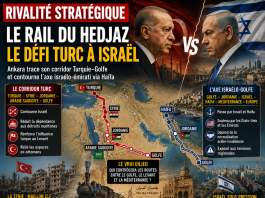

Nabih Berri in the middle of the fracture
Nabih Berri again became a central player in the Lebanese crisis. Between distrust of the diplomatic sequence, defence of the Shiite camp and the desire to avoid an internal rupture, the President of the Chamber imposes himself as a figure of blockade as well as stabilization, in the heart of a Lebanon fractured by war and negotiation.
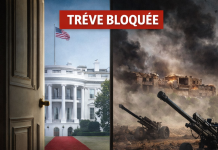
Washington opens the door, the forehead closes it
In Washington, diplomacy between Lebanon and Israel is progressing, but the southern front continues to impose its pace. Around Bint Jbeil, fighting blocks any credible truce. Between American mediation, Israeli military pressure and Lebanese prudence, the war recognizes negotiation without giving it priority on the ground.
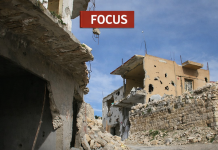
Bint Jbeil, the node of battle
Bint Jbeil has again become the military and symbolic epicentre of South Lebanon. The Israeli army claims a decisive advance, while Hezbollah tries to maintain a resistance to it in a ravaged urban environment. This battle is beyond the ground: it weighs on the direct discussions between Beirut and Israel, on the Israeli security zone strategy, on the future of the return of the inhabitants and on the ability of the Lebanese State to take over one day in the South.
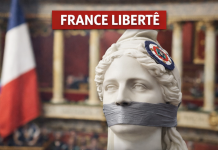
From the IRHA Law to the Yadan Law: Vichy’s gravity to the capture of...
In France, a new bill revives the debate on the assimilation of anti-Zionism and anti-Semitism. Its critics see it as a tool of censorship designed to muzzle Israel's criticisms and support for Palestine, at the risk of impoverishing public debate and undermining freedom of political expression.
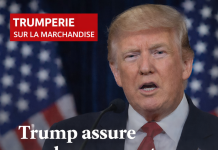
Trump says war is almost over
Donald Trump assures that the war with Iran is "almost over" and evokes a resumption of negotiations this week in Pakistan. Yet behind this spectacular statement, the facts tell another story. The ceasefire remains fragile, the American blockade of Iranian ports is intensifying, the Strait of Ormuz remains largely paralysed and the nuclear issue continues to block any agreement. Between political communication, maximum pressure and duress diplomacy, de-escalation remains possible without yet being acquired.
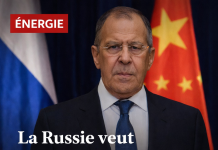
Russia-China: Energy as a lever
On a visit to Beijing, Sergei Lavrov assured that Russia could compensate part of the energy deficit caused to China by the Middle East war. This promise comes at a time when Moscow is seeking to consolidate its pivot towards Asia, while Xi Jinping is preparing a new first-rate diplomatic sequence, with Donald Trump expected mid-May and Vladimir Putin announced in the first semester. Behind the rhetoric of friendship, energy appears to be the true heart of the balance of power between Beijing and Moscow.
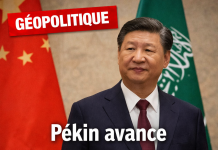
Beijing and the New Deal in the Middle East
The crisis around Iran and Ormuz reveals a new regional situation: Beijing is gaining ground in the Middle East without replacing Washington militarily. China takes advantage of the flaws of the American system, maintains ties with Tehran and the Gulf, and transforms every tension into a major diplomatic, energy and commercial lever.
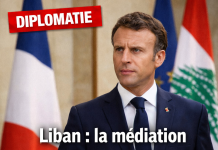
Lebanon: French mediation ousted
France does not participate in the new negotiating format opened in Washington between the United States, Israel and Lebanon. This absence contributes to the weakness of Lebanese diplomacy and marks a major break. However, Paris had co-sponsored the 2024 ceasefire, sat in its monitoring mechanism and attempted, until March, to defend a gradual exit from crisis. By accepting a framework without France, Beirut lost a Western diplomatic counterweight at a time when Israel imposed a military pressure discussion and UNIFIL was entering a scheduled phase of withdrawal.
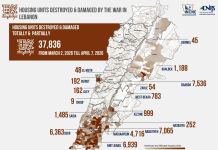
Conflict: 37,836 affected housing units in Lebanon
The latest update of the CNRS-L brutally places housing in the centre of the war in Lebanon. Between 2 March and 7 April 2026, 37,836 housing units were identified as destroyed or damaged. The number is massive, but its strength is mainly due to its rapid accumulation and geography: Baabda, Nabatiyeh, Bint Jbeil, Sour and Marjaayoun concentrate most of the damage. The 2023-2024 report remains essential to measure the scale of the shift, but the focus is now on this new sequence and what it announces for the recovery.
The couple (Trump; Netanyahu): Hitler of the 21st century?
In this text, Mohamed El Bachir describes Gaza as the heart of a global changeover, accuses Israel and its Western supporters, and sees in the confrontation with Iran and the Arab, Lebanese, Iraqi and Yemeni resistances the risk of a major regional war, or even of a lasting outbreak on the whole Middle East.
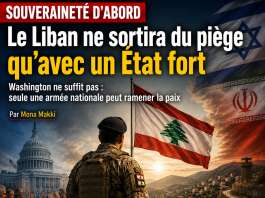
LEBAN FACE AT ITS ALLEGEANCE TEST — BETWEEN NATIONAL TREATY AND TRANSNATIONAL DERIVE
In the face of transnational allegiances, Lebanon can only preserve its sovereignty by reaffirming a single loyalty to the State. From the history of communities to current Hezbollah issues and regional influences, this text advocates active neutrality, control of acts and national exclusivity of strategic decision-making.
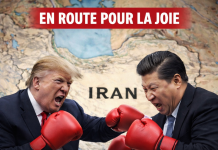
With the US blockade of Ormuz, towards a crisis between USA and China?
By blocking Ormuz and targeting China, Donald Trump turns the Iranian crisis into a threat of global conflict.
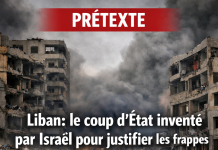
On 8 April, Israel did not foil a coup d’état in Lebanon: it crushed...
The Israeli account of a Hezbollah coup appears to be a pretext for disproportionate bombing of Lebanon. No credible evidence was produced, while the scale of the strikes against civilians fed accusations of war crimes.
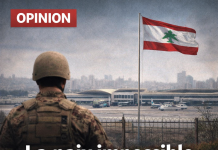
IMPOSSIBLE PEACE — CHRONICS OF A DISARMED STATE OF SUSTAINABLE RECOGNITION
Lebanon cannot guarantee peace without regaining the monopoly of force. This chronicle analyses a fragmented State, unable to fully control violence, and calls for a sovereign reconquest based on the control of arms, borders, financial flows and national political decision-making.



