




Negotiations in Washington: Beirut seeks a French counterweight
On the eve of further negotiations in Washington between Lebanon and Israel, Emmanuel Macron promised Nawaf Salam that France would help Beirut prepare its position, even without sitting directly at the table. This support is not symbolic. At a time when the United States is holding the format, where Israel retains the military advantage and where Lebanon arrives weakened by the war, Paris can still play a useful role: clarifying the Lebanese red lines, reintroducing the issues of sovereignty, Israeli withdrawal and the protection of civilians, and preventing negotiations from being reduced to an exclusively security agenda.
Death as a political project
This forum examines how sacrificial logic can transform death into a political project, weaken sovereignty, block the economy and lock Lebanon into permanent war. It opposes this drift a strategy of reconstruction based on life, state, justice, neutrality and common lasting prosperity.
Truce in Lebanon: Iran returns from the southern front
In Lebanon, on 21 and 22 April, a specific fear was revived: that of a truce that did not collapse by an official decision, but by a series of incidents that reconstituted the logic of war. Israeli strikes in the South, Hezbollah's response to northern Israel, bombing in West Bekaa, and then Donald Trump's extension of the ceasefire with Iran at Pakistan's request: the sequence reveals less than two separate crises than the same regional power ratio, which Washington tries to compartmentalize without really achieving it.
Truce in Lebanon: Iran returns from the southern front
In Lebanon, on 21 and 22 April, a specific fear was revived: that of a truce that did not collapse by an official decision, but by a series of incidents that reconstituted the logic of war. Israeli strikes in the South, Hezbollah's response to northern Israel, bombing in West Bekaa, and then Donald Trump's extension of the ceasefire with Iran at Pakistan's request: the sequence reveals less than two separate crises than the same regional power ratio, which Washington tries to compartmentalize without really achieving it.

Does the mirror close on Lebanon?
Lebanon faces a decisive choice: finally undertaking deep institutional reforms to restore its sovereignty, credibility and access to international aid, or sink into erosion. Justice, financial control, monopoly of force and political responsibility now become the conditions for any national renaissance for the country.
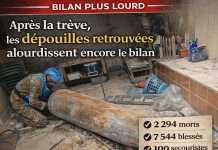
Lebanon: The rubble still delivers its dead
The ceasefire did not end the death count in Lebanon. It opened a slower and harder phase, that of the remains removed from the rubble, collapsed buildings and still difficult to access areas. In Tyre, Kfar Melki, Qadmous, Hayy al-Sellom or near the Qasmiyeh bridge, the rescue teams continue their research and reveal an incomplete human record. The health authorities recognize this themselves: the figures remain provisional until the rubble is lifted, the bodies are not extracted and DNA identifications are completed.
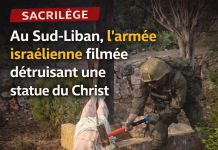
In Lebanon, the Calvary of Christ continues
The filmed destruction of a statue of Christ in Deir Siryan deeply shocked Christians in southern Lebanon. But for these border villages, the case far exceeds religious emotion. It adds to a series of tragedies that include the death of Abbé Pierre al-Rahi, the isolation of localities such as Rmeish, Debel and Ain Ebel, as well as the new threat of a return prevented by the yellow line imposed by Israel. It is a Christian presence in the South that is now feeling humiliated, vulnerable and threatened.
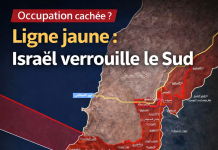
Yellow line: Israel locks South Lebanon
The yellow line imposed by Israel in southern Lebanon is already redefining the terms of the ceasefire. Presented as an advanced line of defence, it effectively prohibits the normal return of dozens of localities, maintains an Israeli military presence inside Lebanese territory and increases tension with Hezbollah as with the Lebanese State. Behind the route is the sovereignty, the reconstruction of the South and the future of 100,000 to 150,000 potential displaced persons.

In Lebanon, corruption never disappears: it returns in fragments
In Lebanon, corruption does not disappear: it returns in fragments, between the file of the Casino of Lebanon, suspicions about emergency aid and collapse of institutional trust. In the absence of clear judicial closures, each case feeds into a system where opacity, public waste and unfinished responsibilities remain the norm.

Lebanon: The politics of death or the courage to live
Opinion: Lebanon must emerge from a system where war, sacrifice and death serve as political language. The issue is not only safe. It is existential: to rebuild a State capable of protecting, integrating, giving a future and making life credible to all.

Pentagon: Hegseth’s Pulp Fiction Prayer
The sequence first looked like a viral curiosity. It quickly turned into a political controversy. By conducting a Christian prayer service at the Pentagon, Pete Hegseth recited a text inspired by the false verse popularized by Pulp Fiction, in a context of war with Iran and strong religious rhetoric at the top of the American military apparatus. Controversy goes beyond mere film borrowing: it opens up a debate on the boundaries between personal faith, language of war, popular culture and the exercise of power within an institution supposed to represent all the military.
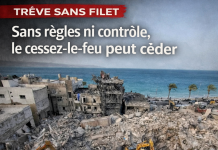
Can a truce without implementation architecture survive the ground?
The ten-day truce between Lebanon and Israel remains fragile for lack of implementation architecture. Without independent verification, clear rules, timetable, and humanitarian guarantees, the cease-fire is likely to be emptied by the ground, rival narratives and persistent ambiguity around Hezbollah and violations from hours to time.

France relegated, but not absent
France is no longer at the centre of the diplomatic sequence around Lebanon, but it has not disappeared from the game. Relegated behind Washington, it maintains decisive maps on the multilateral, Lebanese army, reconstruction and the form of a future stabilization framework in South Lebanon.
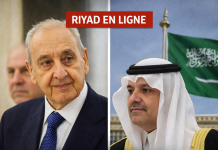
Riyadh Reactivates Lebanese Networks
Saudi Arabia reactivates its Lebanese networks in the midst of war and negotiation. By receiving Ali Hassan Khalil, close to Nabih Berri, Riyadh seeks to influence the ceasefire, contain an internal crisis in Lebanon and prevent a fragile de-escalation from opening a more serious political divide.



