Can Israel accept a limit on its operations in Lebanon?
Israel claims to want to preserve its freedom of action in Lebanon against Hezbollah, but the Iran-USA agreement changes the calculation. Washington wants to protect regional de-escalation, Tehran claims that Lebanon is included in the ceasefire and Beirut calls for a full withdrawal. Between targeted strikes, partial withdrawal, buffer zone and international surveillance, the Israeli strategy must now deal with a new constraint: not to defeat the regional agreement.
Stop fire in Lebanon: the five necessary guarantees
The ceasefire in Lebanon can only be achieved if it is based on concrete guarantees. The five minimum conditions are the complete cessation of strikes, the verifiable Israeli withdrawal, the safe return of the inhabitants, the clear role of the Lebanese army and the Finul, and a mechanism for resolving violations. Without these safeguards, the regional agreement announced between Washington and Tehran risks remaining a diplomatic formula with no lasting effect on the ground.
USA-Iran agreement: international community’s cautious reactions
International reactions to the US-Iran agreement combine relief and caution. France, the United Kingdom, the European Union, the United Nations and several Arab countries welcome an opportunity for regional de-escalation. But all insist on implementation, freedom of navigation in the Strait of Ormuz, Iran's nuclear issue and Lebanon's sovereignty. The Lebanese front remains the main test of credibility of the announced protocol.
Why Lebanon became the test of the Iran-USA agreement
Lebanon concentrates on the contradictions of the Iran-USA agreement. Tehran wants to include the Lebanese front in the de-escalation. Israel refuses to lose its freedom of action against Hezbollah. Washington seeks to preserve its deal with Iran without breaking with its Israeli ally. Beirut claims its sovereignty, but does not control the land alone. The ceasefire will therefore be judged in the South, in the villages, on the return roads and around the disputed Israeli positions.
USA-Iran agreement: Berri welcomes Lebanon clause
Nabih Berri welcomed the Memorandum of Understanding between the United States and Iran, stressing the Lebanon clause. For the President of Parliament, the Israeli aggression must be a central and binding part of the text. This position places Beirut at the heart of a diplomatic arm where Israel already challenges any limitation of its military action against Hezbollah.
Southern Lebanon: villages under alert before agreement
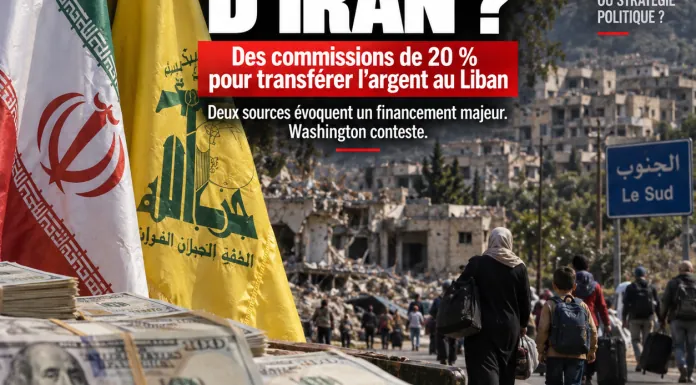
In southern Lebanon, the regional agreement expected on 19 June will be judged on the ground. The evacuation orders, the yellow line imposed by Israel, the roads cut off, the agricultural losses and the uncertain return of the internally displaced persons show that the ceasefire is only valid if it produces concrete guarantees. For Beirut, Israeli withdrawal, reconstruction and the role of the Lebanese army remain the minimum conditions for a return to stability.
Israel refuses the Lebanese side of the deal Iran
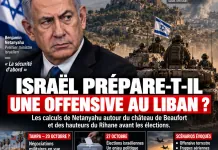
Israel hardened its position against the US-Iran agreement and refused to allow the Lebanese side to limit its military action against Hezbollah. Benjamin Netanyahu, Israel Katz, Benny Gantz and Itamar Ben-Gvir each defend, in their own register, the maintenance of freedom of action in Lebanon. This line places the Lebanese front at the heart of the arm between Washington, Tehran and Tel Aviv, while the implementation of the regional compromise remains fragile.
The Israeli strike on Beirut that made the United States fold
The Israeli strike on Beirut had an immediate political effect. By threatening to defeat the Washington-Theran deal, it pushed Donald Trump to speed up the conclusion of a reduced-to-essential compromise: stopping operations, reopening of Ormuz and subsequent negotiations on Iran's nuclear. The episode reveals a growing divergence between Benjamin Netanyahu's electoral calculations and those of the US president, under pressure before the midterms.
‘ALL THE PLACES WE BELONG
In Beirut, a city shaped by migration and diversity, the idea of belonging reflects the complex relationship between identity, uprooting and seeking its place in the world. Art lovers are invited to discover the exhibition ‘ALL THE PLACES WE BELONG
After the deal with Iran, what impact?
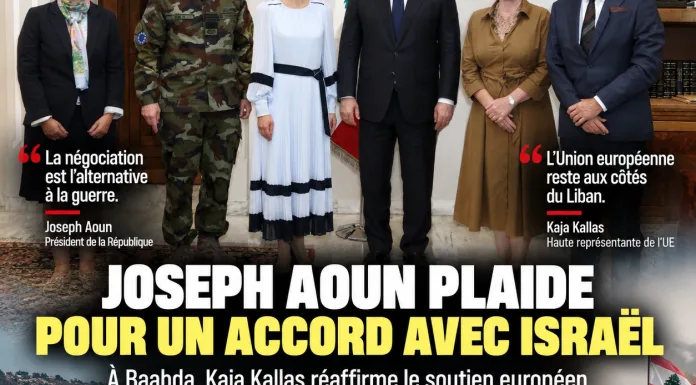
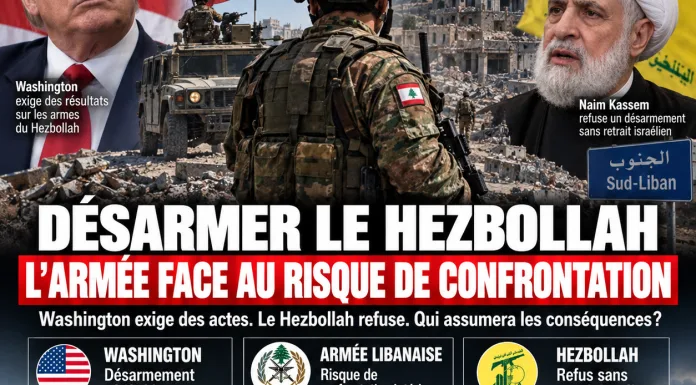
The deal with Iran does not end regional tensions. It suspends hostilities, reopens Ormuz and refers key issues to further negotiations. The United States can claim de-escalation, but it also appears to be constrained by the political, energy and military cost of the war. In the Gulf, the American umbrella is questioned. In Lebanon, Iran's claimed inclusion of the Lebanese front strengthens Hezbollah and complicates the line of Joseph Aoun and Nawaf Salam.
Press review: Lebanon at the centre of the arm between Washington, Tehran and Tel...
The Lebanese press review of 15 June 2026 shows a Lebanon placed in the centre of the arm between Washington, Tehran and Tel Aviv. Hits on Beirut, USA-Iran agreement, Israeli pressure in the South and ceasefire now condition regional balance and Lebanese sovereignty in the face of the risks of major escalation this week.
USA-Iran agreement: Lebanon between antagonistic readings
The US-Iran agreement announced in the night opens a major diplomatic phase, but its application to Lebanon remains uncertain. Washington highlights the reopening of the Strait of Ormuz and the end of the naval blockade against Iran. Tehran affirms that hostilities must cease on all fronts, including in Lebanon. Israel still claims its freedom of action against Hezbollah, at the risk of turning Beirut and South Lebanon into an immediate test of compromise.
Israel refuses to withdraw from Lebanon despite US-Iran deal
Despite the possible agreement between Washington and Tehran, Israel refuses to withdraw from Lebanon and intends to maintain its freedom of action against Hezbollah. This position weakens the US-Iran deal, as Tehran links de-escalation to the fate of the Lebanese front. Without Israeli withdrawal, the ceasefire may remain incomplete.
Trump blames Israel, Iran threatens to retaliate
Donald Trump strongly criticized Israel for his attacks on Beirut, according to Axios, while Washington and Tehran were trying to finalize an agreement. Iran is now threatening to respond, putting the risk of a resumption of regional war at risk. Israeli media also claim that Tehran rejected an offer of $12 billion not to attack Israel, an unconfirmed information.