






By Tasneem Elridi
Thousands of Lebanese families continue to suffer the consequences of an increasingly serious humanitarian crisis, despite the announcement of a ceasefire. According to recent reports by the United Nations and international organizations, the number of internally displaced persons now exceeds 1.049 million, while more than 130,000 internally displaced persons currently live in 632 collective shelters throughout Lebanon. Concerns are growing about the overpopulation of these centres and their increasingly limited capacity to respond to the needs of those receiving them.
Official data from the health sector indicate that 3,433 people have lost their lives and a further 10,395 have been injured since the escalation of hostilities in March. Children account for about 9% of all victims, while women account for almost 12%.
Health infrastructure and services also continue to be targeted. As at 1 June, 190 attacks on the health sector had been recorded, resulting in 128 deaths and 332 injuries.
Lebanon was already facing a serious economic crisis, an increase in poverty and the continuing consequences of the explosion in the port of Beirut, which had plunged many families to the brink of economic collapse. The recent outbreak of violence has only exacerbated the situation, forcing many families to choose between buying food, obtaining medicine, paying rent or meeting their basic needs.
A large-scale humanitarian response to increasingly complex crises
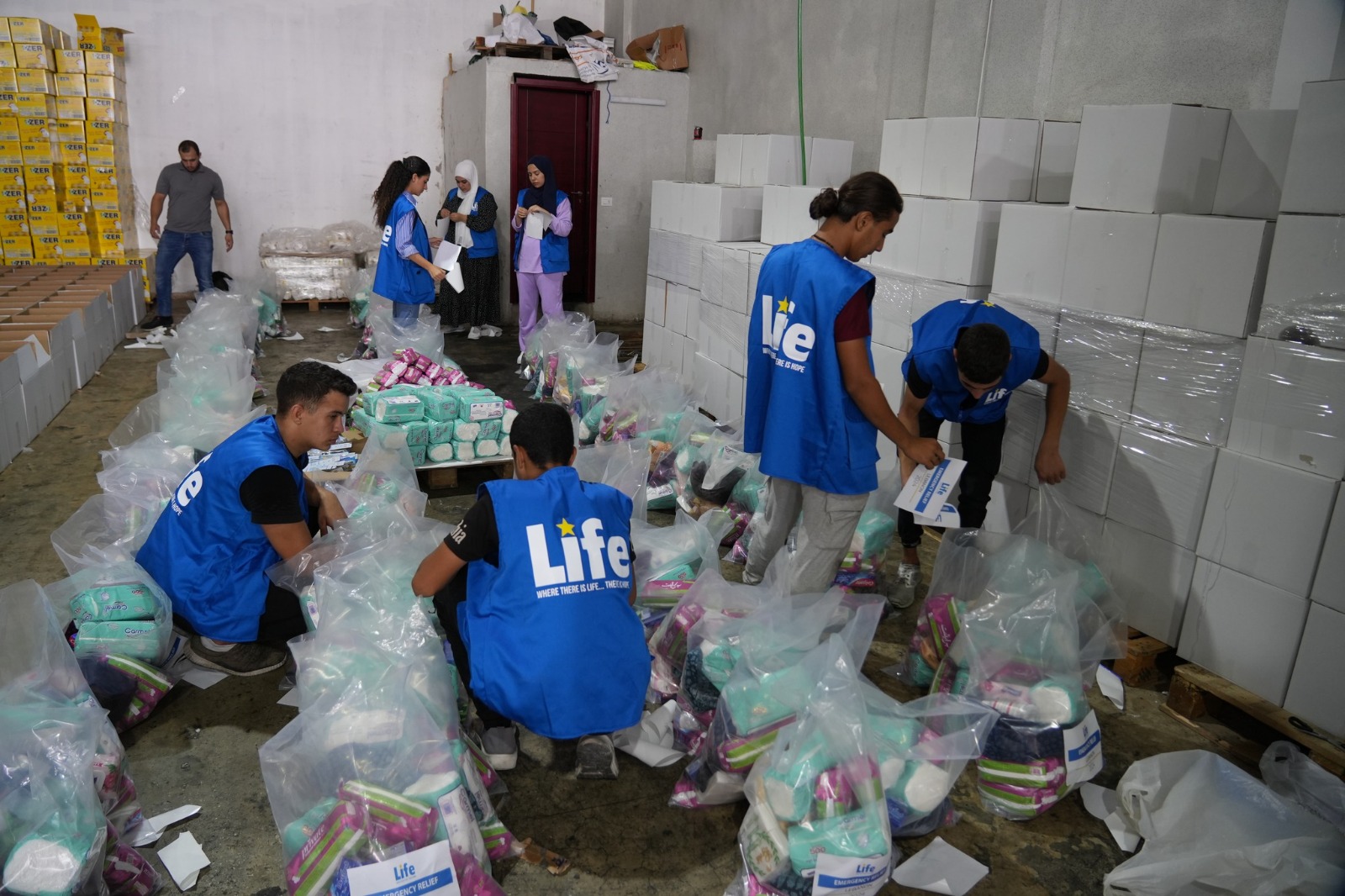
In response to these challenges,Life for Relief and Developmentconsiderably strengthened its emergency aid programmes throughout the year. The organization has intensified the provision of temporary shelters and tents, as well as the distribution of food packages, ready-to-eat meals, medical care, hygiene products, housing aids and essential items for infants. Thousands of vulnerable people affected by the crisis have benefited from this assistance, particularly in the most affected areas of Tripoli, Akkar and Tyre.
EngineerMohammed Al-Sharif, coordinator of the Life office in Lebanon, stressed that the magnitude of current humanitarian needs goes far beyond the framework of emergency aid and requires sustained support to enable local communities to recover and rebuild their future.
He explained that, for many Lebanese families, the ceasefire did not translate into a tangible improvement in their living conditions. Affected communities continue to face displacement, rising cost of living, damaged infrastructure and deteriorating economic and social conditions.
» Lebanese families are under increasing economic pressure, » said Al-Sharif. « The price of bread has increased by 12% in recent months, while fuel prices have risen by about 84% since mid-February. These increases significantly increased transport and production costs and further reduced household purchasing power. »
More than 1 million displaced persons and 632 shelters under high pressure
Mr. Al-Sharif said that charitable donations and contributions continue to play a key role in providing food aid, medical care, housing support and basic necessities to affected families. These efforts help restore stability, dignity and hope for thousands of Lebanese homes. However, a large part of the population continues to face economic, social and security challenges that require continued humanitarian assistance and long-term recovery programmes.
Referring to the health sector situation, he added:
» The repeated attacks damaged 17 hospitals, resulted in the complete closure of three hospitals and the disruption of 42 primary health-care centres. Health facilities are also facing an increasing shortage of essential medicines and medical supplies, which threatens the continuity of care, particularly for people with chronic diseases, pregnant women and children.
As a humanitarian organization, we continue to face repeated displacements caused by air strikes and evacuation orders. At the same time, the return of internally displaced persons to their communities remains limited due to damaged infrastructure, destroyed housing and persistent security risks. Host communities are also under increasing pressure because of the arrival of a large number of displaced families. »
For more information:
https://www.lifusa.org/lebanon-emergency-relief
https://lifeussa.org/#social-media