





State deficit, public debt, the Bank of Lebanon and banks in the manufacture of the Lebanese disaster
It is always reassuring, after a disaster, to find him a face.
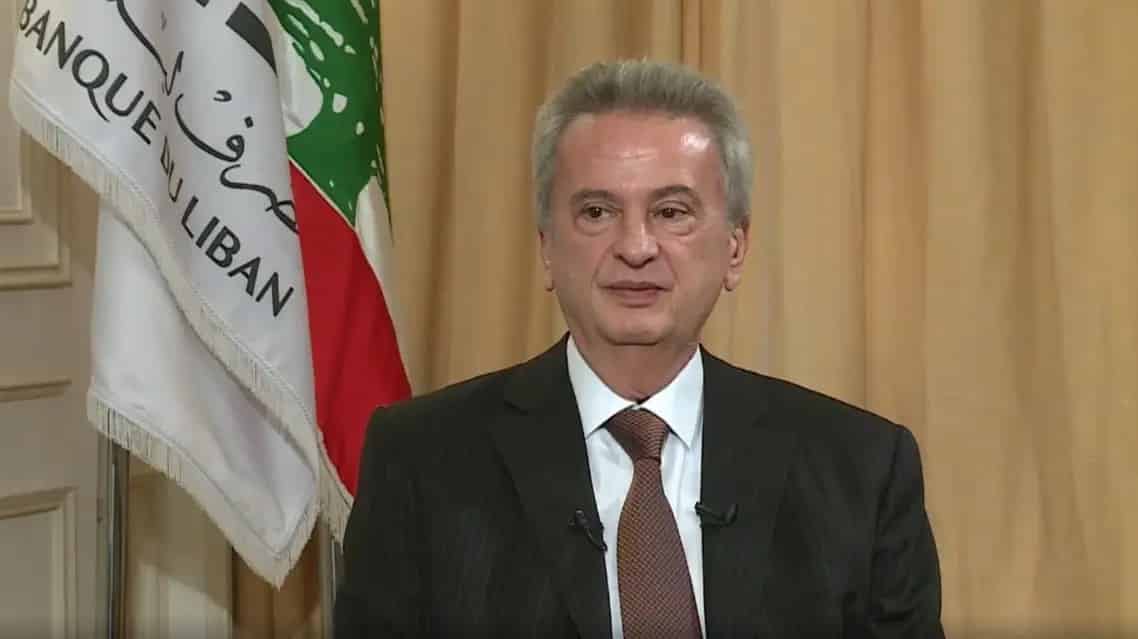
A face makes it possible to simplify history, to concentrate anger and avoid too disturbing questions. In the case of the Lebanese financial collapse, this face became that of Riad Salamé.
The former Governor of the Bank of Lebanon bears considerable responsibility. For three decades, he led the institution at the heart of the monetary and banking system. It has defended to the extreme an exchange rate which has become unsustainable. He agreed that the Central Bank should directly or indirectly finance a chronically deficit state. He encouraged commercial banks to invest ever more dollars with the BDL. He used increasingly expensive and opaque financial transactions to save time, preserve apparent reserves and maintain the illusion of a stability that no longer existed.
But recognizing this responsibility does not mean rewriting history.
Riad Salamé never voted a budget alone. He did not decide on the number of officials. It did not determine public sector wages. It did not impose subsidies on electricity in Lebanon. He did not choose fiscal policy. He did not spend alone on reconstruction. It has not passed laws allowing for debt. It did not approve eurobond issues alone. Nor did it oblige commercial banks to concentrate such a large share of their customers’ savings in government securities and investments with the Bank of Lebanon.
Riad Salamé was a central part of the system. He was neither the sole creator, the sole decision-maker, nor the sole beneficiary.
The real issue of the Lebanese collapse is that of a shared responsibility between governments, finance ministers, Parliament, the Bank of Lebanon, commercial banks and political forces that have for decades refused to link state spending with its resources.
The actions of Riad Salamé must therefore be judged. But we must also understand the machine in which these acts took place. Without this, his trial could become the alibi allowing all others to disappear behind him.
The deficit is the starting point of all history
Before we talk about the Bank of Lebanon, we have to talk about the state budget.
A budget deficit is not simply a negative figure in an accounting table. It represents money that the state spent without having previously collected it.
Where tax revenues are insufficient to cover wages, pensions, subsidies, transfers to public institutions, contracts, administrative expenditure and interest on debt, there is a shortage of money in the funds. This shortfall must be funded.
The State must then borrow.
But its annual need for funding is not limited to the year’s deficit alone. It must also repay or renew borrowings that mature. It must therefore find sufficient money to finance the new deficit, pay interest on the existing debt and refinance the old bonds that mature.
This is where the gear starts.
The deficit generates debt. Debt generates interest. Interest increases expenses. These expenditures exacerbate the deficit. The new deficit imposes new borrowings. These loans in turn generate new interest.
From a certain level, the country no longer borrows mainly to invest or build. He borrows to pay the cost of what he has already borrowed.
The distinction between primary and overall deficits is essential for understanding the Lebanese case. The primary balance excludes interest on debt. The overall balance includes them. As a result, a government can cover a significant portion of its current expenditure and still have a considerable overall deficit because interest absorbs its revenues.
The World Bank estimates that between 1993 and 2019, Lebanon accumulated a primary budgetary surplus of approximately £22,000 billion, down to some £5 trillion when treasury operations are integrated. However, over the same period, the aggregate cumulative deficit reached nearly Pound123 trillion and the government debt increased from about 48 per cent to 171 per cent of gross domestic product. The paradox is only apparent. It shows the enormous weight of interest, extrabudgetary operations and refinancing dynamics.
In 2019, the last year in which the Lebanese State fully honoured its debt service, interest accounted for about 10% of GDP and absorbed almost half of government revenue.
That is the real engine of the crisis.
Lebanon had to continually find new lenders to pay back the old ones, pay interest and maintain the functioning of the State. As long as the money entered the country, the system seemed viable. When dollar entries slowed down, its true nature appeared.
The reconstruction of Rafic Hariri and the founding choice of debt
From 1992, Lebanon had left fifteen years of war. Infrastructure was destroyed, administration disorganized, currency weakened and confidence almost nonexistent.
Rafic Hariri wanted to rebuild the country quickly, restore Beirut, modernize infrastructure and stabilize the pound. This ambition met a real need. Lebanon needed to rebuild its economy and restore public authority.
But reconstruction was largely financed by debt.
From 1992 to 1998, Rafic Hariri himself held the finance portfolio formally, while Fouad Siniora served as Minister of State for Financial Affairs. The period from 1993 to 1997 was marked by significant reconstruction expenditures, recruitment into civilian and security administrations and a clearly negative primary deficit.
The choice made at that time can be summed up in this way.
The government wanted to rebuild quickly without immediately imposing on the population the full tax cost of this reconstruction. So he preferred to borrow.
At the same time, the stabilization of the pound required high interest rates. Capital holders had to be persuaded to retain or place their money in Lebanon rather than transfer it abroad. Monetary stability was thus based on sufficiently attractive remuneration for deposits and public securities.
But the higher the rates, the higher the cost of debt service.
Fiscal policy therefore produced debt, while monetary policy aimed at stabilizing the currency made it more expensive.
The first trap was already closed.
The reconstruction was real, but it was accompanied by a model in which confidence depended on incoming capital, capital depended on the proposed returns and high yields fed the debt they were supposed to finance.
Georges Corm and the attempt to brake a machine already launched
Georges Corm became Minister of Finance in the government of Salim Hoss between December 1998 and October 2000.
This period tried to correct some of the imbalances. Investment spending was greatly reduced and some tax revenues increased. The World Bank describes the years 1998-2002 as the beginning of an undeclared form of austerity, marked by a contraction in capital spending and a reconciliation of the primary balance towards balance.
But it was already difficult to stop the debt.
Even when a government reduces its new spending, it remains obliged to pay interest from previous borrowings. It must also settle accumulated arrears and renew matured securities.
The year 2000 was marked by a further increase in the deficit, mainly due to the payment of previous arrears and various accounting and budgetary operations.
The braking attempt could therefore only produce its effects in the long term. Lebanese policy rarely reasoned in the long term. Each government inherited obligations created by its predecessors, while putting the cost of the present decisions on its successors.
Fouad Siniora, taxation and Paris II
Fouad Siniora occupied the full Ministry of Finance from 2000 to 2004 in the governments of Rafic Hariri.
His passage was marked by several attempts at consolidation, including the introduction of value added tax, the development of new tax revenues and the search for cheaper financing.
The Paris II conference allowed Lebanon to obtain international assistance and to refinance part of its debt on more favourable terms. The aim was not to immediately eliminate the debt, which had become impossible, but to reduce its cost and extend its maturity.
This policy provided a respite.
It did not transform the structure of the system.
Lebanon had started issuing Eurobonds in 1998, officially replacing a portion of the debt in more expensive pounds with a foreign currency debt. In fact, both components progressed in parallel. The foreign currency debt also exposed the State to an additional risk, since it had to find dollars to repay it.
Paris II saved time. But saving time is not a problem.
The announced privatisations were limited. Structural reforms remained incomplete. The electricity sector continued to generate losses. Administration remains expensive and inefficient. Growth remained largely dependent on foreign capital, real estate, consumption and banking.
The model therefore remained based on the same principle. New dollars were needed to ensure that the State, the Central Bank and banks could continue to honour their commitments.
Elias Saba and Dimianos Kattar, a transition period
Elias Saba occupied the Ministry of Finance between October 2004 and April 2005. Dimianos Kattar succeeded him for a few months.
These mandates were too short and were registered in a political period too upset to allow a profound transformation of the economic model.
The assassination of Rafic Hariri, the Syrian withdrawal, political tensions and the recomposition of power placed public finances in an environment of great instability.
But institutional continuity remained.
Interest always had to be paid. Debt securities had to be renewed. Banks remained the main purchasers of government debt. The Bank of Lebanon remained the backbone of the system.
The change of minister did not change the mechanics.
Jihad Azour, Paris III and the 2006 War
Jihad Azour was Minister of Finance between 2005 and 2008 in the government of Fouad Siniora.
His mandate was marked by the 2006 war, destruction, political blockade and the Paris III conference. The government sought further international assistance in exchange for commitments to reform, fiscal consolidation and restructuring of certain public sectors.
But the reforms were once again hampered by political divisions.
Paris III provided funding and confidence, but the country remained unable to deal with the main causes of its deficits. The electricity sector remained in deficit. Staff costs remained high. Tax revenues remained insufficient and unevenly distributed. The State continued to borrow.
An international conference can finance a transition. It cannot replace the will to govern indefinitely.
Foreign money has often enabled Lebanon to avoid difficult decisions. Each capital injection temporarily reduced the pressure and became a new reason to postpone the reforms.
Muhammad Shatah and Rayah Haffar al-Hassan, years of false improvement
Mohamad Chatah occupied the Ministry of Finance between 2008 and 2009. Rayah Haffar al-Hassan succeeded him until 2011.
This period benefited from significant capital inflows. After the international financial crisis of 2008, some of the regional and Lebanese capital sought investments offering both attractive remuneration and the appearance of bank security.
The deposits progressed. Economic activity grew. Nominal GDP increased and the ratio between debt and GDP decreased.
But the debt itself did not disappear.
The decline in the ratio created an illusion of deleveraging. In reality, the denominator, that is, GDP, was growing rapidly as the stock of debt continued to grow.
The World Bank sees this as a missed opportunity. The external conditions were favourable, capital entered and the country could have used this window to strengthen its revenues, reduce its deficits and reform its public services. He preferred to take advantage of the abundance of cash.
The mistake was to confuse liquidity with solvency.
Because the money was available, it was believed that the debt was sustainable. But a debtor is not solvent simply because he still finds lenders.
Mohamad Safari and the turnaround after 2011
Mohamad Safadi was Minister of Finance between 2011 and 2014.
From 2011, the regional environment changed sharply. The war in Syria disrupted trade, tourism, land transport and confidence. The massive influx of refugees placed additional pressure on infrastructure and public services. Growth is slowing down. Tax revenues stagnated.
Between 2011 and 2016, tax revenues decreased significantly as a proportion of GDP. The sectors that continued to develop, including real estate, were undertaxed or supported by subsidized credit mechanisms.
At the same time, natural capital inflows began to slow down.
The problem was no longer just a budgetary one. It also became external.
Lebanon was much more important than it was exporting. It therefore had to find dollars not only to finance the State, but also to finance its trade deficit, maintain the parity of the pound and meet the foreign exchange demands of the economy.
The same bank deposits in dollars were thus required to fund two simultaneous deficits.
They financed the state deficit.
They also financed the country’s external deficit.
The International Monetary Fund will later talk about Lebanon’s « twin deficits », the budget deficit and the current account deficit, both dependent on deposit inflows.
When these inflows began to slow down, the Bank of Lebanon did not impose an immediate correction. It has sought to replace the more natural dollars with dollars attracted by ever higher returns.
This is when the system began to change its nature.
Ali Hassan Khalil and the final acceleration
Ali Hassan Khalil was Minister of Finance from February 2014 to January 2020, under the governments of Tammam Salam and then Saad Hariri. His mandate covers much of the final phase before the collapse and the first years of Michel Aoun’s presidency.
It would be unfair to attribute to him alone the decisions of whole governments and a fragmented Parliament. A Minister of Finance does not create spending alone, does not vote alone in laws and does not control decisions imposed by political parties.
But its long passage to the ministry corresponds to the period during which imbalances became uncontrollable.
Lebanon had operated for more than 12 years without a regular budget adopted before the vote on the 2017 budget. This prolonged absence weakened budgetary discipline, parliamentary control and transparency of spending.
The new wage grid for the public sector, recruitment despite the announced restrictions and the persistence of transfers to Electricity in Lebanon are still aggravating public finances.
In 2018, the budget deficit reached about 11% of GDP, up from 8.6% in 2017. In particular, the IMF attributed this deterioration to rising public wages and new recruitment despite the official freeze. Public debt was expected to reach nearly 155% of GDP by the end of 2019.
The case of Electricity of Lebanon alone summarizes part of the state’s bankruptcy.
Over a decade, budgetary transfers to EDL averaged about 3.8 per cent of GDP, almost half of the overall budget deficit. In 2012 alone, they reached nearly $2.2 billion.
For years, the state has therefore been in debt to finance electricity that it does not even provide properly.
The population paid for the first time by taxes and public debt, then for the second time by private generators’ bills.
It was no longer just a deficit. It was an organized transfer of resources to a system unable to produce the expected service.
Michel Aoun’s presidency and the political impossibility of correcting the system
Michel Aoun joined the presidency in October 2016. At that time, the crisis had not yet erupted openly, but the main imbalances were already visible.
Capital inflows were slowing down. The balance of payments was deteriorating. Banks were becoming increasingly exposed to the Bank of Lebanon. The cost of maintaining parity was increasing. The state continued to accumulate deficits.
This period would have required an exceptional political response.
It would have been necessary to reduce the deficit, reform electricity, stop customer recruitment, recognise the losses of the Central Bank, gradually restructure banks and negotiate an orderly correction before the reserves were exhausted.
Nothing deep enough was undertaken.
Starting in the second quarter of 2016, the Bank of Lebanon launched massive financial engineering operations. The initial amount is estimated at approximately $13 billion. They provide banks with very high earnings and wages to bring new dollars to the Central Bank.
These operations did not create new wealth.
They moved the risks between the balance sheets of banks, the Bank of Lebanon and the State. They attracted currencies in exchange for promises of ever more heavy future remuneration.
The government was getting time.
Banks were getting profits.
The Bank of Lebanon was getting dollars.
The political class avoided reforms.
But the future cost of the system was increasing.
In 2018, when the government failed to normally place its Eurobonds on the market, the Bank of Lebanon signed them up itself before reselling a part of them at reduced prices to attract currencies. It thus became the dominant buyer of government debt.
Monetary financing was no longer an exceptional support. It became a condition for the survival of the system.
Ghazi Wazni, the default and missed opportunity of 2020
Ghazi Wazni was appointed Minister of Finance in January 2020 in the government of Hassan Diab.
He inherited an already collapsed system.
Banks had imposed informal restrictions on depositors. The book had begun to lose its value. Reserves were declining. The state no longer had access to markets.
In March 2020, Lebanon defaulted on its euro bonds.
The government then adopted a recovery plan that recognized the existence of very large losses in the financial system. Negotiations began with the International Monetary Fund.
But a battle began immediately around the size of the losses and their distribution.
The government provided an estimate. The Bank of Lebanon challenged certain elements of this. Banks refused to allow their shareholders to bear most of the losses. Policymakers feared the consequences of restructuring on their most influential interests, networks or depositors.
The IMF considered that the magnitude of the losses presented by the government plan was generally credible, while requesting further work.
But Lebanon failed to build a common position.
The moment when the losses should have been recognized was transformed into a confrontation between institutions. Each sought to avoid losses appearing in his own balance sheet.
The government wanted to transfer part of the cost to the Central Bank and banks.
Banks invoked the State’s debt to the BDL.
The Central Bank sought to protect its balance sheet and the continuity of the banking sector.
The applicants had no equivalent institutional power.
The result was a slow liquidation of their assets by inflation, currency depreciation and withdrawals at rates far below the market.
Youssef Khalil and the end of the Aoun Presidency
Youssef Khalil succeeded Ghazi Wazni in September 2021 in the government of Najib Mikati. He was still Minister of Finance when Michel Aoun’s presidency ended in October 2022.
In April 2022, the Lebanese government reached a preliminary agreement with the IMF on a programme of approximately $3 billion.
The agreement required, inter alia, bank restructuring, recognition of losses, a credible fiscal strategy, reform of the Bank of Lebanon, adoption of a budget and unification of exchange rates.
But the reforms were moving too slowly.
By September 2022, the IMF noted that the majority of pre-programmed actions had not been implemented. He stressed the need to recognize bank losses, respect the legal order of claims, protect small depositors and limit the use of public assets.
At the end of the Aoun presidency, Lebanon had therefore not yet restructured its debt, remedied the Central Bank, recapitalized banks or established a legally clear distribution of losses.
The crisis had changed shape, but it continued.
Before 2019, it was hidden in the balance sheets.
After 2019, it was transferred to the population.
Did the Ministry of Finance have authority over the Bank of Lebanon?
This issue is at the heart of institutional responsibility.
The answer cannot be an absolute yes or an absolute no.
The Bank of Lebanon is legally a public institution with administrative and financial autonomy. The Governor has extensive management powers. It legally represents the Bank, applies the Currency and Credit Code and implements the decisions of the Central Council.
As a result, the Minister of Finance cannot normally call the Governor and impose a daily monetary decision, interest rate or bank circular.
But the BDL was not separated from the state.
The Governor is appointed by decree of the Council of Ministers on the proposal of the Minister of Finance. The Director General of the Ministry of Finance and the Director General of the Ministry of Economy shall be a voting member of the Central Council of the Bank of Lebanon. The Council shall lay down monetary and credit policy and shall decide in particular on requests for loans from the public sector.
The Currency and Credit Code also provides for a government office at the Central Bank, attached to the Ministry of Finance.
The Commissioner is responsible for overseeing the accounts of the BDL and ensuring that the law is enforced. He may not intervene directly in the management, but he may request the Governor to suspend a decision which he considers to be contrary to the laws or regulations and refer the matter to the Minister of Finance.
The IMF further notes that certain foreign exchange operations aimed at ensuring currency stability required the agreement of the Minister of Finance. It considers that the Ministry’s participation limited the operational autonomy of the Central Bank.
The BDL was therefore neither a mere management of the Ministry of Finance nor a completely independent institution from the government.
It was in an ambiguous area.
The governor had considerable personal power, while the government had means of appointment, representation, control and influence.
This ambiguity made it easier for everyone.
When the results seemed positive, political power welcomed monetary stability.
When the losses occurred, governments claimed that the Central Bank was autonomous.
For its part, the Bank of Lebanon could invoke the needs of the State to justify its interventions, while claiming its autonomy when asked for accounts.
Autonomy became an excuse for the government.
The need to finance the State became an excuse for the Central Bank.
The Governor’s Double Constraint
The most profound problem was the dual function of the Bank of Lebanon.
The BDL was first the state bank.
She was her cashier, financial agent, advisor and a key player in public debt management. It organized Treasury bill auctions, intervened in securities markets and facilitated funding for government needs.
But she was also the bank of the banks.
It had to regulate commercial establishments, monitor their strength, ensure their liquidity, protect depositors and intervene as lender of last resort in the event of a crisis.
Both missions can coexist as long as the state remains solvent and banks are sufficiently diversified.
They become contradictory when the state is chronically in deficit and banks are its main creditors.
As a state banker, Riad Salamé was supposed to help the Treasury find money.
As a regulator of banks, it should have prevented banks from unduly concentrating their customers’ deposits in the debt of the same State.
It should therefore ask banks to finance the State while protecting them against the risk posed by that State.
It had to support the value of public bonds because they constituted a significant part of banks’ assets.
He had to protect the banks because their collapse would have destroyed the deposits and the economy.
It had to maintain the exchange rate because a devaluation would have revealed the inability of the State, the BDL and banks to honour their dollar commitments.
The Central Bank was both the firefighter responsible for extinguishing the fire and the fuel storage facility.
If it stopped financing the State, it might be lacking.
If the State were lacking, banks suffered massive losses on their public securities.
If banks were threatened, the Central Bank had to help them.
But to help them, it had to mobilize resources that it had already used to finance the state and defend the currency.
Riad Salamé was thus locked in a double constraint.
Refusing to finance the state could immediately cause sovereign default, bank collapse and the fall of the pound.
Continued funding delayed the crisis, but increased the final amount of losses each year.
He chooses to delay.
This is where a major part of its responsibility lies.
He could have said publicly that the Central Bank could no longer finance deficits. He could have refused certain operations. It could have revealed more clearly the deterioration of net reserves. It could have required a recovery programme from governments and Parliament.
But such a refusal would have triggered earlier the crisis that the entire political class was trying to avoid.
Closed circle between depositors, banks, BDL and state
The operation of the system was relatively simple in principle.
Individuals, businesses and the diaspora deposited their dollars in commercial banks.
Banks placed a large portion of these dollars with the Bank of Lebanon or in government securities.
The Bank of Lebanon used its foreign exchange resources to defend the exchange rate, support banks, directly or indirectly finance the Treasury and meet the external needs of the economy.
The State used the borrowed funds to finance its deficits, pay interest and repay old debts.
For the chain to continue, new deposits had to be constantly attracted.
In February 2020, according to the World Bank, banks’ exposure to the state and the Bank of Lebanon amounted to approximately 68.2 per cent of their assets, of which nearly 56 per cent to the central bank alone. At the same time, the BDL had become the dominant buyer of public securities.
The balance sheets were therefore intertwined.
The State debt was an asset for the Central Bank and banks.
Bank investments in BDL were assets for banks, but debts for the Central Bank.
Client deposits were debts to banks.
When the State could no longer repay, the value of the assets held by the banks and the BDL collapsed.
When the BDL could no longer return all the dollars placed by the banks, they could no longer return their depositors’ dollars.
The depositor considered himself to be the creditor of his bank.
In reality, his money had gone through several balance sheets before being absorbed by government financing, maintaining the exchange rate and losing the system.
Commercial banks were not just victims
Nor can the Lebanese banks present their participation as an obligation.
They voluntarily purchased public securities and placed considerable amounts from the Bank of Lebanon because the yields were attractive.
They made high profits.
They distributed dividends.
They accepted an exceptional concentration of risks.
They knew that their profitability depended increasingly on the State and the Central Bank rather than on financing the productive economy.
The regulator should have imposed greater caution on them.
But the banks themselves also had a responsibility to protect the deposits entrusted to them.
They could not ignore that a return much higher than international rates necessarily corresponded to a higher risk.
The system worked because everyone found its immediate interest.
The State was finding funding.
The Central Bank found dollars.
Banks found returns.
Policy makers found ways to postpone reforms.
Depositors were paid higher than those offered abroad.
But the risks were pushed back to the future, until the day the future arrived.
Collective responsibility does not mean equal responsibility
To say that responsibility is collective does not mean that all actors are equally responsible.
Riad Salamé is responsible for the decisions taken at the head of the Bank of Lebanon, the continued maintenance of an unsustainable exchange rate regime, the development of financial engineering, the opacity of the Central Bank’s balance sheet and the increase in foreign currency liabilities.
Finance ministers and successive governments are responsible for deficits, unrealistic budgets, debt, the absence of tax reform and the continued use of bank financing.
Parliament is responsible for having voted or tolerated expenditure, borrowing and budgetary arrangements, but also for having allowed the country to function for years without a budget normally adopted.
Political parties are responsible for clientelist recruitment, contracts, subsidies, blocking reforms and protecting particular interests.
Commercial banks are responsible for having overexposed their customers’ savings to the State and the Central Bank.
The oversight bodies are responsible for failing to exercise their prerogatives effectively or for remaining silent.
The responsibilities are therefore different, but they converge.
Riad Salamé was the monetary engineer of the system.
Governments were the budgetary producers.
The banks were interested in it.
Parliament gave it its legal framework.
Political forces consumed their resources.
The Still Missing Trial in Lebanon
The real trial of the Lebanese crisis cannot be limited to examining Riad Salamé’s personal fortune or any commissions that he is accused of.
These files are important and must be tried. But they are not enough to explain the disappearance of deposits and the collapse of a country.
Each budget, debt issue, Treasury advance, Bank of Lebanon subscription, financial engineering operation and Central Council decision must also be reviewed.
It is necessary to determine which ministers have warned, who have agreed, who have signed and who have closed their eyes.
Minutes of meetings between the Department of Finance and the BDL must be found.
It must be understood why the Commissioner of Government was unable or unwilling to exercise full control.
It is necessary to analyse the successive renewals of the governor’s mandate and to identify those who supported him when his policy arranged the whole system.
Banks should be asked why they have placed such a proportion of their clients’ funds with a single direct or indirect debtor.
Finally, it is necessary to determine how the profits were distributed during the favourable years and how the losses were then transferred to the depositors and the public.
Riad Salamé must answer, but the others also
Lebanon will not find the truth by replacing a system of responsibility with the account of a single culprit.
Riad Salamé must answer for his decisions.
He must explain why he continued to finance the State.
He must explain why he maintained the exchange rate.
He must explain how financial engineering was designed.
He must explain what he knew about the real state of reserves and when he understood that the Central Bank could no longer return the money received from the banks.
But Finance Ministers must also respond.
Heads of government must respond.
The members of the Central Council must respond.
Bank managers must respond.
Parliamentarians who voted on expenditures and borrowing must respond.
Parties that imposed recruitment and blocked reforms must respond.
The Lebanese financial crisis was not born of a man who allegedly acted alone in a closed room.
It was born out of the meeting between a state living above its means, a central bank that concealed the cost of this incapacity, banks attracted by exceptional profits and a political class that preferred to borrow time rather than govern.
Riad Salamé’s trial is necessary.
But if it becomes the way to avoid the trial of governments, ministers, banks and the entire political system, it will not be an act of justice.
It will become the last concealment operation of a regime which, after having placed a whole population in bankruptcy, would still seek to make believe that only one man would be responsible for it.