




Bayeux Tapestry enters the British Museum
"The Tapestry of Bayeux entered the British Museum "Wondered between 1067 and 1079, probably commanded by Odon de Bayeux, half brother of William the Conqueror.
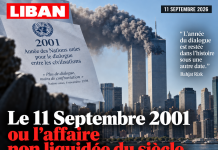
September 11, 2001 or the unliquidated case of the century.
Michel Edmond Ghanem On 4 November 1998, the UN General Assembly adopted without a vote a resolution proclaiming the year 2001 as the United Nations Year of Dialogue among Civilizations. The text had been proposed a few weeks earlier by Iranian President Mohammad Khatami, in explicit response to Samuel Huntington, including Le Choc des [...]
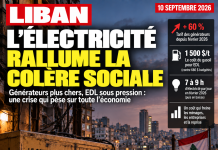
Lebanon: Electricity lights up social anger
In Lebanon, the decline in electricity supply from Lebanon sends households and businesses back to private generators at a time when their official tariff increased by almost 60 per cent between February and August 2026. Joe Saddi has embarked on long-blocked institutional reforms, but EDL must simultaneously absorb a shock on diesel, public unpaid payments, network losses close to 40% and a massive need for investment. The electricity crisis now acts as a private tax on consumption, investment and competitiveness.
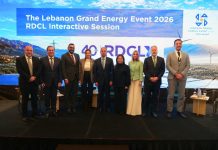
The RDCL is organizing an interactive session on the seven-axis reform plan for the...
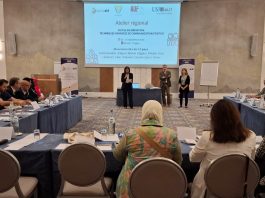
The Gathering of Lebanese Leaders and Business Leaders (RDCL) organized an interactive session for its members, entitled "The Seven-Axis Energy Sector Reform Plan: Private Sector Contributions and Emerging Business Opportunities", at the InterContinental Phoenicia Hotel in the framework of the "Beyrouth Forum for Business Development" [...]

Alfa-Touch: what’s behind the recharges
The controversy over Alfa and Touch reloads is part of the information announcing the end of the dollar transfers and the obligation to buy complete cards. The Ministry of Telecommunications confirms that it is willing to put an end to a revenue leak in the prepaid system, but no final formula is yet agreed. The real issue is whether subscribers will be able to keep the small rechargings that allow them to adapt their spending to their means.
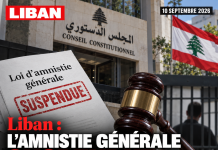
Lebanon: General amnesty suspended
The Lebanese Constitutional Council suspended the application of the general amnesty law recently passed by Parliament, pending its decision on the appeal against the text. The measure does not yet constitute a cancellation, but blocks the effects of the law and any possible releases that may result from it. The decision revives a long-standing debate on overcrowding, prolonged preventive detention, regional claims, victims' rights and fear of a new culture of impunity.
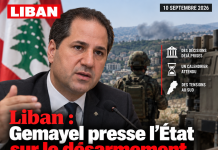
Lebanon: Gemayel Presses State on Disarmament · Global Voices
The President of Kataëb, Sami Gemayel, addressed a parliamentary question to the government in order to obtain a precise state of implementation of decisions on the arms monopoly. He asked what had been carried out, what obstacles delayed the plan entrusted to the army and what timetable the executive had set. In a context of intensified Israeli strikes in the South, Gemayel asked why disarmament would not begin in areas not directly affected by the fighting.
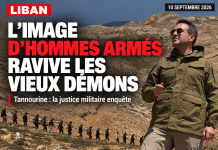
Lebanon: The image of armed men revives old demons
Images showing MP Kataëb Nadim Gemayel with about 30 men, including several armed and some masked, led to an investigation by the military prosecutor. Intelligence services must identify participants and verify the legality of weapons. In a Lebanon in the midst of debate on the state monopoly of force and the disarmament of Hezbollah, the sequence also revives a particularly sensitive memory: that of militias and armed demonstrations of civil war.
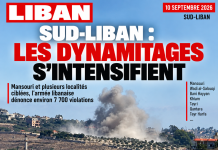
South Lebanon: Israeli dynamiting intensifys
Israeli forces are continuing their blasting and demolitions in several locations in southern Lebanon. On Wednesday, 9 September, Mansouri concentrated a particularly intense campaign, with 29 explosions recorded on part of the day, while other operations affected Wadi al-Saluqi, Bani Hayyan, Khiam, Tayri and Qantara. The Lebanese army now accuses such destruction of preventing its deployment, causing further displacement and directly jeopardizing the return of the inhabitants.
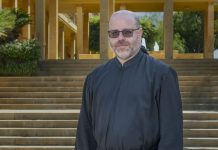
Father Joseph Moukarzel, Rector of the Holy Spirit University of Kaslik (USEK), elected President...
Beirut, 10 September 2026 – Father Joseph Moukarzel o.l.m, Rector of the Holy Spirit University of Kaslik (USEK), was elected President of the Regional Conference of Rectors (C2R) of the member institutions of the Middle East AUF for a two-year term, covering the period 2027-2028. His election took place after a show of hands vote in [...]
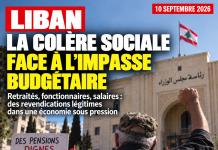
Lebanon: Social Anger at the Fiscal Stalemate · Global Voices
The mobilization of retired soldiers places the social issue at the centre of Lebanese news. Behind the demands for pension revalorisation appears a much more difficult equation for the government: the economy is expected to contract by 6.4% by 2026, inflation reaches 17.5% and wage expenditure already absorbs a major part of the budget. Raising wages further therefore means finding new revenue without reviving inflation, weakening the pound or increasing the taxation of a population that has already experienced seven years of crisis.
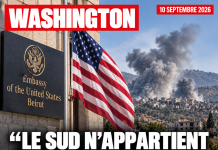
Washington: South does not belong to Hezbollah
The US Embassy in Beirut states that Lebanese prefer state institutions over Hezbollah weapons and that southern Lebanon does not belong to militias or regional actors. This particularly direct message comes in the wake of a statement by the Lebanese army accusing the intensification of Israeli attacks of threatening existing arrangements and impeding its efforts to restore stability in the South.
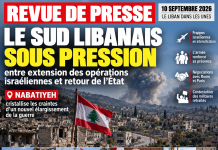
Press review: Southern Lebanon under pressure between expansion of Israeli operations and return of...
On 10 September 2026, the Lebanese press placed the South at the heart of the news. Nabatiyah feared an expansion of Israeli operations while the army intensified its deployment. Joseph Aoun defends the negotiation, Rome and Paris become key diplomatic stages and social tensions are also gaining the country.

Midterms : Trump plays the election auction
Less than two months before the mid-term elections on November 3, Donald Trump hardened his strategy to try to preserve Republican majorities in Congress. The president promised $5,000 per adult if his party won and said that the war against Iran would end after the election. Behind these spectacular announcements is a deeper issue: to avoid a defeat in the House, or even in the Senate, paralyzing the last two years of his presidency and prematurely opening the battle of his succession.



