





Trump speaks to Damascus about Hezbollah
Donald Trump claims to have spoken with Syrian President Ahmed al-Charaa about the confrontation with Hezbollah. This statement, reported by Reuters, introduces Damascus into the Lebanese case as Washington seeks to preserve its agreement with Iran and contain Israeli strikes in Lebanon. For Beirut, this track is sensitive: it affects Lebanese sovereignty, the memory of Syrian tutelage and the risk of a regional arrangement without the Lebanese State.
Trump accuses Israel of killing civilians in Lebanon
Donald Trump sent a rare public criticism to Israel about his military methods in Lebanon. By denouncing the destruction of residential buildings to target Hezbollah members, the US President places the issue of Lebanese civilians at the centre of a sensitive diplomatic sequence. For Beirut, these statements confirm a reality that has been going on for months: Israeli strikes affect not only military objectives, but entire neighbourhoods.
South Lebanon: Iran-USA deal energized as Washington begins to pressure Tel Aviv
South Lebanon remains under high tension after a night of Israeli strikes and exchanges of fire with Hezbollah. Mifdoun, Choukin, Rihane, Hadatha-Haris and Kfar Tebnit are sectors affected or reported by Lebanese and international media. Iran warns that continued Israeli attacks could threaten the momentum with Washington. The United States, on the other hand, is multiplying the pressure signals on Israel before the expected signing of the agreement.
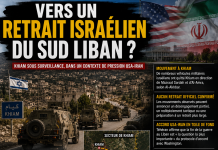
South Lebanon: Towards an Israeli withdrawal?
The reported withdrawal of many Israeli vehicles from Khiam to Mazraat Sardah and Al-Amra revives the hypothesis of an early withdrawal from southern Lebanon. No global departure is confirmed, but the diplomatic sequence has changed. Iran claims that the end of the war in Lebanon is the central issue of the agreement with Washington, while the Israeli press refers to pressure on Netanyahu. The visa file of Itamar Ben Gvir adds a political signal to the tensions between Washington and Israel's hard wing.
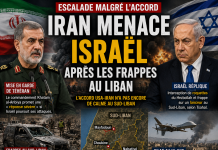
Iran threatens Israel after the strikes in Lebanon
The Iranian army threatened Israel with a "severe response" after strikes in southern Lebanon killed at least four people in Mayfadoun and Choukin. This warning comes despite the announcement of an agreement between Washington and Tehran to open a regional de-escalation. Israel claims to have intercepted Hezbollah rockets and destroyed a launcher, while Iran now demands Israeli withdrawal from occupied areas in Lebanon.
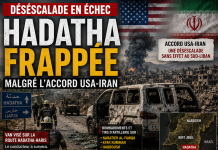
South Lebanon/Hadatha: 18 dead after raids
The Civil Defence identified 18 martyrs in Hadatha following Israeli attacks on that town in Bint Jbeil District. This local preliminary assessment does not only concern the strike on Tuesday against a van on the Hadatha-Haris road, whose driver survived before being evacuated by the Lebanese army. Bombardments also targeted Nabatiyah al-Fawqa, Kfar Rumman and Habbush.
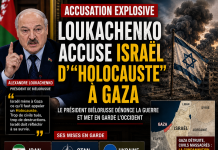
Lukashenko accuses Israel in Gaza
In an interview with Al Arabiya English since Minsk, Alexander Lukashenko delivered a charge against Israel, the United States and NATO. The Belarusian president called the Israeli actions in Gaza a "Holocaust", denounced the American attack on Iran as a "fatal mistake" and warned that direct intervention by the Atlantic Alliance in Ukraine could lead to a nuclear confrontation. He also apologized to Volodymyr Zelensky and assured that Belarus did not want to go directly to war.
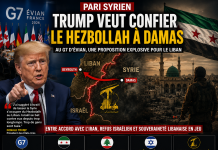
Trump wants to entrust Hezbollah to Syria by invading Lebanon
Donald Trump said, on the sidelines of the G7 Summit in Evian, that he suggested that Israel leave Syria "to occupy" Hezbollah in Lebanon. The U.S. President believes that the confrontation between Israel and the Shi'a movement has lasted too long and cost too many lives. This declaration comes as Washington defends a framework agreement with Iran, Israel refuses to withdraw from Lebanon and Beirut demands the exclusive return of the State to its territory.
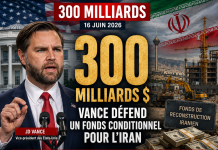
Iran : Vance evokes a 300 billion fund
US Vice President JD Vance said Iran could access a $300 billion reconstruction fund if Tehran met its obligations under the Washington agreement. The US administration insists on the conditionality of the mechanism and states that it would not be a direct payment of US public money. However, the issue remains politically sensitive due to sanctions, Iranian nuclear power, Tehran's regional role and the Lebanese front.

Lebanon: Aoun and Salam frame Washington after Islamabad · Global Voices
The communiqué issued after the meeting between Joseph Aoun and Nawaf Salam sets the five constants of the Lebanese position before the Washington negotiations. Lebanon calls for a final stop to fire, the Israeli withdrawal from the occupied territories, the deployment of the army to international borders, the return of Lebanese prisoners and the launching of reconstruction. Behind this brief formulation, Beirut seeks to frame a regional sequence opened by the American-Iranian agreement.
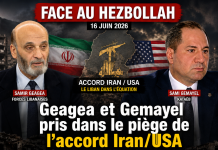
After Islamabad: Geagea and Gemayel facing Hezbollah
The Lebanese forces of Samir Geagea and the Sami Gemayel Kataëb responded to regional agreements by placing Hezbollah at the centre of the Lebanese debate. Both parties refuse to allow a ceasefire to re-establish the old security balance. They call for state monopoly of arms, Israeli withdrawal, resumption of the decision to war and institutional reconstruction. But the regional sequence imposes a difficult political terrain on them.
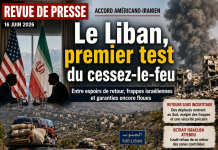
Press review: Lebanon faces immediate test of the American-Iranian ceasefire
Lebanon became the first test of the American-Iranian ceasefire announced on 16 June 2026. Between the hasty returns of the displaced, persistent strikes, Israeli refusal to withdraw and expectations of American guarantees, Beirut remains suspended from a regional agreement that it has not negotiated but which it pays the immediate human and political price.
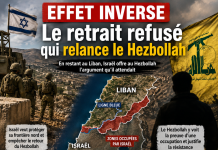
Israeli refusal to withdraw from Lebanon strengthens Hezbollah
The Israeli refusal to withdraw from Lebanon risks strengthening Hezbollah instead of weakening it. By maintaining positions in southern Lebanon, Israel wants to protect its northern border and prevent the return of the Shiite movement near the Blue Line. But this presence offers the party a powerful political argument, complicates the debate on its weapons and is also part of an Israeli electoral sequence marked by security, the Netanyahu coalition and the prospect of a vote by October 2026.
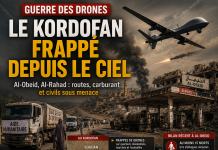
Sudan: Drones change war in Kordofan · Global Voices
Drones in Sudan transform the war in Kordofan. In Al-Obeid, the strikes hit gas stations, neighbourhoods, convoys and civilian gatherings. On the Al-Rahad axis, attacks on trucks and roads show a new way to cut the flow without occupying the terrain. The Rapid Support Forces are accused of several attacks, but the army also uses this technology on other fronts. Civilians remain the most exposed.



