





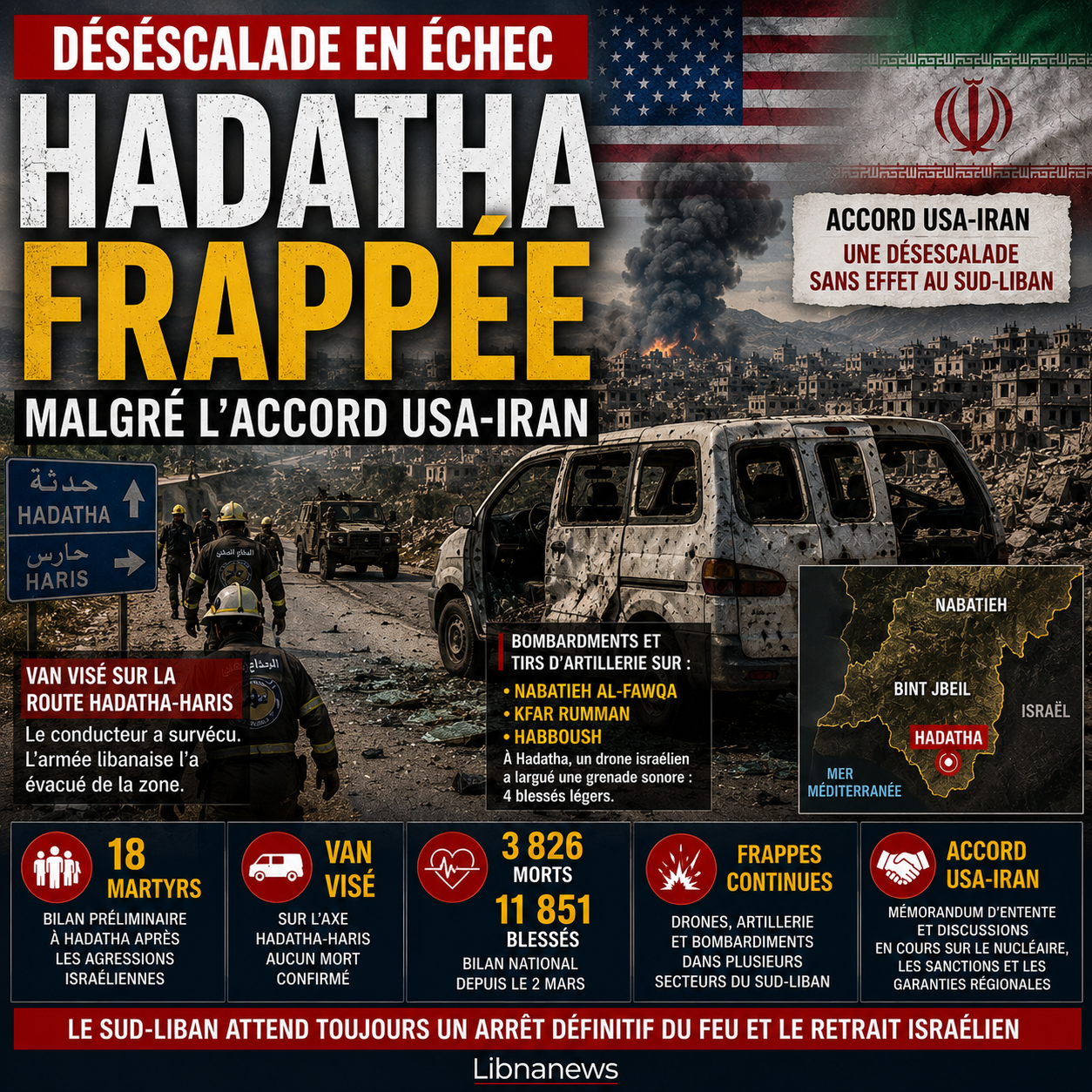
On Tuesday, 16 June, the Civil Defence conducted an initial assessment of its tour in the town of Hadatha, Bint Jbeil District. According to this preliminary assessment,18 deaths have been recorded so farfollowing Israeli aggression against the locality. This figure relates to the accumulated balance of attacks on Hadatha and does not refer only to the strike reported in the morning against a van on the Hadatha-Haris road.
Earlier that day, Israeli forces had targeted a van on the Hadatha-Haris axis. The driver survived the attack. The Lebanese army then intervened to evacuate from the area.
Shooting and bombing in several sectors
Israeli military pressure continued in other locations in southern Lebanon. Artillery fire was reported on Nabatiyah al-Fawqa, Kfar Rumman and Habbush. Al-Manar also reported an incident in Hadatha, where a sound grenade dropped by an Israeli drone slightly injured four young people.
These attacks occur as southern Lebanon continues to be subjected to targeted strikes, intermittent bombardments and destruction operations in certain border areas. Several villages in Bint Jbeil District remain at particular risk, despite ongoing diplomatic discussions on a more sustainable ceasefire.
National balance sheet continues to grow
The Lebanese Ministry of Health has announced that the cumulative impact of the Israeli offensive against Lebanon, from 2 March to 16 June, is now increasing3,826 martyrs and 11,851 injured.
This national review confirms that de-escalation announcements have not yet produced real calm on the ground. In Hadatha, the Civil Defence tour highlights the extent of local human casualties, while the van strike shows that southern roads remain dangerous for civilians.
The situation remains volatile in Bint Jbeil and around Nabatieh, where people are still waiting for concrete guarantees of halting the bombing, Israeli withdrawal and safe return to the affected localities.
The USA-Iran agreement against the background
These attacks occurred as Washington and Tehran signed a memorandum of understanding to open a phase of de-escalation after several months of regional war. The agreement includes a gradual resumption of traffic in the Strait of Ormuz and a second phase of discussions on nuclear issues, sanctions and regional safeguards.
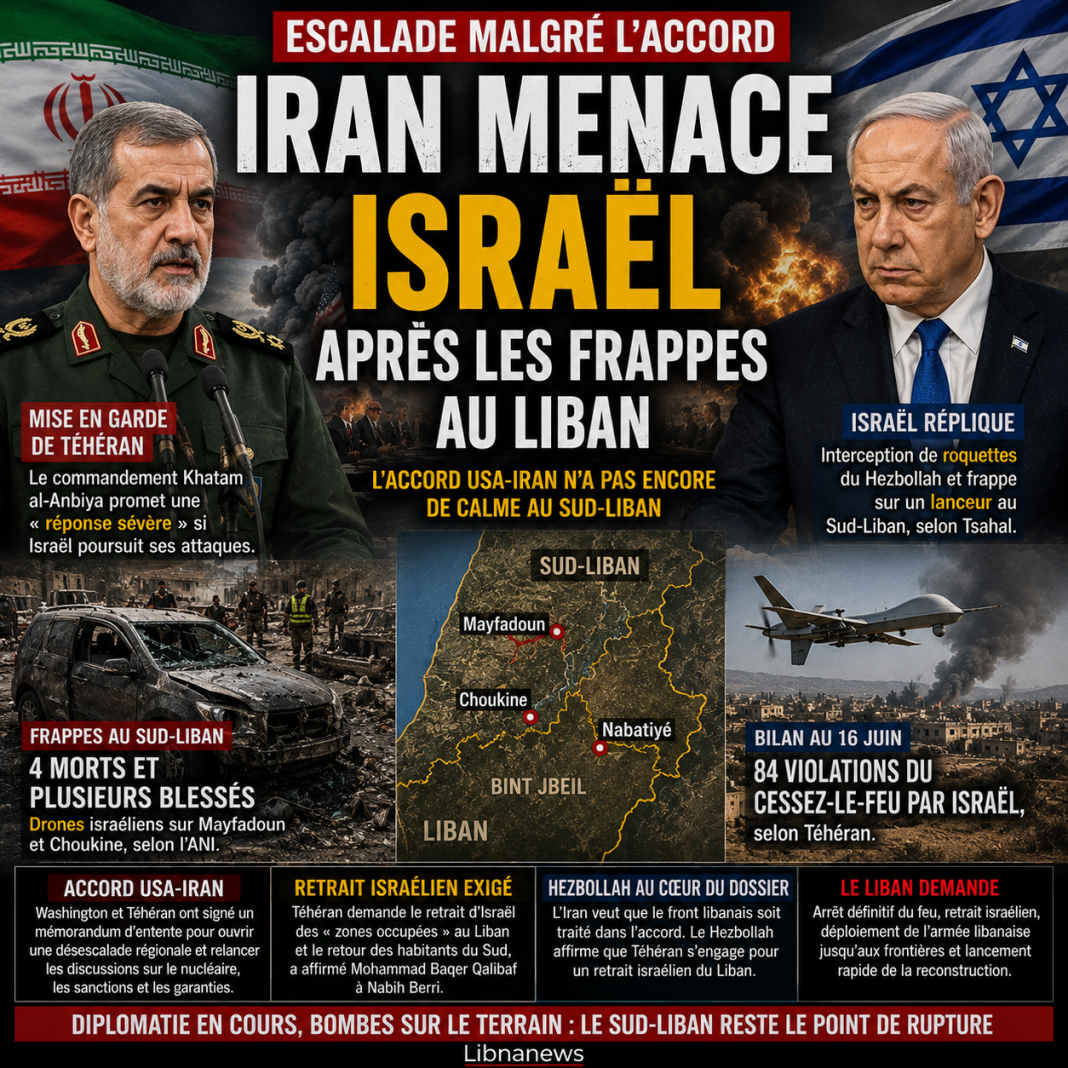
Lebanon plays a sensitive role in this process. Tehran insists that the Lebanese front be dealt with within the broader framework of the agreement with Washington. Hezbollah claims that Iran has pledged to push for an Israeli withdrawal from Lebanon in the next discussions. This interlocking shows that South Lebanon is not just a local front. It remains linked to the arm of war between Iran, the United States and Israel.
On the ground, however, de-escalation remains incomplete. Israel continues to carry out strikes and still refuses a total withdrawal of certain positions in Lebanon. This situation complicates Beirut’s efforts, which call for a permanent cessation of fire, Israeli withdrawal, the full deployment of the Lebanese army to international borders and the launching of reconstruction.
For Hadatha, the emergency remains first humanitarian. Civil Defence continues its tours, the wounded are evacuated when conditions permit, and the inhabitants are still waiting for lasting calm. The US-Iran deal could open a diplomatic window, but Tuesday’s bombings show that this window has not yet translated into real security in the southern villages.