







Aoun and Berri reactivate the Iranian channel
Iran-Lebanon communication resumes at the institutional level, with two calls from Abbas Araghchi to Joseph Aoun and Nabih Berri. The official comments emphasize Lebanon's sovereignty, regional stability and the immediate application of the cessation clause against the country. This renewed contact comes after a period of diplomatic tension, but the central issue remains the practical application of the ceasefire in southern Lebanon.
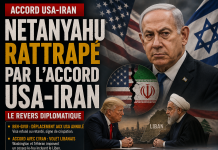
Netanyahu caught up in the US-Iran agreement, tries to defend its record by continuing...
Benjamin Netanyahu finally reacted to the agreement between the United States and Iran. The Israeli Prime Minister claims that his country will remain in Lebanon, preserve its freedom of military action and prevent Tehran from obtaining nuclear weapons. But his speech reveals a major contradiction: Israel wanted to eliminate the Iranian threat and keep its hand in Lebanon, while the Iranian-American protocol already limits its diplomatic margin.

Kuwait: mass withdrawals of nationality
Kuwait issued a new set of eight decrees withdrawing or revoking the nationality of 2,193. The authorities describe this campaign as a correction of fraudulent cases and prohibited dual nationalities. Critics see it as a political, social and identity hardening, in a country where citizenship opens up access to essential rights. The current wave questions the lack of judicial control, the risk of statelessness and the future of the Kuwaiti model.

The war in Ukraine between military freeze and economic war
The war in Ukraine is entering a phase where the front moves less quickly, while economic pressure against Moscow is intensifying. Kyiv seeks to strengthen its position before any negotiations can take place, without formally giving up its occupied territories. Westerners now target Russian revenues, banks, maritime services and the ghost fleet. A lasting ceasefire will depend as much on security assurances as on the maintenance of sanctions.

Council of Ministers: truce, reviews and reforms
The Lebanese Council of Ministers discussed the latest political, security and humanitarian developments, pending the effective implementation of the ceasefire announced between the United States and Iran. Nawaf Salam called for continued efforts to secure Israeli withdrawal, release of prisoners and reconstruction. The government also slowed down on official reviews, while approving several administrative, financial and public files, including the fund audit, Beirut Airport, Central Inspectorate, pricing policy and waste management.
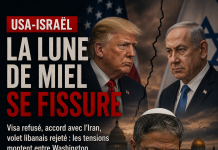
USA-Israel: Honeymoon cracks, Ben Gvir without visa
The announced cancellation of Itamar Ben-Gvir's trip to the United States, due to difficulties in obtaining a visa according to the Israeli press, comes in a moment of tension between Washington and Tel Aviv. The agreement between the United States and Iran, which includes Lebanon, provokes open opposition from several Israeli ministers. The Ben-Gvir case thus becomes the symptom of a damaged honeymoon, without formal strategic rupture.

In Lebanon, drone noise is using nerves
In Lebanon, the sound of drones became a war without immediate explosion. Permanent buzzing sets up a state of alert, disturbs sleep, weakens children, exhausts parents, workers and rescue workers. This sound monitoring transforms the daily into a possible hit. Even in the event of a ceasefire, the cessation of bombings will not be enough if overflights continue to keep civilians in fear.

Palestine: international law without effect
In Palestine, international law is pervasive in speeches, resolutions and judicial decisions. It condemns occupation, settlements, forced transfers and arbitrary detention. Yet its concrete effect remains limited. Palestinian prisoners remained numerous, settlements were progressing and sanctions remained targeted. The gap between legal norms and political constraints feeds into a lasting crisis of credibility of international institutions.

Can Lebanese diplomacy speak with one voice?
Lebanese diplomacy must find a common line while the Iran-USA agreement places the country at the centre of a regional game that it does not control. The Presidency, the Government, Parliament and Hezbollah share some demands, such as the Israeli withdrawal and the cessation of strikes. But the divides remain deep on weapons, Iran and negotiations with Israel. The withdrawal of the Iranian ambassador's accreditation also deprived Beirut of a useful official channel with Tehran.

Lebanese Army: return under caution
The Lebanese army calls on the displaced inhabitants of the South not to return too quickly to the border villages, despite information about a regional ceasefire. The communiqué issued by the leadership emphasizes the risks of Israeli violations, aggression and unexploded ordnance. This puts civil security at the heart of the transition from diplomatic announcement to reality on the ground.

Nabih Berri, forced passage of Lebanese stability
Nabih Berri again becomes a central player in the post-regional agreement. President of Parliament since 1992, Head of Amal and interlocutor of the Shiite tandem, he occupies a place that neither Joseph Aoun, Nawaf Salam, nor foreign mediators can ignore. Its role can facilitate the ceasefire, the return of the South and the dialogue on arms. But its proximity to Hezbollah, internal criticism and international expectations set clear limits.

Stop fire in Lebanon: the five necessary guarantees
The ceasefire in Lebanon can only be achieved if it is based on concrete guarantees. The five minimum conditions are the complete cessation of strikes, the verifiable Israeli withdrawal, the safe return of the inhabitants, the clear role of the Lebanese army and the Finul, and a mechanism for resolving violations. Without these safeguards, the regional agreement announced between Washington and Tehran risks remaining a diplomatic formula with no lasting effect on the ground.

USA-Iran agreement: international community’s cautious reactions
International reactions to the US-Iran agreement combine relief and caution. France, the United Kingdom, the European Union, the United Nations and several Arab countries welcome an opportunity for regional de-escalation. But all insist on implementation, freedom of navigation in the Strait of Ormuz, Iran's nuclear issue and Lebanon's sovereignty. The Lebanese front remains the main test of credibility of the announced protocol.
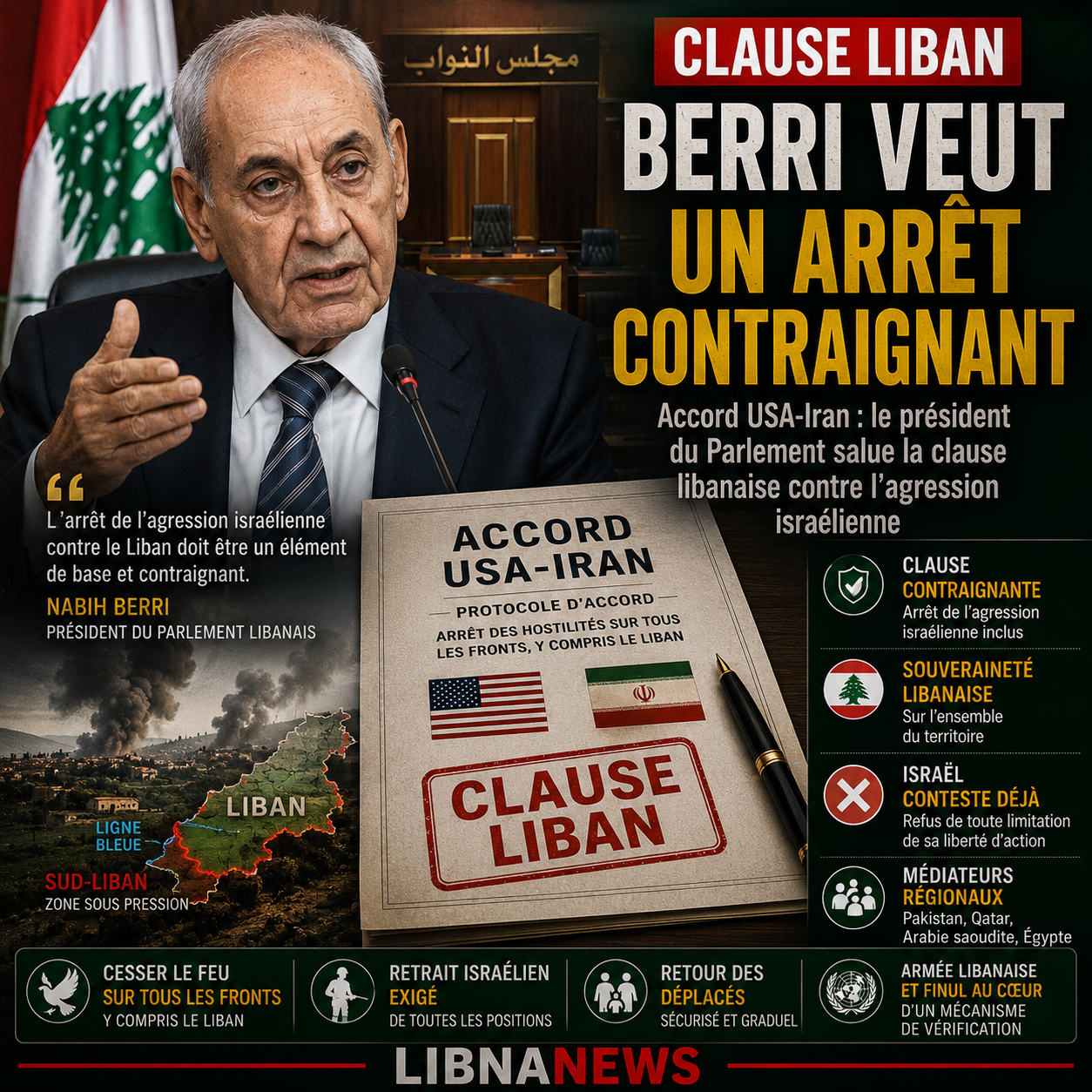
USA-Iran agreement: Berri welcomes Lebanon clause
Nabih Berri welcomed the Memorandum of Understanding between the United States and Iran, stressing the Lebanon clause. For the President of Parliament, the Israeli aggression must be a central and binding part of the text. This position places Beirut at the heart of a diplomatic arm where Israel already challenges any limitation of its military action against Hezbollah.



