Crime of 8 April: How Israel attempted to break the Iranian-American de-escalation by attacking...
#8Aprilexplained: A ceasefire between Washington and Tehran did not mean regional peace, but it profoundly changed the political framework of the war. In this analysis, Israel had an interest in breaking this sequence before it settled, as it reduced its narrative margin, increased its diplomatic isolation and risked loosening the political fabric around Hezbollah in Lebanon. An escalation of magnitude could then serve not only to resume the military initiative, but also to push Iran and Hezbollah to react, in order to bring them the political cost of breaking up the Iran-American process, especially at the sensitive moment of the Islamabad discussions.
Israel claims 1,400 Hezbollah fighters killed: a military story challenged by the magnitude of...
The Israeli army claims to have killed more than 1,400 Hezbollah fighters and destroyed more than 4,300 infrastructure in South Lebanon. But these figures, which cannot be independently verified, face another reality: about 1,700 deaths in Lebanon since 2 March, more than 1 million internally displaced persons and recent strikes on densely populated areas that have caused hundreds of victims. A critical reading is required in the face of a highly calibrated war communication.
Nabatiyah: at least 17 dead in an Israeli strike against the Serail, among them...
An Israeli strike on the Nabatiyeh Government Serail killed at least 17 people, according to the latest available, still provisional. The victims include members of the State Security Service and, according to initial information, other Lebanese security personnel. The attack this time strikes the administrative and security heart of the state in South Lebanon, and further weakens the Israeli version of a strictly targeted war.
Naim Qassem displays Hezbollah of challenge and endurance
Naim Qassem hardened the tone in a speech to the Lebanese, between tribute to the victims, refusal of concessions and political challenge to Israel.
The new oil order
The war around Iran is no longer limited to a temporary surge in energy prices. It is already reshaping the mechanisms of world crude trade. With paralysed Ormuz Strait, disorganized maritime flows, more expensive physical cargoes and persistent tensions over inflation, the oil order is entering a more political and fragmented phase. This recomposition could have a lasting impact on global growth, monetary balance and the strategic position of the United States.
The need for international military aid to help the Lebanese State restore its lost...
Can Lebanon regain its sovereignty without international military assistance? Faced with a weakened state, paralysed institutions and the domination of a parallel armed force, the restoration of public authority appears to be the first condition for a return to stability, democracy and international trust.
Trump settles his accounts between NATO and Maga
Trump is targeting NATO and several Maga influencers after Iran's war and a truce that divides its allies as its base.
Lebanon: Bishops of France call to pray Saturday for peace
The Conference of Bishops of France calls on Catholics to gather Saturday, April 11 at 6 p.m. to pray for peace in Lebanon. In a statement issued on Thursday, Cardinal Jean-Marc Aveline expresses his sadness, indignation and solidarity after the Israeli strikes of 8 April. He condemned an operation which he considered intolerable, called for respect for international law and also called for support for the East Work to help Lebanese people.
Lebanon: After a day of fire, provisional record exceeds 300 deaths
The results of the Israeli strikes of 8 April in Lebanon now exceed 300 deaths according to the Ministry of Health. This increase confirms the magnitude of mass carnage, while relief efforts continue to search under the rubble and Lebanese hospitals remain under continuous extreme pressure.
Paris hardens the tone: the EU-Israel agreement could be reopened after the strikes in...
France has significantly tightened its position after the Israeli strikes in Lebanon. The spokesperson for the Quai d'Orsay, Pascal Confavreux, felt that a rediscussion of the Association Agreement between the European Union and Israel could not be excluded, given the seriousness of the events in Lebanon and the situation in the West Bank. If a suspension would remain difficult to obtain, because it presupposes unanimity among the 27 Member States, the political signal sent by Paris is clear: the strikes on Lebanon now weigh on the institutional relationship between Europe and Israel.
Israel-Lebanon direct negotiations next week?
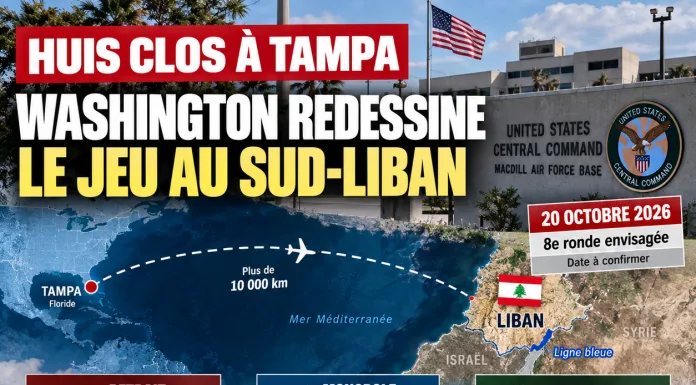
Direct Israel-Lebanon negotiations could start in Washington next week, in a very unfavourable context in Beirut.
Netanyahu wants to negotiate under fire: why Israel pushes Lebanon to an unbalanced face-to-face
Netanyahu wants to negotiate under fire in Lebanon to isolate the Lebanese file from the regional framework and regain control of a politically strengthened Hezbollah.
WHO warns about exhaustion of medical stocks in Lebanon
The World Health Organization warns about the critical state of the hospital system in Lebanon. At its site, the institution states that access to essential care is increasingly under threat, that several hospitals have been closed or damaged, and that critical stocks need to be replenished urgently to avoid shortages and interruptions of treatment. If the exact formula on a lack of supplies "in the next few days" has not been found as such, the background of the alert is well present in the official WHO documents
Lebanon at 6 p.m.: still active front, threatened Beirut, still fragile negotiations
At 6 p.m., Lebanon remained caught between war and diplomacy. The southern front remains active, the southern suburb of Beirut remains under Israeli threat, and hospitals are still facing the shock of Wednesday's bombings. At the same time, Joseph Aoun claims that the proposal for a ceasefire with Israel and for direct negotiations is beginning to receive a positive response. But no agreement is yet formalized, and Washington and Israel continue to exclude Lebanon from the truce with Iran.