



Lebanon: How Washington would have dismantled the format of the five before taking control...
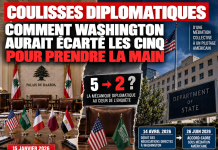
Washington reportedly sought, even before Joseph Aoun's election, to reduce the five to a Saudi American tandem. The Lebanese President reportedly resisted on 15 January. A few months later, direct negotiations with Israel placed the United States at the centre of a deeply transformed diplomatic architecture around the Lebanese issue.
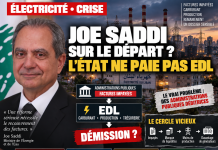
Joe Saddi on the departure? Behind the threat of resignation, the battle over financing...
Joe Saddi reportedly started to evoke a possible resignation on the background of a financial impasse at Electricity Lebanon. Public administrations would not pay their bills while EDL must finance fuel and production. Behind the possible departure of the minister is the credibility of the electricity and financial recovery of the Lebanese State.
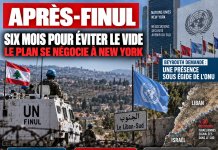
Six months to avoid the vacuum in South Lebanon: the underside of the transition...
A six-month extension of UNIFIL is being circulated as a transitional scenario to avoid a security vacuum in South Lebanon after 2026. Beirut calls for an international presence under UN auspices, while diplomats, regional and Western partners are still discussing the future mechanism, based on persistent Israeli positions in the South.
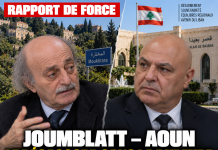
Walid Jumblatt and Joseph Aoun: behind the disagreement, a battle in the state square,...
Walid Jumblatt assumed his differences with Joseph Aoun without joining a front against Baabda. Disarmament of Hezbollah, Israeli withdrawal and Syrian recomposition explain this cautious line. Mukhtara defends the strengthening of the state, but refuses a method likely to provoke internal confrontation or to lock Lebanon in new sustainable regional axes.
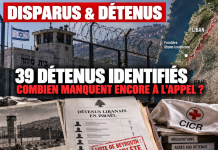
Lebanese detainees in Israel: Beirut list is incomplete and actual number is unknown
At least 39 Lebanese are listed as being detained in Israel, but Beirut still lacks an exhaustive list. Recent releases revealed several detainees who were missing from the available files. Behind this provisional figure remains a major unknown: how many missing Lebanese are in fact currently detained in Israel?

Beirut: Arrested after fatal stone-throwing
Internal Security Forces arrested a man suspected of repeated stone-throwing attacks on vehicles in Beirut. One of the projectiles killed Mohammad Hamza on 12 September. After another incident on 21 September, the suspect was arrested in Sabra and the surveillance was strengthened.
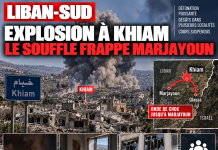
Explosion in Khiam: damage to Marjayoun
A powerful explosion in Khiam causes damage to Marjayoun and Qlayaa and leads to the suspension of classes in a school.

From Beirut to the European courts: what case is behind the new financial procedure?
A new financial procedure reported in Beirut could cross several European investigations targeting Lebanese financial officials, banks and large capital flows. Between freezing assets, the Salamé case, the Forry case and the French, Swiss and Luxembourg investigations, several avenues emerge without still allowing to formally identify the procedure concerned today.
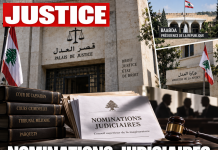
Judicial Appointments in Lebanon: Discreet Dealings Behind the New Judicial Map
The Supreme Council of the Judiciary approved partial judicial appointments following close negotiations between judicial and institutional officials. Behind the final unanimity, several strategic positions at the Court of Cassation, the Military Tribunal and the Public Prosecutor's Office reveal the delicate balances of the new Lebanese judicial map.
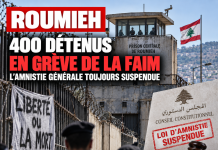
In Roumieh, 400 prisoners on hunger strike
Some 400 prisoners in Roumieh are on hunger strike after the suspension of the general amnesty law by the Constitutional Council.
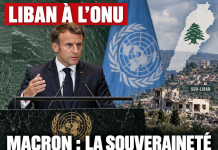
Macron defends Lebanon’s sovereignty at the UN
At the UN, Emmanuel Macron defended Lebanon's sovereignty, criticized Israel's strategy and linked Hezbollah's disarmament to the return of the state.

A human musical ceremony in Rowan, in support of Lebanon and the European Lebanese...
A human musical ceremony organized by CHOR’HUS-Jujat and Orchestra hospitals and the University of Rowan Normandy, in support of humanitarian action in Lebanon, was held in the French city of Rowan in an initiative that brought together music and solidarity. The ceremony was held at the Saint-Maclou church in Rowan, with the participation of musicians, juvies and single scholars, as part of an evening to the Lebanese European Medical Association (ELMS) to support its humanitarian work and initiatives in [...]
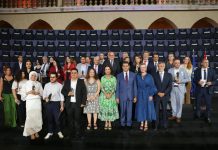
The European Union awards journalists from Lebanon, Palestine, Syria and Iraq at the 2026...
On 21 September 2026, the European Union Delegation to Lebanon and the Samir Kassir Foundation announced the results of the 21st edition of the Samir Kassir Prize for Press Freedom, at a ceremony in the gardens of the Sursock Palace in Beirut. Created and financed by the European Union, this award is recognised as [...]
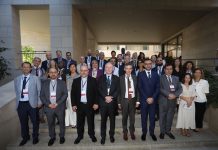
3rd Middle East Rectors Conference in Beirut
Beirut, 21 September 2026 – The Conference of Rectors of the Middle East Region (C2R Middle East) and the Agence Universitaire de la Francophonie (AUF) in the Middle East organized, on 17 and 18 September 2026, the 3rd General Conference of the C2R Middle East, hosted by Saint Joseph University in Beirut. This meeting, placed under the high patronage of the [...]



