





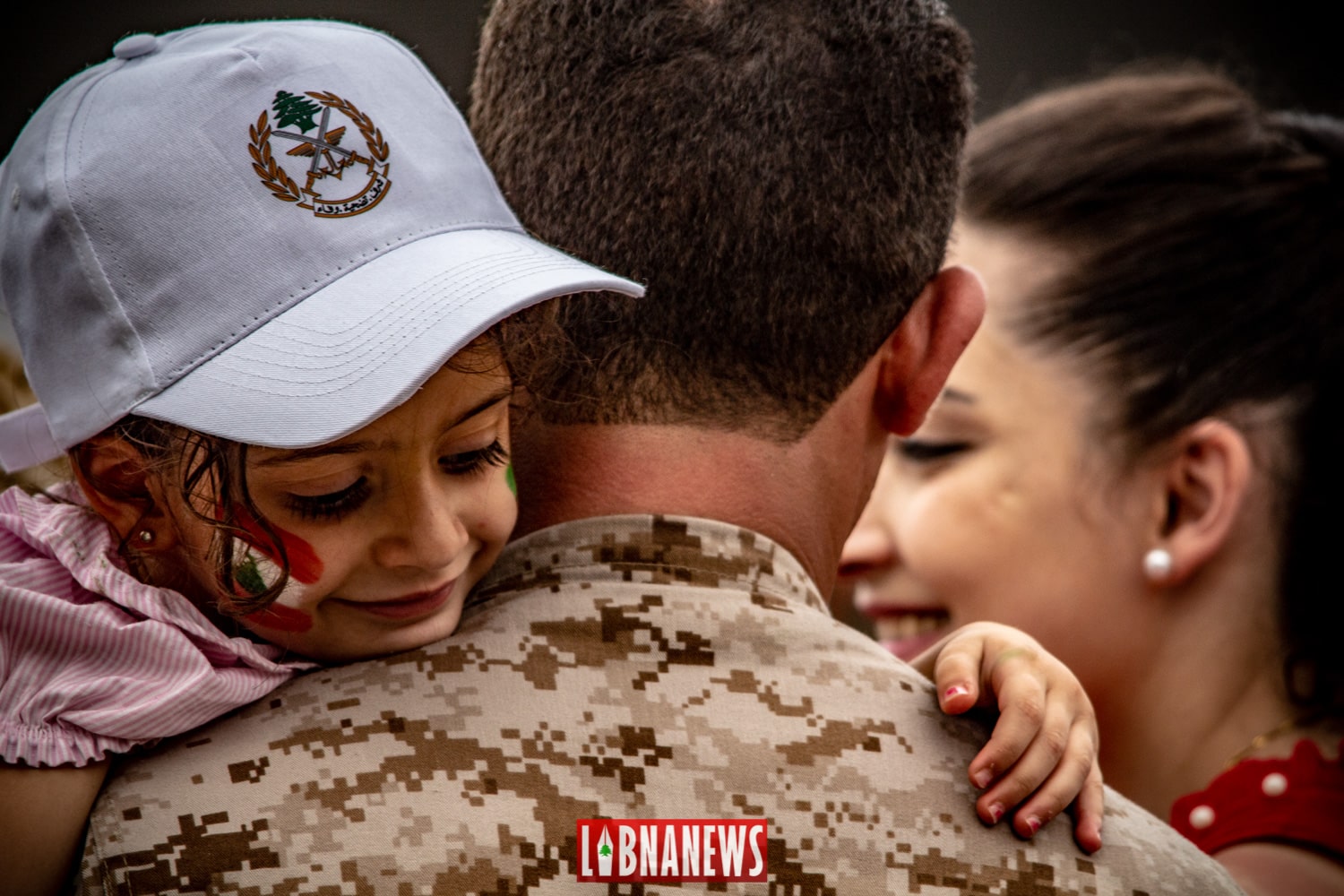
On this Army Day, Lebanon honours soldiers who have fallen or wounded since 2023, while the institution must now assume the perilous « pilot zones » of the South
On 1 August, Lebanon celebrates the celebration of its army. Again this year, ceremonies, speeches and tributes bear the weight of a more painful reality. Since October 2023, dozens of Lebanese soldiers have been killed or injured by Israeli strikes and fire. Some died in their centres, others in military vehicles, on dams, during rescue operations or while returning to their units. Still others died several months after being seriously injured.
Behind each balance sheet are a name, a face, a family and a broken story.
On 1 August, Libnanews paid tribute to these soldiers, known or anonymous, and to an institution that continued to carry out its missions despite the lack of resources, the extent of the territory to be controlled and a regional situation in which it remained directly exposed.
This tribute concerns the dead, but also the wounded. Those whose names have not always been made public. Those who survived the explosion of their centre, the destruction of their vehicle or a strike that killed their comrades. Their wounds, their sequelae and the sacrifices imposed on their families belong to the history of this war.
The nominative list in this article remains non-exhaustive. Some records remain difficult to find, several soldiers were killed while out of service and the identities of many injured were not published. The actual balance sheet is therefore higher than that of the only public archives currently available.
An army to protect a country that it does not fully control
The Lebanese Army occupies a unique place in the country. It is one of the last national institutions to maintain legitimacy among a large part of the population, beyond political, regional and religious divisions.
However, she has an almost impossible mission.
He was asked to control borders, combat trafficking, ensure internal security, deal with terrorist cells, contain social unrest, help the population during disasters and maintain its presence in the South.
He was also asked to restore the authority of the State there, while Lebanese airspace remained violated, territories remained occupied and the decision on war and peace did not always belong to the constitutional institutions.
At the same time, the economic crisis opened in 2019 considerably weakened the institution’s material capacity. The collapse of the Lebanese pound reduced the real value of the balances. The military had to continue to serve under degraded conditions, sometimes with food, medical or financial assistance from partner countries.
Despite this, the army remained present.
Its soldiers kept the borders, maintained the dams, secured the roads and continued their patrols. In the South, they continued to occupy military centres in the immediate vicinity of the combat zones, often without the means to protect their own positions from air strikes.
On December 5, 2023, the first soldier fell
Sergeant Abdel Karim al-Moqdad is the first Lebanese soldier killed by an Israeli attack after the outbreak of hostilities in October 2023.
On 5 December, a bombardment struck an army centre in the area of Nabi Oweida, near Adaïssé. Sergeant’s killed. Five other soldiers were injured, including an officer.
This attack constitutes a serious escalation. She won’t stay alone.
Beginning in September 2024, as Israeli bombings intensified in Lebanon, the number of casualties in the army increased.
On 3 October, Sergeant Maher Ahmad Oueik was killed during an evacuation and rescue mission. Another soldier is injured. On the same day, Corporal Ali Hassan Qassem was also killed.
On 11 October, a strike hit an army centre in Kafra. Corporal Jaafar Chit and first-class soldier Marwan Yacoub die. Three other soldiers were injured.
On 20 October, a military vehicle was hit in the Ain Ebel area. Chief Warrant Officer Tarek Akl Sobha, Sergeant Ahmad Haidar Haidar and first-class soldier Jaafar Mohammad Jaafar are killed.
These soldiers were not engaged in an offensive against Israel. They were on board a vehicle belonging to the regular army of a State officially separate from the conflict between Israel and Hezbollah.
In Yater, an evacuation mission struck
On 24 October 2024, an army unit intervened in Yater, Bint Jbeil District, to evacuate the wounded.
The mission is hit.
Commander Mohammad Sami Farhat, Corporal Mohammad Hussein Nazzal and Corporal Moussa Youssef Mhanna are killed.
The death of these three soldiers illustrates the extreme vulnerability of the rescue teams. On the ground, the distinction between combatants, regular military personnel, relief workers and humanitarian personnel is no longer sufficient to guarantee their safety.
However, the Lebanese army continues to intervene. It evacuates the bodies, provides assistance to civilians and tries to maintain open axes in the middle of the bombings.
Its units do not have air coverage. They cannot intercept drones, prevent Israeli aircraft from hitting, or effectively secure the space in which they operate.
Nevertheless, they continue their mission.
November 2024, the military centers hit
November 2024 marks a further worsening.
On 17 November, a strike against an army centre in the Mari area of Hasbaya District killed Chief Warrant Officer Bassam Ahmad al-Zakhouri and Master Corporal Mohammad Abdel Hadi Mohammad Hussein.
Two days later, on 19 November, the Sarafand military centre was struck in turn. Chief Warrant Officer Ayman Abdel Latif Rahhal, Sergeant Adam Jerji Aoun and Sergeant Ali Mohammad Harb are killed.
On November 20, Private Abbas Ali Nahle lost his life in a strike against an army vehicle.
On 24 November, a military centre in Ameriyé was hit. Chief Warrant Officer Diab Mohammad Jaafar is killed. Eighteen soldiers were injured.
Among them was Corporal Samir al-Abed. He was seriously affected and survived for over a year and a half before succumbing to his wounds on 21 June 2026.
His death recalls that a report announced within hours of a strike does not always tell the whole truth. Some military personnel die several days, months or even years later from injuries they suffered.
Others survive, but remain disabled. Their names disappear from the dispatches as their struggle continues in hospitals, rehabilitation centres and with their relatives.
The wounded, invisible victims of war
Official communiqués frequently show the number of injured without revealing their identity.
Five soldiers, including an officer, were wounded on 5 December 2023 in Nabi Oweida–Adaisse. At least one other was injured during the operation on 3 October 2024. Three soldiers were hit in Kafra on 11 October. Eighteen others were injured in Ameriyé on 24 November.
In addition to these assessments, the members affected by other attacks, those whose injuries were not the subject of a separate release, and those who were out of service at the time of the strikes, were added.
The absence of a name does not mean the absence of suffering.
Some have burns, multiple fractures, internal injuries, auditory or neurological trauma. Others have lost part of their mobility or will no longer be able to work.
There are also less visible injuries. Surviving the explosion of a centre, seeing several comrades die or staying buried under the rubble can leave lasting psychological sequelae.
The State has a specific debt to them: to provide for their care, to finance their rehabilitation, to maintain their income, to support their families and to guarantee their future when their condition no longer allows a normal return to service.
They must not become forgotten in this war.
A new set of losses in 2026
The fighting of 2026 opened a new particularly deadly sequence.
Corporal Mohammad Moufid Tofeili and Corporal Fadl Abdallah Ayoub were killed on 28 March. Two days later, Private Ali Hussein Ajam died in a strike against an army dam in Ameriyé.
On 5 April, Corporal Hussein Ali Nahle was killed in Kfar Hatta.
On 8 April, several attacks hit different parts of the country. Chief Sergeant Hussein Yassine is killed in Saida. First-class soldier Mohammad Bassam Chheitli and conscript Ali Hassan Qassem lost their lives in Chmistar. The non-commissioned student Ali Nassereddine is killed in Mansoura, Hermel.
Private Patrick Antranik Bekarian disappeared on 19 April after his vehicle was targeted. His death is then confirmed.
On 29 April, Private Hussein Sultan was killed in the Khirbet Selm area.
On May 12, Chief Warrant Officer Mohammad Ali Obeid died in a strike against Jebchit.
At the end of the month, death notices are still being issued. Conscript Saleh Mohammad Souni was killed on 26 May. Intern soldier Kamel Marwan Merkez died the next day on the Kfar Rumman–Khardali axis. Sergeant Alaa Mahmoud Madlaj was killed on 28 May on the road from Zefta to Deir ez-Zahrani.
On 3 June, conscript Omar Khodr was killed during his displacement.
Three days later, a strike on the Khardali–Kfar Tebnit axis killed Brigadier-General Wissam Sabra, Captain Elie Khoury and Private Hussein Ghazzal.
In the same vehicle or on the same road there was a general officer, a captain and a soldier. Three levels of military hierarchy, three routes and three families affected by the same attack.
Private Mohammad Sleiman al-Ahmad succumbed to his wounds on 10 June. Chief Sergeant Ali Ibrahim died on 20 June. The following day, Corporal Samir al-Abed died of injuries sustained during the strike against Ameriyé in November 2024.
Pilot areas, a high-risk mission
On this Army Day, the tribute to the dead and wounded cannot be separated from the new challenges imposed on the institution in southern Lebanon.
In the framework of the agreement negotiated under American mediation, « pilot zones » must gradually be under the exclusive control of the Lebanese Army. The mechanism provides for a phased Israeli withdrawal, the deployment of the army, the withdrawal of non-State fighters and the dismantling of Hezbollah weapons and infrastructure in the sectors concerned.
The aim announced is to allow the return of the inhabitants, the reconstruction of the villages and the restoration of state authority.
On paper, the principle seems clear. In the field, it is much less.
The army began to deploy to Zawtar al-Gharbiyeh after Israeli forces withdrew. It also conducted operations in localities such as Frun and Srifa. But the first test of the device quickly revealed its limitations.
Villages are largely destroyed. Many houses remain uninhabitable. Roads, electrical networks, hydraulic installations and civilian infrastructure must be repaired. Unexploded ordnance remains dispersed in the bombed areas.
In Zawtar al-Gharbiyeh, very few families have actually been able to return. Some have found their homes destroyed or too dangerous to be occupied.
The army must therefore not only secure an area. It must also carry out mine clearance, control access, inspect buildings, prevent the return of weapons and accompany a population that sometimes no longer has any housing.
Ensuring security without skies
Yet the main problem remains elsewhere.
The Lebanese Army must ensure the security of areas not controlled by its airspace. Israeli drones continue to fly over the territory. Israeli forces remain present near several areas. No device gives the army the ability to prevent another strike.
The institution is thus responsible for the security of the inhabitants, without being able to neutralise one of the main threats to them.
The commander-in-chief of the army, General Rodolphe Haykal, accused Israel of obstructing the institution’s efforts by continuing its attacks and violations. He reiterated that the units remained ready to deploy to all areas evacuated by Israeli forces.
But deployment alone is not a guarantee.
Members can control a dam, search a building or neutralize an explosive device. They cannot prevent a decided strike from outside Lebanese territory.
The army is therefore faced with a major contradiction: it must assume exclusive authority without having real sovereignty over the whole area.
The risk of an impossible mission
The pilot zone mechanism also exposes the army to internal political risk.
It must search for Hezbollah-owned weapons and infrastructure, prevent combatants from returning and ensure that villages are no longer used for military purposes.
Hezbollah, however, is not a direct signatory to the agreement and refuses a disarmament imposed under Israeli pressure. Any attempt to use force could lead to internal confrontation.
The army could then find itself caught between Israeli and American demands, the commitments of the Lebanese government, the refusal of Hezbollah and the concerns of an already displaced and deeply tried southern population.
This mission cannot be abandoned to the military alone.
The decision on the arms monopoly belongs to political power. It requires a national strategy, clear institutional coverage and an agreement to prevent Lebanese soldiers from being sent against other Lebanese.
The army must not become the operational arm of a decision that civilian officials would not take on publicly.
Berri: not putting the army to the test
On the occasion of Army Day, the President of the Chamber, Nabih Berri, himself warned that the institution should not be « tested » in the pilot areas.
The expression reflects real concern.
The army cannot be held responsible for an incomplete or constantly delayed Israeli withdrawal. It cannot be accused of failure if the strikes continue over the areas in which it deploys.
It cannot guarantee the total disarmament of a region if the rules of verification, the territorial limits and the timetable for withdrawal remain negotiated sector by sector.
Lebanon wishes to obtain a road map leading to a complete Israeli withdrawal. Israel wants to maintain the possibility of negotiating each area separately and of conditioning each movement of its forces for verification of disarmament operations.
This divergence threatens to transform a transitional mechanism into an endless process.
Meanwhile, the army must occupy the ground, manage the expectations of the population and bear the consequences of decisions that do not depend solely on it.
An institution cannot replace the State
The missions assigned to the army continue to accumulate.
It must secure villages, neutralize unexploded ordnance, control roads, monitor borders, search for weapons, prevent infiltration, accompany the return of internally displaced persons and cooperate with international mediators.
It must simultaneously avoid confrontation with Israel and internal confrontation with Hezbollah.
It must carry out these tasks while its human, technical and financial resources remain limited.
An army cannot replace a government, a ministry of reconstruction, a local administration, public services and diplomacy. It could not rebuild villages alone, relocate the inhabitants or finance the return of tens of thousands of displaced persons.
Its role is to ensure security. The task of the State is to create the political, social and economic conditions for this security to last.
Conferring all responsibilities to the military institution would not be a sign of a strong state. It would be a confession that the civilian authorities once again delegated their own responsibilities to the army.
Honoring the dead by protecting the living
August 1 must not only be a day of ceremonies.
Honouring the dead means preserving their memory, supporting their families and recognizing the circumstances in which they were killed.
Honoring the wounded means guaranteeing their care and refusing that their sacrifice disappears behind a number.
Honouring the army means above all not preparing the conditions for new losses.
Soldiers deployed in the pilot areas need a clear mandate, clear rules, protection, demining equipment, suitable vehicles and political guarantees for Israeli withdrawal.
They should not be sent to destroyed villages as a surety to an agreement whose main conditions would remain uncertain.
The death of the army does not belong to a community, party or region. They belong to all of Lebanon.
Their families have already paid the price for the impotence of the State, Israeli violations and the country’s inability to fully exercise its sovereignty.
On this Army Day, the best tribute is not just to greet their memory.
It is about protecting their comrades.
Provisional table of military personnel identified
This list is not exhaustive.It includes military personnel whose identity and circumstances of death have been established on the basis of Lebanese Army records, official communications and notices issued by the National Information Agency. Other victims may miss, including those killed out of service, late deaths resulting from injuries and records that are still difficult to access.
| Name | Grade | Age or birth | Date of death | Circumstances |
|---|---|---|---|---|
| Abdel Karim al-Moqdad | Sergeant | Unpublished | 5 december 2023 | Killed during the bombing of an army centre in Nabi Oweida-Adaïssé. Five soldiers were injured. |
| Maher Ahmad Oueik | Chief Sergeant | 45 years old, born 7 august 1979 | 3 october 2024 | Killed during evacuation and rescue mission to the South. |
| Ali Hassan Qassem | Corporal | Unpublished | 3 october 2024 | Killed in an Israeli attack on his place of duty. |
| Jaafar Chit | Corporal | Unpublished | 11 october 2024 | Killed in a strike against a military centre in Kafra. |
| Marwan Yacoub | First-class soldier | Unpublished | 11 october 2024 | Killed in the strike against central Kafra. Three soldiers were injured. |
| Tarek Akl Sobha | Chief Warrant Officer | Unpublished | 20 october 2024 | Killed when his military vehicle was hit in the Ain Ebel area. |
| Ahmad Haidar Haidar | Sergeant | Unpublished | 20 october 2024 | Killed in strike against the military vehicle in Ain Ebel. |
| Jaafar Mohammad Jaafar | First-class soldier | Unpublished | 20 october 2024 | Killed in the same attack in Ain Ebel. |
| Mohammad Sami Farhat | Commander | 36 years old, born on 14 september 1988 | 24 october 2024 | Killed during an evacuation mission to Yater. |
| Mohammad Hussein Nazzal | Corporal | Unpublished | 24 october 2024 | Killed during evacuation mission in Yater. |
| Moussa Youssef Mhanna | Corporal | Unpublished | 24 october 2024 | Killed in the same attack in Yater. |
| Basam Ahmad al-Zakhouri | Chief Warrant Officer | Unpublished | 17 november 2024 | Killed in a strike against a military centre in Mari, Hasbaya District. |
| Mohammad Abdel Hadi Mohammad Hussein | Master Corporal | Unpublished | 17 november 2024 | Killed in the same strike against Mari’s center. |
| Ayman Abdel Latif Rahhal | Chief Warrant Officer | Unpublished | 19 november 2024 | Killed during the strike against the Sarafand military centre. |
| Adam Jerji Aoun | Sergeant | Unpublished | 19 november 2024 | Killed in the strike against the center of Sarafand. |
| Ali Mohammad Harb | Sergeant | Unpublished | 19 november 2024 | Killed in the same strike in Sarafand. |
| Abbas Ali Nahle | Soldier | Unpublished | 20 november 2024 | Killed in a strike against an army vehicle. |
| Diab Mohammad Jaafar | Chief Warrant Officer | Unpublished | 24 november 2024 | Killed in the strike against the center of Ameriyé. Eighteen soldiers were injured. |
| Mohammad Moufid Tofeili | Corporal | Unpublished | 28 march 2026 | Killed in an Israeli air strike. |
| Fadl Abdallah Ayoub | Corporal | Unpublished | 28 march 2026 | Killed in an Israeli air strike. |
| Ali Hussein Ajam | Soldier | Unpublished | 30 march 2026 | Killed in a strike against a military dam in Ameriyé. |
| Hussein Ali Nahle | Corporal | Unpublished | 5 april 2026 | Killed in an Israeli attack on Kfar Hatta. |
| Hussein Yassine | Chief Sergeant | Unpublished | 8 april 2026 | Killed in an Israeli attack on Saida. |
| Mohammad Bassam Chheitli | First-class soldier | Unpublished | 8 april 2026 | Killed in an Israeli attack on Chmistar. |
| Ali Hassan Qassem | Conscript | Unpublished | 8 april 2026 | Killed in Chmistar during the same sequence of strikes. |
| Ali Nassereddine | Non-commissioned student | Unpublished | 8 april 2026 | Killed in an Israeli attack in Mansoura, Hermel. |
| Patrick Antranik Bekarian | Soldier | Unpublished | Disappeared on 19 April 2026 | Targeted in his vehicle. His death was later confirmed. |
| Hussein Sultan | Soldier | Unpublished | 29 april 2026 | Killed in an Israeli attack in the Khirbet Selm area. |
| Mohammad Ali Obeid | Senior Warrant Officer | Unpublished | 12 may 2026 | Killed in an Israeli strike against Jebchit. |
| Saleh Mohammad Souni | Conscript on extended service | Unpublished | 26 may 2026 | Killed in an Israeli strike. |
| Kamel Marwan Merkez | Intern Soldier | Unpublished | 27 may 2026 | Killed on the Kfar Rumman–Khardali axis, near its centre. |
| Alaa Mahmoud Madlaj | Sergeant | Unpublished | 28 may 2026 | Killed during a strike on the Zefta-Deir ez-Zahrani road. |
| Omar Khodr | Conscript on extended service | Unpublished | 3 june 2026 | Killed by an Israeli strike during his displacement. |
| Wissam Sabra | Brigadier-General | Unpublished | 6 june 2026 | Killed in a strike on the Khardali–Kfar Tebnit axis. |
| Elie Khoury | Captain | Unpublished | 6 june 2026 | Killed in the same strike. |
| Hussein Ghazzal | Soldier | Unpublished | 6 june 2026 | Killed in the same strike. |
| Mohammad Sleiman al-Ahmad | Soldier | Unpublished | 10 june 2026 | Death of wounds sustained in an earlier Israeli strike. |
| Ali Ibrahim | Chief Sergeant | 42 years old, born on 15 december 1983 | 20 june 2026 | Death of injuries caused by an Israeli strike. |
| Jamil Nahhal | Conscript | Unpublished | 20 june 2026 | Killed on the road Kfar Rumman–Nabatiyé. |
| Samir al-Abed | Corporal | Unpublished | 21 june 2026 | Death of wounds sustained during the strike of 24 November 2024 against its center in Ameriyé. |
Injured identified without full public identification
| Date | Place or operation | Review published |
|---|---|---|
| 5 december 2023 | Nabi Oweida – Adaïssé Centre | Five soldiers injured, including one officer |
| 3 october 2024 | Evacuation mission in southern Lebanon | At least one member injured |
| 11 october 2024 | Kafra Military Centre | Three soldiers injured |
| 24 november 2024 | Military Centre of Ameriyé | Eighteen military personnel injured |
| Since October 2023 | Other centres, roads and missions | Several other injuries whose full identity was not made public |
Sources
- Lebanese Army Command, death notices, press releases and military biographical records.
- Official account of the Lebanese Army on X, nominal publications and death notice.
- National information agency, dispatches reproducing the communiqués and advice of the military command.
- Statements by President Joseph Aoun, the Commander-in-Chief of the Army Rodolphe Haykal and the Speaker of the Chamber Nabih Berri on the occasion of Army Day.