Thinking Lebanon Before Our Communities
Faced with the destruction in the South and the denominational divisions, this text calls on the Lebanese to defend together the 10,452 km2 of the country. He refuses resignation, questions political silences and pleads for national citizenship, beyond religious affiliations, before it is too late, truly for all.
Lebanese children: mental health on alert
The psychological consequences of the conflict on Lebanese children remain less visible than material destruction, but they already affect hundreds of thousands of minors. An area of concern is intense fear, nightmares, sleep disorders, sadness, irritability, drop-out and separation anxiety. Repeated displacement, closure of schools, fragility of parents and limited access to care may lead to lasting disorders if psychosocial support is not strengthened quickly.
Lebanon and the Coué method
Editorial: Lebanon has become accustomed to reassurance. The truce is extended, but the drones continue. The economy seems to be stabilized, but deposits remain blocked and credit does not return. The state speaks of sovereignty, but it is hard to exercise it in its territory, finances and institutions. This national Coué method allows to hold, but it does not allow to heal. The country now has to choose between a survival story and a real decision.
Lebanon and the Coué method
Editorial: Lebanon has become accustomed to reassurance. The truce is extended, but the drones continue. The economy seems to be stabilized, but deposits remain blocked and credit does not return. The state speaks of sovereignty, but it is hard to exercise it in its territory, finances and institutions. This national Coué method allows to hold, but it does not allow to heal. The country now has to choose between a survival story and a real decision.
Why Iran weighs on the Lebanese table without sitting there
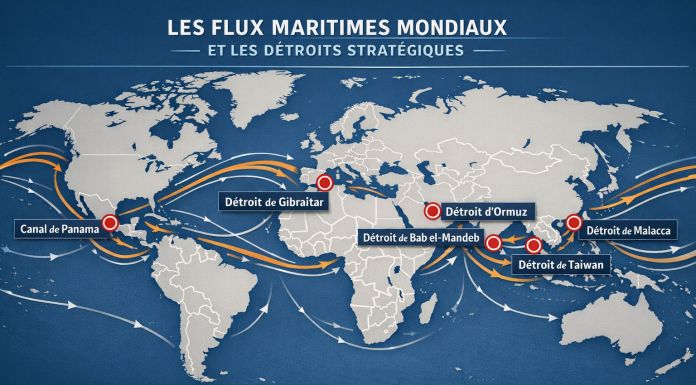
Iran does not sit at the Lebanese-Israeli table, but its influence goes through all the negotiations. Washington links the truce to Hezbollah, Israel seeks guarantees against the Iranian axis, Riyadh tries to preserve Lebanese unity and Beirut wants to maintain its national mandate. Between Ormuz, sanctions, financing, Israeli withdrawal and the return of displaced persons, Lebanon must avoid becoming a map in the regional arm.
Amal Khalil, a death that changes the sense of truce
The death of Amal Khalil turns the truce into a real protection test. The ceasefire cannot be judged only in Washington. It must be checked in the South with civilians, journalists and rescue workers. The case requires Lebanon to document the facts, seize the relevant authorities and integrate press security into any diplomatic negotiations. Peace begins with concrete guarantees.
Debel’s Christ: Italy repairs desecration
The statue of Christ destroyed by an Israeli soldier in Debel, southern Lebanon, was replaced by the Italian soldiers of UNIFIL. The Israeli army claimed to have made a replacement, but the cross presented was smaller, different and placed elsewhere. Local accounts say that it was a liturgical cross taken from a church. The Italian contingent then installed a Christ near the original, at the same location.
Debel’s Christ: Italy repairs desecration
The statue of Christ destroyed by an Israeli soldier in Debel, southern Lebanon, was replaced by the Italian soldiers of UNIFIL. The Israeli army claimed to have made a replacement, but the cross presented was smaller, different and placed elsewhere. Local accounts say that it was a liturgical cross taken from a church. The Italian contingent then installed a Christ near the original, at the same location.
Three weeks for an agreement: Washington pushes Beirut into a high-risk diplomatic race
The three-week period opened by Washington puts Lebanon before a decisive test. The truce is only valid if it protects civilians, stops destruction, allows the return of displaced persons and restores sovereignty. Between American pressure, Saudi leadership, regional tensions and the fragility of the southern front, Beirut must negotiate without yielding its national mandate or allowing diplomacy to advance the ground. The three weeks will tell if the announcement becomes local verifiable reality.
Pillage in South Lebanon: The Mirror of Gaza
The revelations published in the Israeli press about thefts committed by soldiers in houses and shops in southern Lebanon are displacing the debate. They no longer describe an isolated incident, but a practice presented as visible, repeated and unimpeded. Motorcycles, televisions, carpets, paintings, furniture and household items were reportedly taken to places that were partially prohibited from returning. Placed in the wake of Gaza, images of soldiers with women's clothes, Lebanese kitchens invested and Debel's case, this sequence further weakens the story of an exemplary army.
Pillage in South Lebanon: The Mirror of Gaza
The revelations published in the Israeli press about thefts committed by soldiers in houses and shops in southern Lebanon are displacing the debate. They no longer describe an isolated incident, but a practice presented as visible, repeated and unimpeded. Motorcycles, televisions, carpets, paintings, furniture and household items were reportedly taken to places that were partially prohibited from returning. Placed in the wake of Gaza, images of soldiers with women's clothes, Lebanese kitchens invested and Debel's case, this sequence further weakens the story of an exemplary army.
After UNIFIL, Lebanon wants to retain troops to protect it
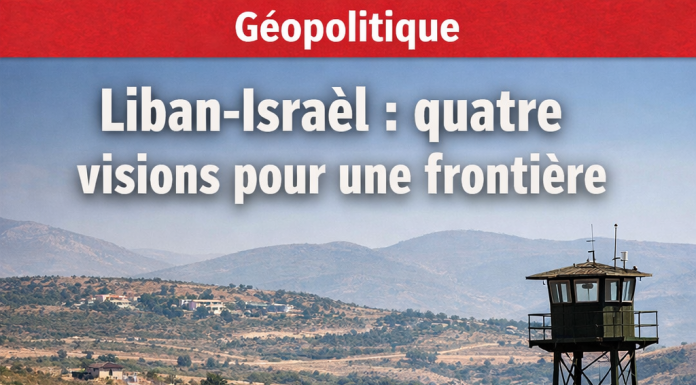
The planned withdrawal of UNIFIL from 2027 onward led Beirut to reflect on the next stage. Without an officially agreed plan, several signals show that international maintenance in southern Lebanon is now being discussed well beyond the United Nations. Italy stated that it wanted to remain present even after the mission, Spain wanted to continue its engagement in another form, and Joseph Aoun supported any country ready to maintain forces in the South in a framework accepted by Lebanon. This perspective is gaining weight as Israel consolidates a de facto militarized band within Lebanese territory.
After UNIFIL, Lebanon wants to retain troops to protect it
The planned withdrawal of UNIFIL from 2027 onward led Beirut to reflect on the next stage. Without an officially agreed plan, several signals show that international maintenance in southern Lebanon is now being discussed well beyond the United Nations. Italy stated that it wanted to remain present even after the mission, Spain wanted to continue its engagement in another form, and Joseph Aoun supported any country ready to maintain forces in the South in a framework accepted by Lebanon. This perspective is gaining weight as Israel consolidates a de facto militarized band within Lebanese territory.
Are we marching towards the ruin of our economies as sleepwalkers?
In this rostrum, Henri Ramoneda links the Tehran Accords of 1943, the erasure of the Soviet role in the Second World War, the American soft power and recent wars to warn of an ideological drift that would lead Western economies to impoverishment, strategic dependence and a truncated memory.