


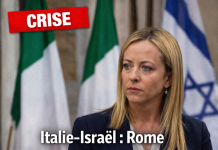
Italy-Israel: Rome freezes defence agreement
The announcement by Giorgia Meloni to suspend the automatic renewal of the defence agreement between Italy and Israel marks a more important diplomatic turning point than it seems. Israel assures that this decision will have no effect on its security, minimizing the operational scope of the text. Yet Rome's gesture reflects a real political deterioration, fuelled by the war in Lebanon, the incident involving an Italian UNIFIL convoy and the rising pressure in Europe on military relations with Israel.
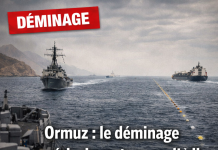
Ormuz Strait: American Trompe-Ioeil Demining
Washington displays a recapture of the Strait of Ormuz, but public events tell a more fragile story. The United States has launched a security mission and may open a temporary passage under protection, with drones and escorts. On the other hand, they have withdrawn their former mining dredgers from Bahrain, rely on LCS whose transition remains incomplete and are gradually emerging from the logic of specialized helicopters. The real issue is therefore not the entry of two destroyers into the Strait, but the gap between a demonstration of presence and the real ability to demine the entire gully in a sustainable manner.
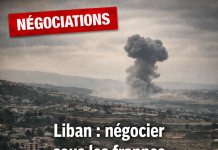
Lebanon: negotiating under Israeli strikes?
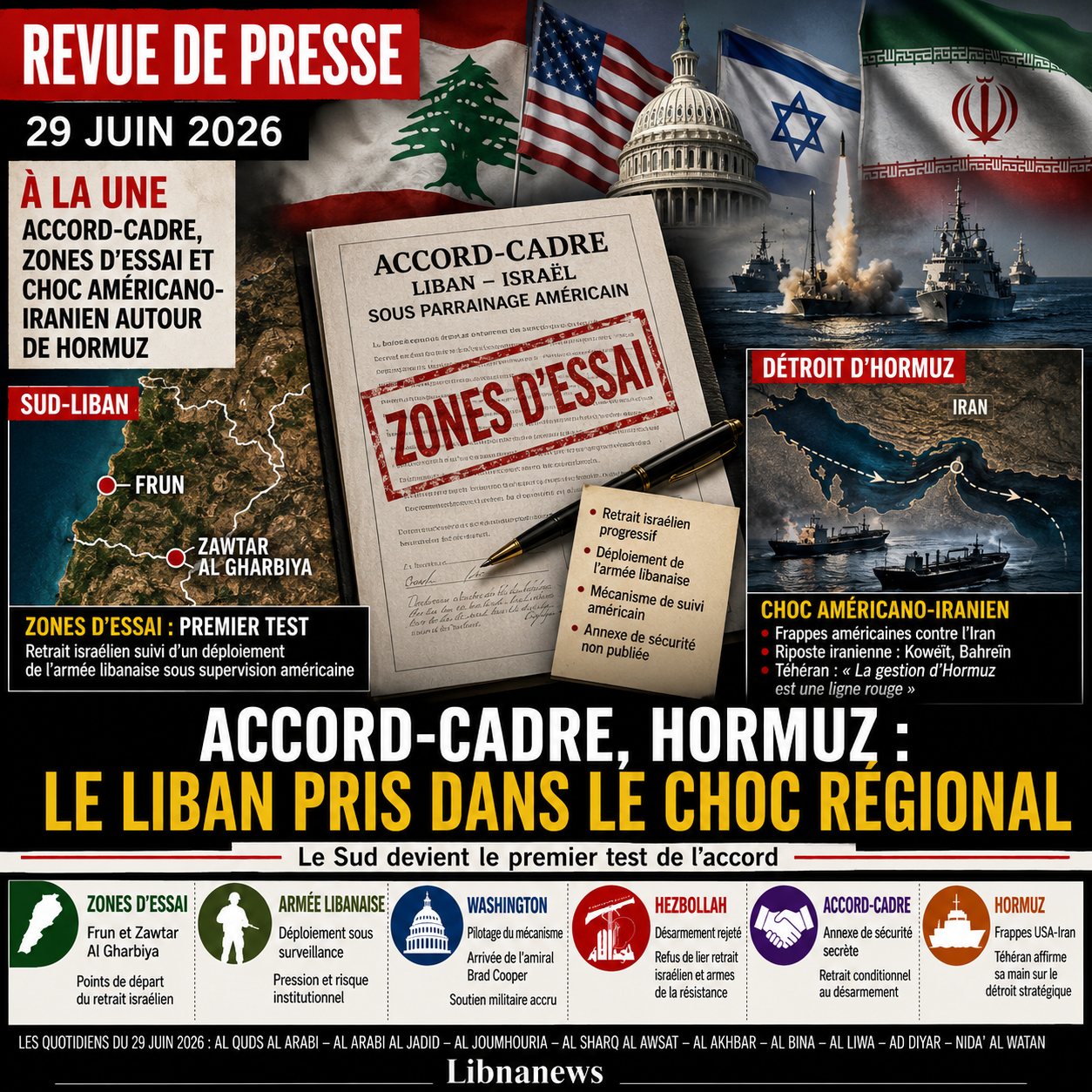
Lebanon is entering a rare diplomatic sequence, but deeply unbalanced. In Washington, a direct channel opens between Lebanese and Israeli representatives under American mediation. Yet, the strikes continue in the South and in the Bekaa, while Israel already places the security of its northern border and the disarmament of Hezbollah at the heart of the agenda. Beirut is trying to get a pre-ceasefire. Hezbollah rejects any negotiations conducted while the war continues to establish the balance of power.
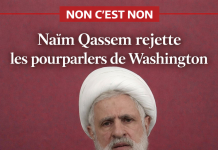
Naïm Qassem rejects Washington talks
In a speech broadcast Monday evening on Al Manar, Naïm Qassem rejected the meeting scheduled for Tuesday in Washington between the ambassadors of Lebanon and Israel. The Secretary-General of Hezbollah called on the Lebanese State to cancel these discussions, which he considered unnecessary as long as Israeli bombing continued. He also reaffirmed the continuation of the confrontation, called for the implementation of the November 2024 agreement and sent a direct message to President Joseph Aoun and the government.
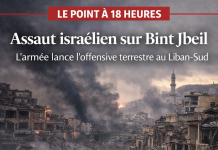
Israeli attack on Bint Jbeil: Army launches land offensive in South Lebanon on April...
On 13 April, the Israeli army launched a ground offensive on Bint Jbeil, a strategic bastion of Hezbollah in southern Lebanon. The assault, carried out after the complete encirclement of the city, took place on the eve of the Washington talks and was part of a regional war marked by a serious and persistent humanitarian crisis in Lebanon.
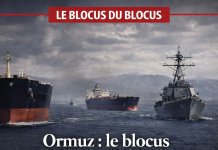
Ormuz: US blockade begins
The United States embargo against Iranian maritime flows entered into force on Monday, 13 April, in the Ormuz area. Washington claims not to close the Strait to all world trade, but the effect is already visible: the tankers slow down, the Brent returns to over $100, the physical market flies away and China, the first customer of Iranian crude, finds itself directly exposed. The article details Washington's strategic logic, the risks of Iranian retaliation, the immediate impact on financial markets and why Beijing could be one of the major economic victims of this new stage.
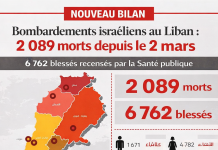
Israeli bombings in Lebanon: 2,089 killed since 2 March
The Lebanese Ministry of Public Health published on Monday 13 April a new cumulative assessment of the victims of Israeli bombings since 2 March. According to the Emergency Health Operations Centre, 2,089 people were killed and 6,762 injured. On 13 April alone, 34 people were killed and 174 injured. The information provided by the Ministry also details the impact of the conflict on the health sector, with ambulance workers, medical centres and hospitals affected.
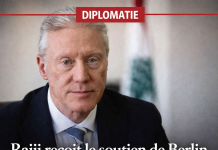
Youssef Raji: Lebanon leaves Iran
The interview between Youssef Rajji and Johann Wadephul marks more than a 45 million euro aid announcement. It enshrines a diplomatic repositioning that Beirut assumes more and more clearly: to deal with the Lebanese issue in an autonomous framework, distinct from the Iranian trajectory, while direct discussions with Israel must open up in Washington. This line remains fragile because Lebanon is seeking a ceasefire while Israel maintains a broader agenda and Lebanese internal divisions persist.

Israeli strikes: Beirut under threat
On the eve of the discussions planned in Washington between the Lebanese and Israeli representatives, the gap is complete. Beirut wanted to make the ceasefire the heart of the meeting and even its political prerequisite. On the contrary, Washington has validated a reading that leaves Lebanon out of the regional pause, while Israel continues its offensive in the South and keeps the capital under threat. The article goes back to this American dissociation, the contradiction between the Lebanese mandate and the Israeli agenda, and what this sequence says about Lebanese sovereignty under military pressure.
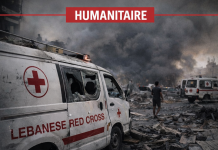
Israel targets the Red Cross in Lebanon
In less than one day, the Lebanese Red Cross was hit twice in southern Lebanon. First on the road to Beit Yahoun, where an Israeli drone killed the rescuer Hassan Badawi during a humanitarian mission. Then in Tyre, where a strike targeted a Red Cross centre during the transfer of an injured person. The stake goes beyond the immediate emotion: when medical teams, ambulances and identified rescue centres are attacked, the classification of war crime becomes a central legal hypothesis.
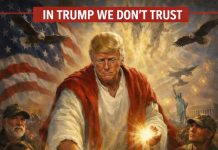
Trump facing the Pope, the temptation of the sacred
Trump Pope: After attacking Leo XIV, Donald Trump spreads an almost Christian image and revives the debate on the cult of the leader.
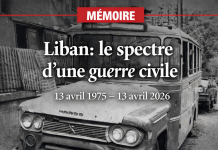
Lebanon: the specter of a new civil war, 51 years old
On 13 April 2026 not only refers to the memory of the bus of Ain al-Remmaneh and the beginning of the 1975 civil war. He refers to a very present risk: that of a Lebanon weakened by an Israeli offensive that not only destroys infrastructure and lives, but also revives the internal fractures of the country. Between massive displacements, pressure on the state, divisions around Hezbollah and fear of a confessional rereading of war, the country sees the reappearance of the mechanisms it believed contained.

Radio Orient, the ultimate flagship of the Hariri clan media empire, is under the...
The transfer of Radio Orient to a holding company of the United Arab Emirates in 2025 seals the end of the Hariri media empire. Over thirty-two years of political, diplomatic and media influence between Beirut, Paris, Riyadh and Abu Dhabi, and the possible impact of this takeover on its future editorial line.
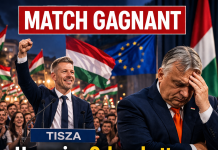
Team Hungary EU 1 – Team Orban/USA/Russia 0
Viktor Orban's defeat against Péter Magyar marks a major political turning point in Hungary. With more than 52% of the votes for Tisza, Brussels breathes, Moscow cashes and the trompist camp loses one of its ideological references. The election opens a possible political and European normalisation phase.



