



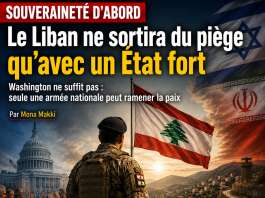

When the abdicated state decides, others decide
One of the most consistent laws in history is that no power vacuum remains vacant for a long time. When a State voluntarily or unintentionally renounces its full exercise of its prerogatives, other actors always occupy the space left free. The cost of non-choice The Lebanese tragedy is that the country has gradually become accustomed to living in [...]
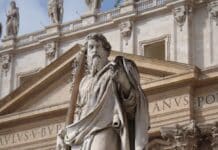
Saint Paul (Saul de Tarsus): The Apostle of the Nations and His Passage in...
Saint Paul, through his visit to Tyre and Sidon, contributed to the expansion of Christianity in a region crucial for the spread of the Gospel. His role as apostle of the nations, preaching to Jews and Gentiles, laid the foundation for a faith that transcends ethnic and cultural boundaries. Today, his legacy is visible not only through the Christian communities in Lebanon, but also in the universal mission of Christianity he has defended so much.

When modern wars also kill history
Beaufort, Tyre and the names of places become the targets of cultural erasure, when bombardments, renunciations and military accounts turn the heritage into an identity battlefield in Lebanon, Palestine and elsewhere, today before our eyes.
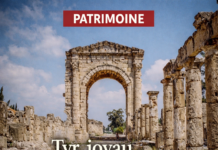
The city of Tyre: a thousand-year-old jewel of southern Lebanon
Tyre (Sour), a millennium jewel of southern Lebanon, was one of the major Phoenician cities in the Mediterranean. Ports, imperial purple, colonies like Carthage, legendary seats and Roman splendors make up his account. Ranked UNESCO since 1984, the city today faces urbanization and threats to its remains.

Open letter
Dear executioners of the war imposed on the Lebanese, You are free to choose your destiny. Free to believe in martyrdom. Free to consider that death for a cause exceeds life itself. This is your conscience, your faith, your worldview. But there is an absolute limit that no man, [...]
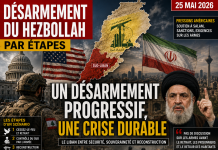
Hezbollah disarmament in stages
The disarmament of Hezbollah is no longer an immediate decision, but a progressive process. American pressure, Israeli demands and reconstruction needs can gradually reduce the party's military and social autonomy. Naim Kassem refuses this calendar and places any discussion after the halt of the strikes, the Israeli withdrawal and the return of the inhabitants of the South. The Lebanese State seeks a margin between sovereignty and the risk of internal explosion.

Lebanon trapped in the mutual veto: when elites protect each other
Political, institutional and financial analysis of reform paralysis in Lebanon Since the financial collapse of 2019, an idea is constantly returning to the Lebanese debate: "Who blocks the reforms? For some, the person in charge is obvious. For others, it has a specific name, party or confession. Yet, more the years [...]
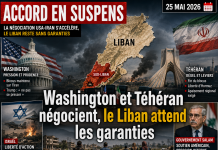
Washington-Tehran agreement: Lebanon waits
Lebanon is at the centre of a regional negotiation whose terms it lacks. Discussions between Washington and Tehran may lead to de-escalation, but guarantees remain unclear for the southern front. Israel wants to preserve its freedom of action, Hezbollah refuses any pressure on its weapons, and the Salam government is trying to restore state authority without causing a major internal crisis.
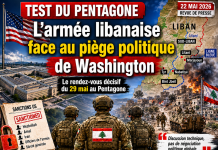
Lebanese Army: The Pentagon Test
The meeting on 29 May in the Pentagon places the Lebanese army in a delicate position. Beirut presented the delegation as a technique for the ceasefire, Israeli withdrawal and operational needs in the South. But American sanctions, debates on the composition of officers and the issue of Hezbollah's weapons give this meeting a wider political scope, as the state seeks to strengthen its authority without causing a new internal divide.
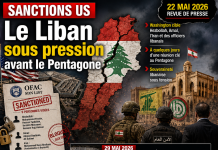
US sanctions: Lebanon under pressure
US sanctions against Hezbollah, Amal, Iran and two Lebanese security institutions are shifting the Lebanese debate to sensitive terrain. A few days away from a meeting in the Pentagon, the measure places the army, the government and the parties in the face of a difficult equation: strengthening state authority without turning institutions into a new field of political confrontation.

What if the attacks on the Gulf were part of an Israeli False Flag...
The drone attacks on the United Arab Emirates and Saudi Arabia, attributed to trajectories coming from Iraq, revive the debate on a possible operation under false banner. Israel would have a strategic interest in seeing the Gulf countries tighten their position against Iran, but such manipulation would also pose a huge political risk if it were discovered.

Political Islam, Zionism and Conflict of Legitimacy: History, Religion, Geopolitics and Memory of the...
The conflict between Zionism and part of the Muslim world cannot be reduced to mere religious opposition between Jews and Muslims. It is a complex entanglement of biblical memory, historical narratives, competing nationalisms, geopolitical traumas and spiritual representations of the Promised Earth. For a long time, the fight against Israel [...]

The collapse of the Lebanese state: between systemic corruption, oligarchic finance and unfinished sovereignty
For several years, a question has been insistent in political and intellectual debates in Lebanon: is the collapse of the Lebanese state only the consequence of the rise of Hezbollah, or is it the result of a much deeper and older crisis? For some, the answer seems obvious: the presence of an organisation [...]

LEBAN FACE TO ITS ALLEGANCES AND TO ITS OLIGARCHIC VERROU
Lebanon remains a prisoner of community allegiance, foreign protection and an oligarchic lock that blocks the state. This article examines the crisis of sovereignty, the institutional collapse, the role of political-financial networks and the need for a re-foundation based on independent justice, active neutrality and constitutional guarantees for all Lebanese citizens.



