



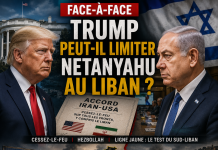
Can Israel accept a limit on its operations in Lebanon?
Israel claims to want to preserve its freedom of action in Lebanon against Hezbollah, but the Iran-USA agreement changes the calculation. Washington wants to protect regional de-escalation, Tehran claims that Lebanon is included in the ceasefire and Beirut calls for a full withdrawal. Between targeted strikes, partial withdrawal, buffer zone and international surveillance, the Israeli strategy must now deal with a new constraint: not to defeat the regional agreement.
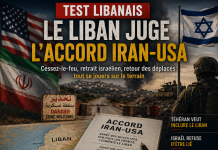
Why Lebanon became the test of the Iran-USA agreement
Lebanon concentrates on the contradictions of the Iran-USA agreement. Tehran wants to include the Lebanese front in the de-escalation. Israel refuses to lose its freedom of action against Hezbollah. Washington seeks to preserve its deal with Iran without breaking with its Israeli ally. Beirut claims its sovereignty, but does not control the land alone. The ceasefire will therefore be judged in the South, in the villages, on the return roads and around the disputed Israeli positions.
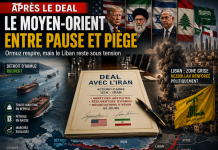
After the deal with Iran, what impact?
The deal with Iran does not end regional tensions. It suspends hostilities, reopens Ormuz and refers key issues to further negotiations. The United States can claim de-escalation, but it also appears to be constrained by the political, energy and military cost of the war. In the Gulf, the American umbrella is questioned. In Lebanon, Iran's claimed inclusion of the Lebanese front strengthens Hezbollah and complicates the line of Joseph Aoun and Nawaf Salam.
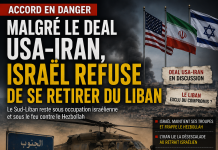
Israel refuses to withdraw from Lebanon despite US-Iran deal
Despite the possible agreement between Washington and Tehran, Israel refuses to withdraw from Lebanon and intends to maintain its freedom of action against Hezbollah. This position weakens the US-Iran deal, as Tehran links de-escalation to the fate of the Lebanese front. Without Israeli withdrawal, the ceasefire may remain incomplete.
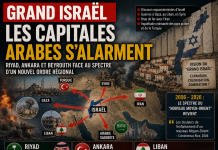
Great Israel: Riyadh and Ankara alarm
Tensions between Israel, Turkey and several Arab countries are getting stronger around the discourses on "Great Israel". Saudi Arabia, which remains opposed to Hezbollah's weapons, however, seems to reassess its approach in the light of Iranian resilience and Israeli escalation. Turkey sees the strikes in Lebanon and Syria as a direct threat. The concept of the "new Middle East", already invoked in 2006, has been reflected in regional discussions.

9 June 1861: Mount Lebanon enters the era of religious autonomy
On 9 June 1861, the Beyoğlu Protocol established the Mount Lebanon Moutassarifiya after the 1860 massacres. This Ottoman autonomy, guaranteed by the European powers, stabilizes the Mountain but institutionalises Community representation, foreshadowing the religious balances of modern Lebanon and its lasting political compromises until today still visible.

Ben Gvir proposes arresting women and young people from Hezbollah-related families
Ben Gvir reportedly proposed arresting women and youth from Hizbullah-related families, according to the Israeli press. This declaration revives the charge of collective punishment, questions international humanitarian law and places Israel's allies in the face of a major political and legal red line at the heart of the conflict.

Israel-Lebanon: the frog is in the pot
The Israeli technique in Lebanon resembles the frog in a pot: temperature rises in degrees, village after village, strikes after strike, evacuation order after evacuation order. Meanwhile, Lebanon is being asked to negotiate as if a ceasefire could be unilateral. This editorial defends the obvious: no serious discussion can begin without complete, complete, reciprocal and verifiable cessation of military operations.
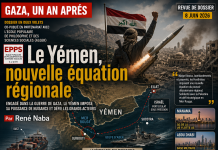
Yemen, an essential equation of regional decision-making power because of its commitment to the...
In this case, René Naba analyses Yemen as a decisive player in the Gaza war. Despite blockade, bombardment and poverty, the Houthists imposed a new regional equation, disrupted the Red Sea and challenged Western, Israeli and petromonarchic military arrangements around the global strategic routes of international maritime trade.
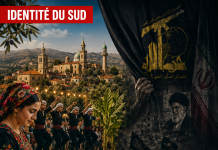
The South, a Lebanese History
Mona Makki defends the idea of a Lebanese South long shaped by tolerance, holidays, education and living together, before Hezbollah's ideological grip. It recalls the cultural identity of the Shiites of the South and denounces the progressive erasure of their libanity under organized and lasting Iranian influence today.
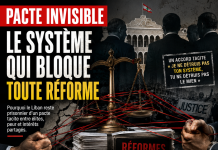
The Invisible Pact: Why the Lebanese system blocks any reform
The invisible pact Many Lebanese think that the problem comes from a man, a party or a government. Yet decades pass, faces change and crises follow, but the result often remains the same. As if real power was not held by those occupying the institutions but by a mechanism [...]
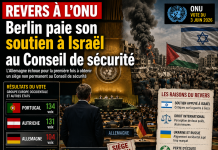
Support to Israel costs Berlin a seat at the UN
Berlin's support for Israel is in Germany's failure to obtain a non-permanent seat on the UN Security Council.
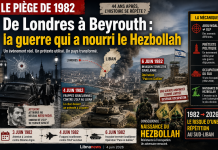
4 June 1982: Israel’s Lebanese Trap
On 4 June 1982, the political shift was marked by the Israeli invasion of Lebanon. After the attempted assassination of Shlomo Argov in London, Israel struck the PLO, while the attack was attributed to the Abu Nidal network, an enemy of Yasser Arafat. Forty-four years later, this sequence sheds light on the birth of Hezbollah, the limits of so-called limited operations and the current risks of strategic repetition in southern Lebanon.
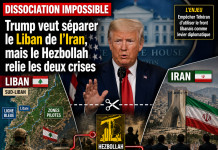
Trump wants to separate Lebanon and Iran
Trump wants to separate Lebanon from negotiations with Iran, but this dissociation confirms the interdependence of the two issues.



