

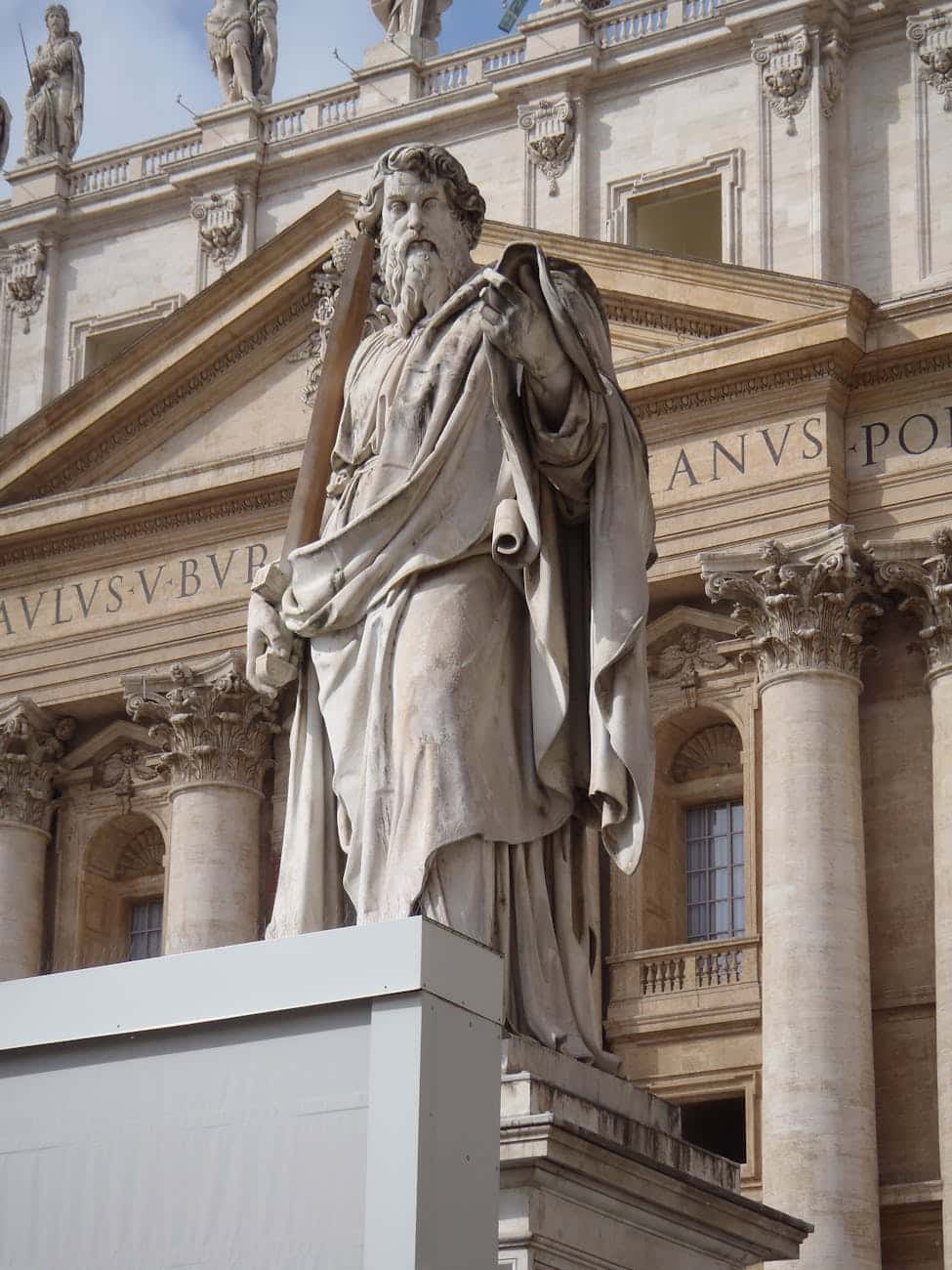
Saint Paul, born under the name Saul of Tarsus, is one of the most influential characters of primitive Christianity. Born into a Hellenistic Jewish family, Saul of Tarsus, a Roman citizen, distinguished himself first of all by his zeal for the Jewish Law and his persecution of the early Christians. His radical conversion to Christianity on the way to Damascus, referred to inActs of the Apostles(Acts 9:3-19), marks a major turning point in his life. He became Paul, becoming the apostle of the Gentiles, traveling through the Roman Empire to preach the Gospel.
Saint Paul’s role in spreading Christianity is unique in the breadth of his missions and the lasting impact of his letters, or Epistles, which constitute an important part of the New Testament. His visit to Lebanon, especially Tyre and Sidon, is one of many missionary trips aimed at consolidating Christian communities in the Mediterranean world.
The context of his missionary journeys: opening up to the pagan world
After his conversion, Paul adopted a new mission: to preach the Gospel not only to the Jews, but also to the Gentiles, a perspective that often sparked debate among early Christians. His missionary work led him to many regions, from Asia Minor to Greece, Syria and Phoenicia. His travels are mainly documented in theActs of the Apostles, which describe in detail his journeys, his encounters with the disciples, as well as the obstacles he was confronted with.
The passage from Saint Paul to Tyre and Sidon
The passage from Saint Paul to Lebanon is mentioned in theActs of the Apostles(Acts 21:3-6), which relate his arrival in Tyre on his last missionary journey. After leaving Rhodes Island, Paul and his companions arrived in Tyre, where they stayed seven days to meet the local Christian community. This passage highlights the existence of a Christian community established in Tyre, probably founded by earlier disciples or apostles, such as Peter.
During his stay in Tyre, Paul meets with the local disciples who, through the Holy Spirit, warn him of the danger that awaits him in Jerusalem. Despite these warnings, Paul continues his journey. This account bears witness not only to Paul’s missionary fervour, but also to the vitality of the Christian community in Phoenicia at that time.
After his stay in Tyre, Paul continues toSidon, although this step is not so detailed in the Acts. It is likely that the city of Sidon, like Tyre, housed a Christian community with which Paul could have exchanged.
The Writings of Paul and Phoenicia
Although Paul’s letters do not directly mention his passage to Tyre or Sidon, his epistles reflect his universal missionary vision, seeking to reach both Jews and pagans. In his letter to the Romans (Romans 15:18-19), Paul mentions his efforts to preach the Gospel « from Jerusalem and all around to Illyria », indicating the vast scope of his journeys.
Paul often insists on the universality of the Christian message, which explains why he visited areas such as Phoenicia, where both Jews and pagans lived. The fact that Christian communities already existed in Tyre and Sidon at the time of his passage shows that the Gospel had already spread in these areas thanks to the efforts of the early disciples and the apostles.
The spiritual heritage of Saint Paul in Lebanon
The transition from Saint Paul to Tyre and, by extension, to Sidon, represents a key moment for the consolidation of Christian communities in this coastal region of today’s Lebanon. The legacy of Saint Paul in Lebanon is visible in the persistence of these Christian communities throughout history. Even today, the presence of the Apostle Paul is commemorated in several Lebanese churches, especially in coastal areas, where churches bear his name, such as the Saint Paul Church in Harissa.
Paul is also recognized as a symbol of the Christian mission to the Gentiles, a mission that allowed the Gospel to spread through cultures and geographical boundaries. The cities of Tyre and Sidon, at the crossroads of the Jewish, Greek and Roman worlds, played a crucial role in this dissemination.
Sources and writings relating to the passage of Saint Paul to Lebanon
TheActs of the Apostlesremain the main Scriptural source documenting Paul’s missionary journeys, including his visit to Tyre. In addition to the Acts, Paul’s Epistles give an overview of his role in the foundation and support of Christian communities throughout the Mediterranean world. Although Paul does not directly mention Tyre or Sidon in his letters, his efforts to include the Gentiles in the Christian faith shed light on his motivations to visit these multicultural cities.
Writings of the Church Fathers, such as Eusebius of Caesarea, also recount the efforts of the early apostles to evangelize the Levant region. Eusebius, in hisEcclesiastical history, describes the rapid spread of Christianity in the main coastal cities, reinforcing the idea that Paul would have played a key role in establishing communities in Tyre and Sidon.
Paul’s role in the transmission of the Christian faith through Lebanon
Paul’s legacy in Lebanon is not only spiritual, but also cultural. The regions of Tyre and Sidon, which were important commercial and cultural centres, saw the Gospel spread through the influence of Paul and other apostles. The Christians of Lebanon, especially the Maronites, claim historical continuity with the first Christian communities founded by apostles like Paul.
Paul’s passage through these lands, even in short, marked an important step in spreading the Gospel in the pagan world, making it possible to establish stable Christian communities in a region crossed by diverse cultures and beliefs. Even today, the apostle Paul is a key figure of Christianity in Lebanon, and his message of reconciliation and unity between Jews and pagans resonates in the complex history of the country.
An apostle at the gates of Lebanon, a universal mission
Saint Paul, through his visit to Tyre and Sidon, contributed to the expansion of Christianity in a region crucial for the spread of the Gospel. His role as apostle of the nations, preaching to Jews and Gentiles, laid the foundation for a faith that transcends ethnic and cultural boundaries. Today, his legacy is visible not only through the Christian communities in Lebanon, but also in the universal mission of Christianity he has defended so much.
Sources and references:
- The Bible, New Testament– Acts of the Apostles (Acts 9:3-19, Acts 21:3-6).
- Epistles of Paul, including the letter to the Romans (Romans 15:18-19).
- Eusebius of Caesarea,Ecclesiastical historyBook III, on the spread of Christianity in the Eastern Provinces.
- Jean Daniélou,The Origins of Christianity(1952), a study on the spread of the Christian faith in the eastern Mediterranean.




