Lebanon as a dead end of regional compromise
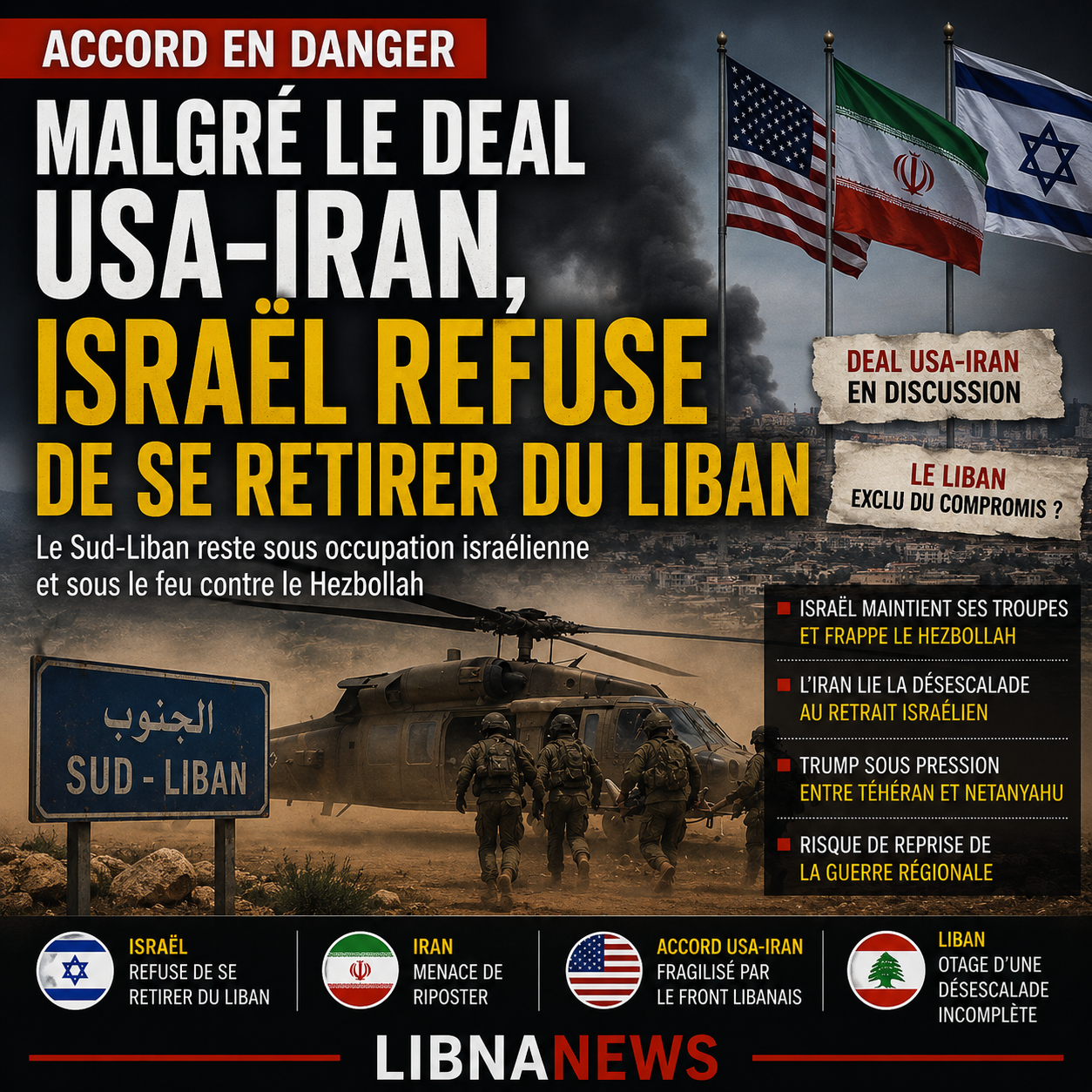
The possible agreement between the United States and Iran is not enough to bring Israel back from Lebanon. While Washington is trying to complete a de-escalation with Tehran, the Lebanese front remains the most fragile point in the system. Israel continues to affirm that it must maintain its freedom of action against Hezbollah and does not want to link its withdrawal from southern Lebanon to a comprehensive arrangement with Iran. This position contradicts Iranian logic, which makes the ceasefire in Lebanon a central condition for any broader agreement with Washington.
The problem is simple: the US-Iran deal can suspend part of the regional war, but it does not automatically resolve the Lebanese question. For Tehran, a de-escalation that would leave Hezbollah under Israeli military pressure would be incomplete. For Israel, an agreement that would limit its operations in Lebanon would amount to providing Hezbollah with indirect protection. Lebanon thus becomes the real test of the agreement: if Israel remains, strikes and maintains a military zone, Iran will be able to assert that de-escalation is nothing but a text without guarantee.
Israel maintains its freedom of action
The Israeli position is not new, but it becomes more visible as the US-Iran agreement approaches. Early in June, following the announcement of a ceasefire framework, Benjamin Netanyahu had already stated that Israel would continue its military operations in southern Lebanon. Information from Reuters indicated that Israeli forces continued to advance towards the Zahrani, in what had been described as their deepest incursion into Lebanon for the past 25 years.
Israel’s Defense Minister, Israel Katz, then expressed an even clearer line: the Israeli army would not withdraw from southern Lebanon at this stage, maintain its operations in a safe area and prevent the return of the inhabitants to the areas concerned. According to The Guardian, this position included, among other things, the Beaufort region, which became one of the military and heritage fixation points of the South Lebanese front.
This doctrine amounts to separating two files that Iran and Hezbollah want to link. Israel agrees to discuss regional de-escalation as long as it does not prevent it from continuing its operations against Hezbollah. But this distinction is precisely what Tehran refuses. Iran considers that its Lebanese ally cannot be left alone under the strikes while Washington and Tehran sign a regional truce.
The raid on Beirut as a message
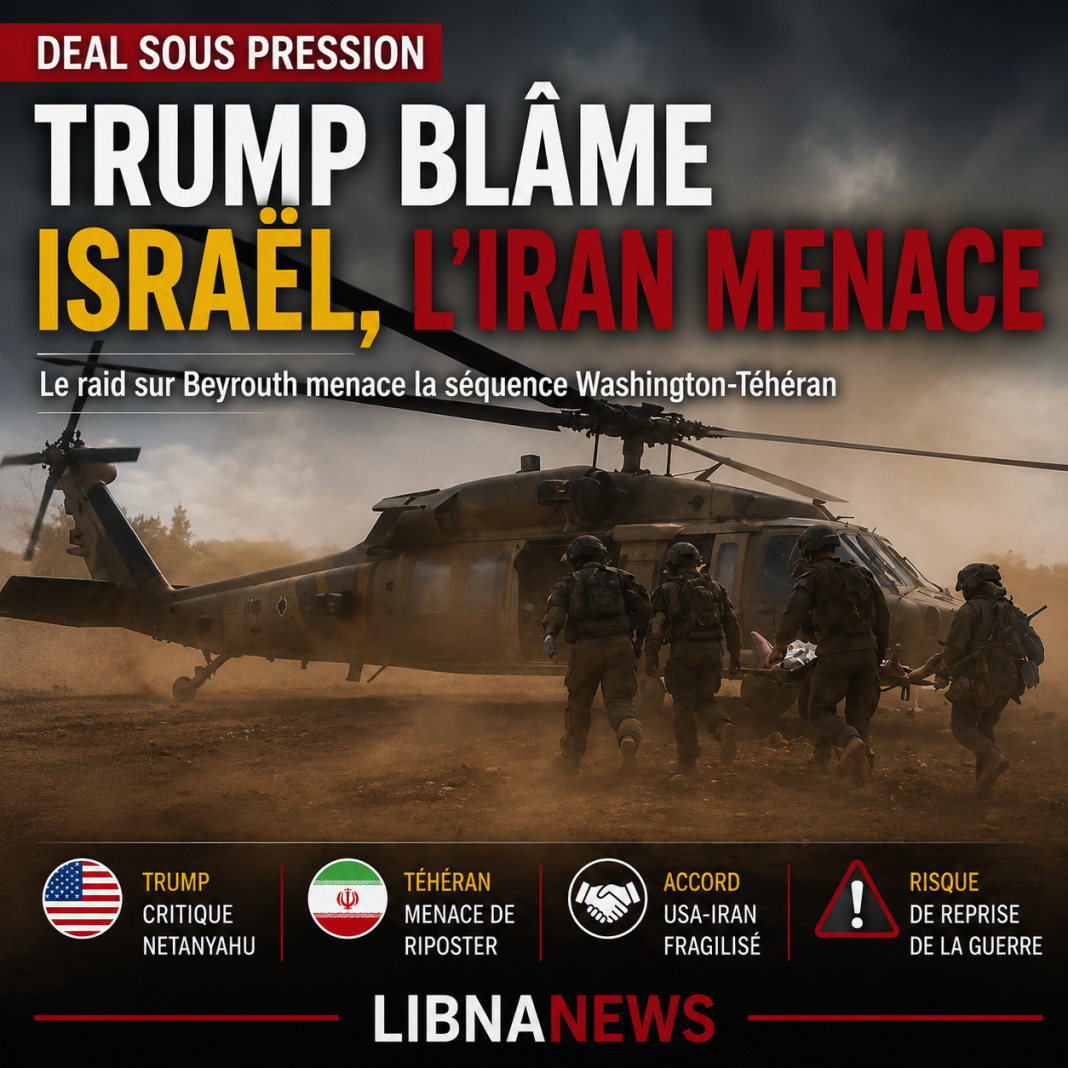
The latest Israeli strikes on the southern suburbs of Beirut have exposed this contradiction. According to Reuters, Israel hit Hezbollah targets in the southern suburbs of Beirut after projectiles launched north of Israel, while Iran threatened to retaliate and Washington tried to preserve an agreement with Tehran.
Donald Trump publicly criticized Israel for the timing of this strike. Axios reports that the U.S. president blamed Benjamin Netanyahu for his lack of judgement, believing that the raid was taking place at the same time as the U.S. was trying to finalize the deal with Iran. Trump said, however, that the deal was still possible, despite Iranian threats of retaliation.
This American reaction shows that Washington understands the danger: if Israel strikes Lebanon as Iran prepares to sign, Tehran can accuse the United States of being unable to control its ally. The raid, therefore, does not only become an operation against Hezbollah. It becomes a test of American credibility.
Hezbollah rejects truce without withdrawal
Hezbollah refuses to validate a truce that would leave Israel in Lebanon. According to Reuters, the movement rejected a ceasefire framework earlier this month, while Israel said it did not want to withdraw its troops. Hezbollah calls for a complete cessation of hostilities and an Israeli withdrawal before any lasting stabilization of the front.
This position complicates the US strategy. Washington would like to obtain a Lebanese-Israeli text supervised by the Lebanese State, strengthen the role of the Lebanese army and reduce the presence of Hezbollah in the South. But if Israel maintains a military zone or continues its strikes, Hezbollah can present the truce as a capitulation imposed on Lebanon. This reduces the leeway of the Lebanese government and weakens any delegation that negotiates on behalf of the state.
The difficulty is also inner. Lebanon can accept US-sponsored negotiations, but it cannot politically defend an agreement that does not provide for Israeli withdrawal, complete cessation of strikes, or secure return of internally displaced persons. In this case, the truce would become an occupation management mechanism rather than a sovereignty process.
USA-Iran deal does not regulate South Lebanon
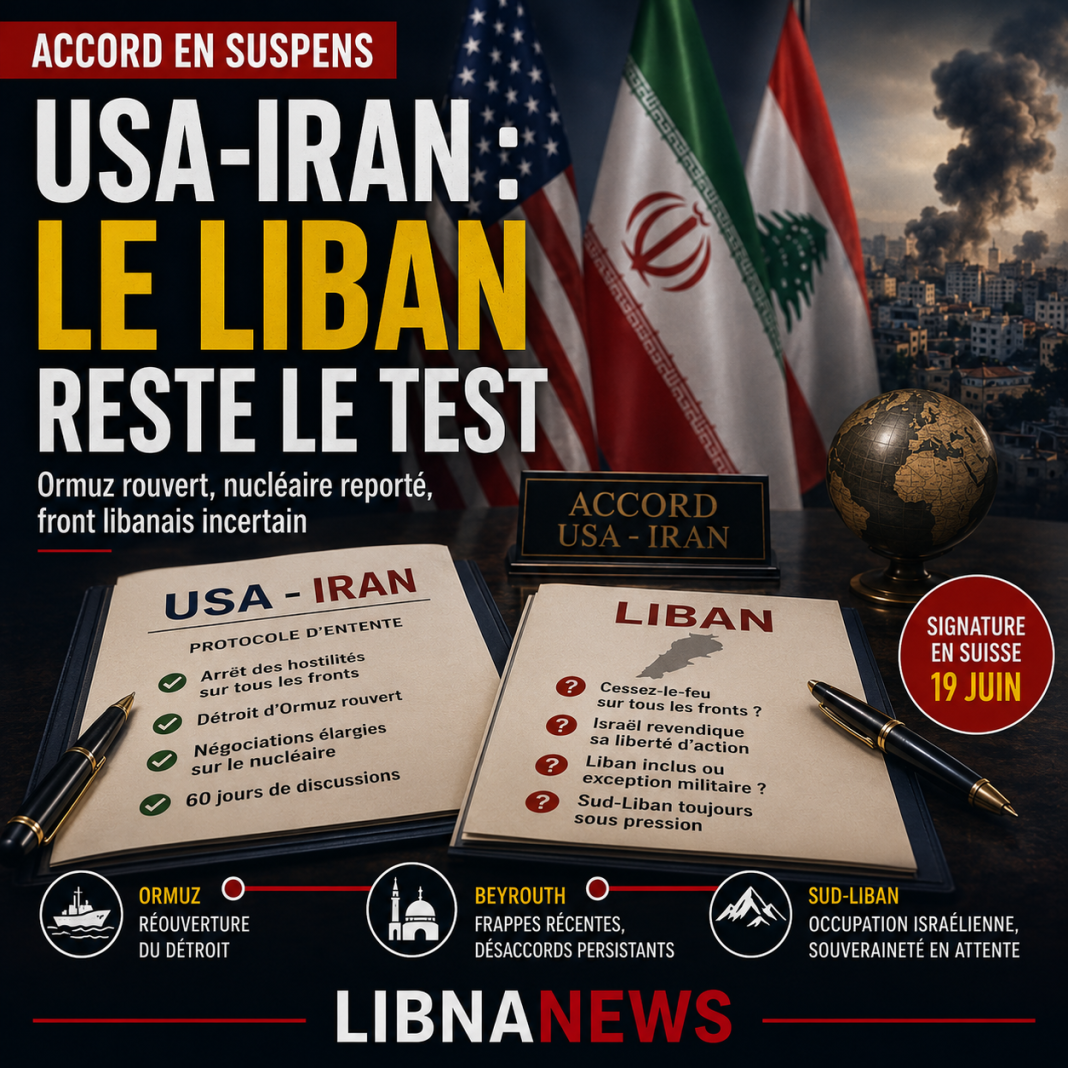
The US-Iran deal seems designed to stop regional escalation, reopen trading channels and reduce risks on energy roads. Reuters reported that Iran had not yet made a final decision on an agreement that Trump hoped to sign quickly. Axios and The Guardian indicate that Washington still considers the agreement possible, despite Israeli strikes and Iranian threats.
But the text can only work long-term if it answers a question: what happens to Lebanon? If the agreement suspends direct strikes between Israel and Iran while allowing Israel to continue operations in southern Lebanon, it creates a two-speed de-escalation. The Iranian front calms, but the Lebanese front remains open. Iran will then be able to keep Lebanon as a lever, while Israel will continue to say that it is not fighting Iran in Lebanon, but Hezbollah.
This diplomatic fiction is becoming increasingly difficult to maintain. Reuters has already described Iran’s willingness to keep Lebanon as a lever in negotiations with Washington. The Lebanese front is therefore not a secondary theatre: it is one of the instruments of pressure in the balance of power between Washington, Tehran and Tel Aviv.
The Trap for Washington
Washington is caught between two imperatives. On the one hand, Trump wants to sign an agreement with Iran and show that he can stop a regional war. On the other hand, Israel wants to maintain its military freedom in Lebanon. If Trump forces Netanyahu to reduce its operations, he faces a crisis with a strategic ally. If he lets Israel continue, he weakens his own agreement with Tehran.
That is why American criticism of Israel is not merely verbal. They reflect a strategic concern. Trump knows that a raid on Beirut can delay, weaken or fail an agreement with Iran. He also knows that Iran can use Lebanon to test Washington’s sincerity. A regional de-escalation that does not stop Israeli strikes in Lebanon is not credible to Tehran.
The risk is therefore that of an agreement signed but immediately undermined. Israel could say that it respects de-escalation with Iran while continuing to target Hezbollah. Iran could respond indirectly by Hezbollah or other regional allies. Washington would then be obliged to manage a war that no longer officially bears the name Iran-Israel war, but would continue through Lebanon.
Lebanon faces conditional sovereignty
For Beirut, the situation is dangerous. Lebanon may be excluded from the decision while bearing its consequences. If Washington and Tehran sign an agreement that does not clearly force Israel to withdraw, the Lebanese government will have to explain to its people why the war continues on its territory. If Hezbollah refuses the truce, Israel will be able to continue its operations. If the Lebanese State accepts the American framework, it may be accused of validating incomplete sovereignty.
The heart of the case is therefore the Israeli withdrawal. Without withdrawal, the ceasefire remains fragile. Without withdrawal, internally displaced persons cannot return for long. Without withdrawal, the Lebanese army cannot deploy as a credible sovereign force. Without withdrawal, Hezbollah retains a central argument: Israel occupies or controls part of Lebanese territory and continues to strike.
The US-Iran agreement can reduce some of the regional pressure, but it cannot replace a simple rule: Lebanon cannot be stabilized if Israel refuses to withdraw. Any diplomatic architecture that circumvents this evidence will only displace the crisis.
Incomplete de-escalation
The current sequence reveals a brutal truth: Israel wants an agreement with Iran that does not bind it to Lebanon, while Iran wants an agreement with Washington that also protects its Lebanese ally. Between these two positions, Lebanon remains the test ground. The attacks on Beirut, the operations in the South, the Israeli refusal to withdraw and the Iranian threats of response show that regional de-escalation cannot be compartmentalized.
The question for the next few days will therefore be less whether a US-Iran deal can be signed than what it is worth in Lebanon. An agreement that suspends direct fire between Israel and Iran but leaves South Lebanon under pressure will not be a regional peace. It will be a partial break, built on a Lebanese exception.
However, this exception may be sufficient to defeat the whole. If Israel refuses to withdraw, if Hezbollah refuses to lay down its weapons under occupation, if Iran makes the truce conditional upon stopping the strikes in Lebanon, then the US-Iran deal will remain suspended from the same flaw: Lebanon.