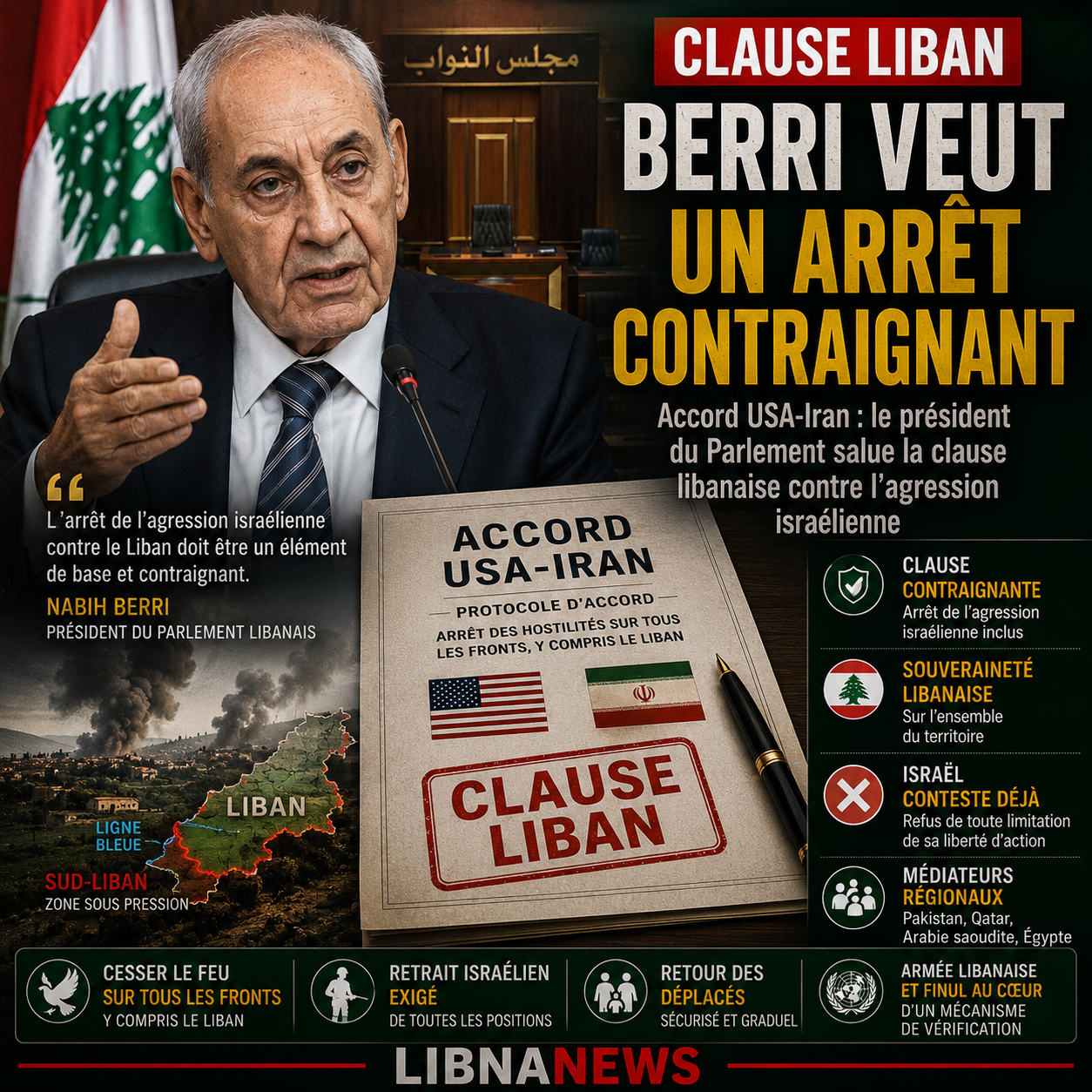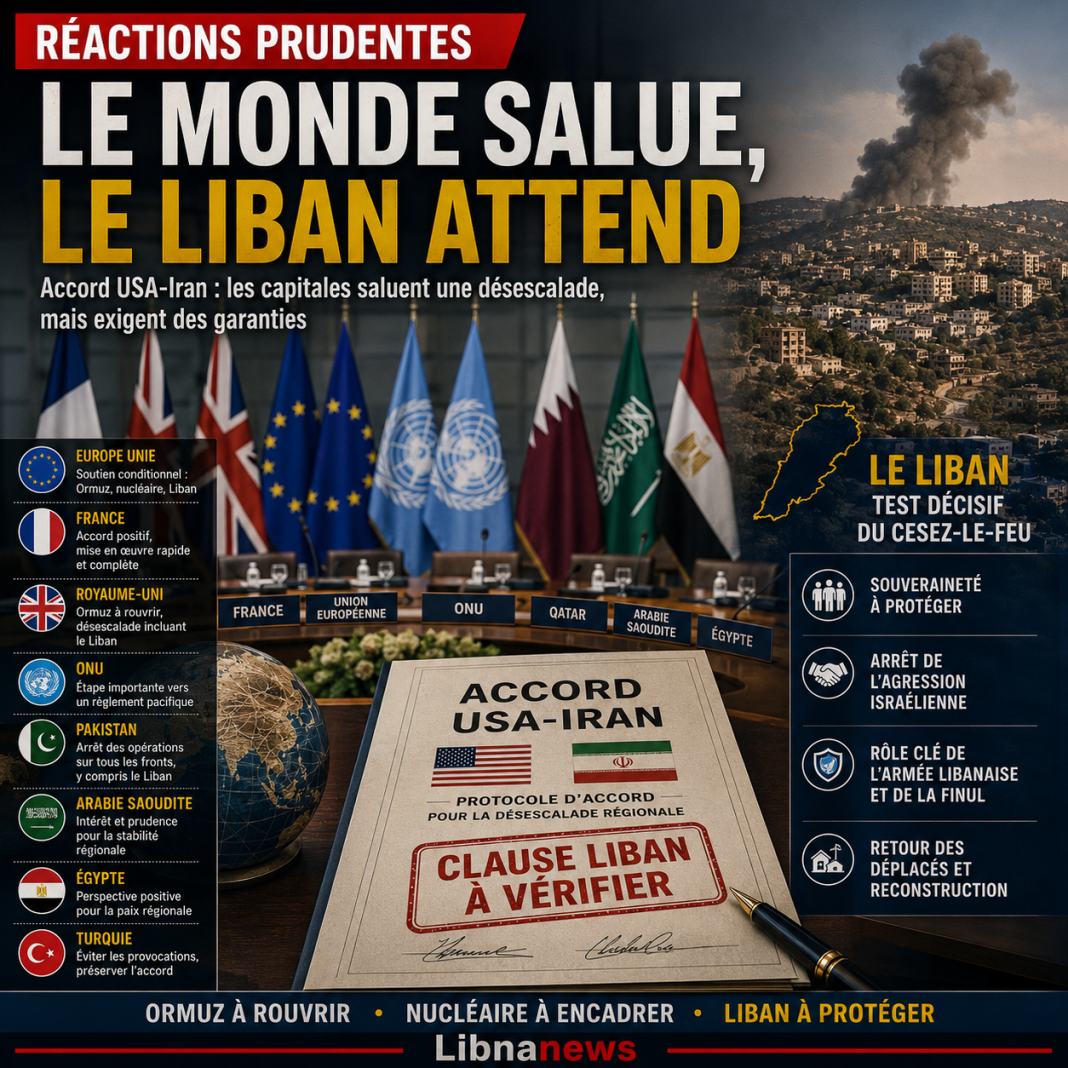






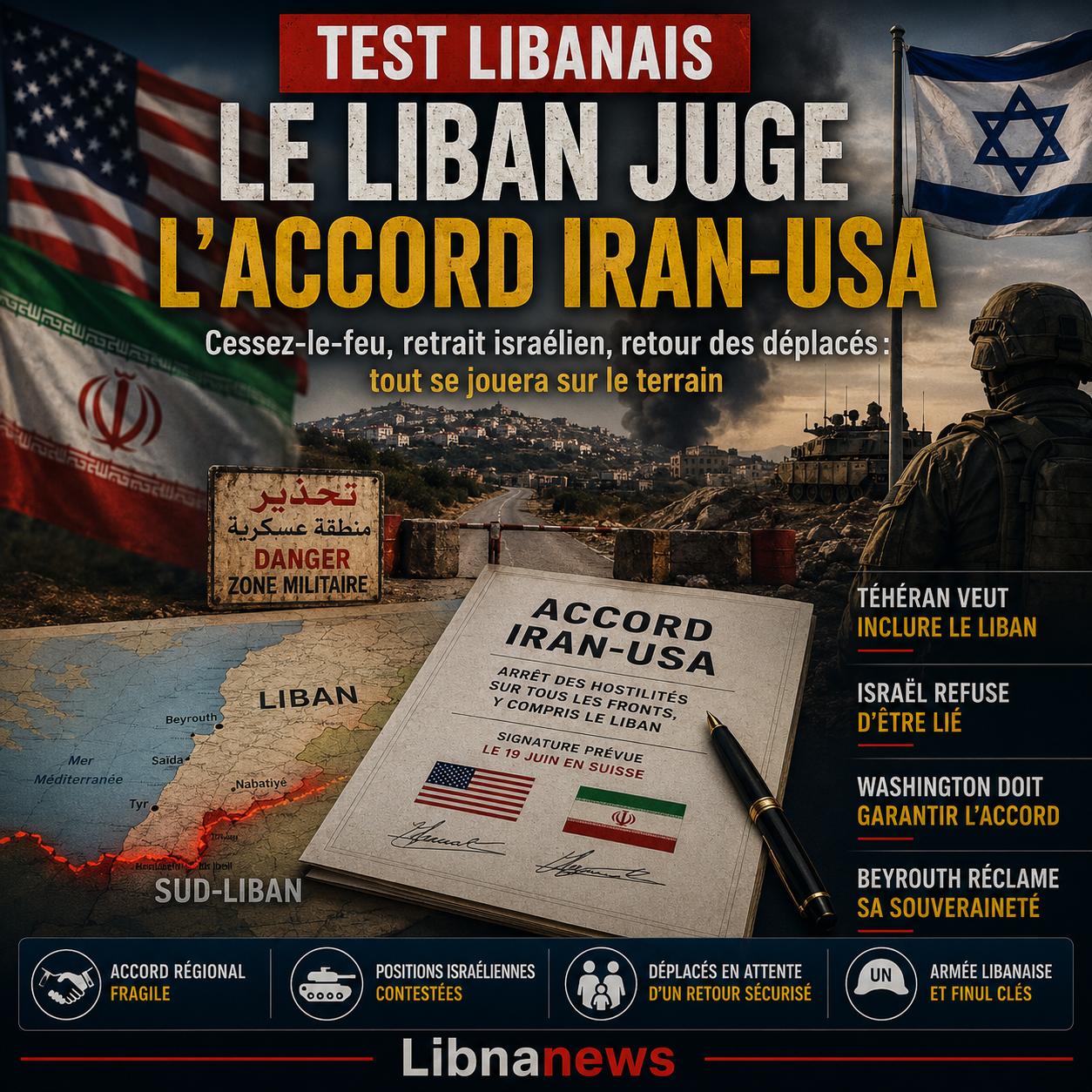
Lebanon has become the test of the Iran-USA agreement because it concentrates the contradictions that the text announced on the night of 14-15 June does not yet settle. Tehran claims that the ceasefire must cover all fronts, including Lebanese territory. Israel says it is not bound by an arrangement between Washington and Iran, and wants to preserve its freedom of action against Hezbollah. The US is trying to save a regional de-escalation, but must contain an Israeli ally who refuses to lose the military initiative. Beirut, finally, claims its sovereignty, without having the means to control the whole terrain alone. It is in this tension that the credibility of the deal will be played. Not in the declarations of principle, but in the South, in the southern suburbs of Beirut, on the return roads of the displaced and around the Israeli positions still contested.
Why Iran Wants to Include Lebanon
For Iran, Lebanon is not an annex. It is one of the main areas where its regional influence is evident. Since the beginning of the open escalation with Israel and the United States, Tehran has sought to prevent its allies from being treated separately from its own file. An agreement that reopens Ormuz, suspends the strikes against Iran and alleviates part of the economic pressure, while leaving Israel free to act in Lebanon, would be difficult to defend politically. It would give the impression that Tehran protects its territory, but accepts the gradual weakening of Hezbollah.
This reading explains the Iranian insistence on a ceasefire applicable to all fronts. It responds to a strategic logic. Hezbollah is a deterrent to Israel for Iran. It is also a central element of the regional axis built by the Revolutionary Guards for decades. If Lebanon were excluded from the compromise, Israel could continue its strikes, degrade Hezbollah’s capabilities and impose a security zone on the South without the Iran-USA agreement being formally violated. Tehran wants to close this loophole.
The inclusion of Lebanon also has an internal function. Iranian leaders must sell the deal to an opinion and political currents that denounce any concession in Washington. They may agree to postpone certain nuclear discussions, maintain a temporary freeze on the programme or negotiate sanctions. But they cannot appear as those who abandon their allies when Iran gets a break. By claiming that Lebanon is covered by the cessation of operations, Tehran transforms Hezbollah into a beneficiary of the compromise, not an adjustment variable.
Finally, the calculation concerns Iran’s regional credibility. If Hezbollah came out weakened and isolated from the agreement, other Tehran partners in Iraq, Yemen or Syria might doubt Iranian protection. Conversely, if Iran succeeds in imposing a halt to the strikes in Lebanon, it will show that its regional network remains useful in negotiating with Washington. Lebanon thus becomes concrete proof of the strategic value of this alliance. It is not enough for Iran to gain economic or maritime gains. It must be shown that de-escalation also protects its advanced lines.
Why Israel refuses to lose its freedom of action
Israel reads the same equation backwards. For his Government, accepting a strict limit on operations in Lebanon would be tantamount to allowing Hezbollah to rebuild. Israeli officials claim that the movement’s military infrastructure is integrated into civilian areas and that the army must be able to strike as soon as a threat arises. This doctrine is based on a simple idea: the ceasefire must not prevent preventive action. Tel-Aviv therefore wants to distinguish the Iran-USA agreement, which concerns the arm of arms with Tehran, from the Lebanese theatre, which Israel presents as an immediate security issue.
Security in northern Israel remains the main argument. The communities near the border were subjected to fire, evacuation and prolonged pressure. The Israeli government cannot tell these people that the army is withdrawing without obtaining a visible guarantee against the return of Hezbollah south of the Litani River. This inner constraint is strong. It explains the willingness to maintain positions, strike capability and aerial surveillance. It also explains evacuation orders and operations in Lebanese villages prior to the planned signing of the deal.
But this strategy creates a direct conflict with Washington. The United States needs the agreement to be seen as regional. If Israel continues to strike in Lebanon, Iran can say that America has not kept its word. Hezbollah can respond. War can be resumed by a peripheral front. That’s exactly what Donald Trump wants to avoid. The Israeli strike on Beirut, carried out just before the announcement of the compromise, showed that Israeli decisions can threaten the American calendar. She also revealed the White House’s agitation against Benjamin Netanyahu.
For Israel, the diplomatic risk is increasing. The country maintains strong US support, but can no longer assume that all its initiatives will be covered unconditionally. The US administration wants to protect its agreement, calm the markets and avoid a new sequence of energy inflation. An operation in Lebanon can now be judged not only at the expense of Israeli security, but also at the expense of American policy. This development does not suppress Israeli freedom of action. It makes it more expensive and more controversial.
Washington between regional deal and Israeli alliance
The United States is at the centre of a credibility test. They negotiated with Iran to stop a war on Ormuz, oil prices, US bases and domestic politics. They need the signature of June 19 to give the image of a return to control. But this image depends on Israel’s behavior in Lebanon. If Washington announces a ceasefire covering all fronts and the Israeli army continues its strikes, the agreement will immediately appear incomplete. If Washington imposes Israeli restraint, it will enter into a political confrontation with Netanyahu and with Israel’s American supporters.
This position is all the more delicate as the agreement brings forward several central issues. Iranian nuclear, enriched uranium stocks, sanctions and ballistic safeguards must be discussed later. The Trump administration can justify this postponement by the urgency of de-escalation. But it must then prove that the immediate ceasefire is working. Lebanon becomes the first evidence. A truce in the South would give negotiators time. A resumption of the strikes would cast doubt on the value of the text even before the opening of the next phase.
But Washington has tools. The United States can exert direct political pressure on Israel. They may condition certain operational coordinations, delay deliveries or limit diplomatic support in international forums. They can also strengthen the role of the Lebanese army and the Finul, in order to offer Israel alternative guarantees. But these instruments are politically sensitive. Trump has to deal with part of his camp committed to supporting Israel, and another side hostile to long wars. He must also avoid giving the impression that he is allowed to dictate the terms by Tehran.
The Lebanese case therefore tests the American ability to prioritize its interests. For years, Washington has often presented Israel’s security and regional stability as two compatible goals. The war has shown that these objectives can diverge. Israel may want to prolong military pressure. The United States may want to stop climbing. Israel can search for a safe area in Lebanon. The United States may want a regional agreement including Lebanon. American credibility will depend on its ability to resolve this contradiction without allowing everyone to interpret the text in their own way.
Lebanese weakness at the heart of the problem
Lebanon is the test of the agreement because it does not control the parameters of its own security alone. The Lebanese State claims a complete Israeli withdrawal, the cessation of strikes, the return of the displaced and the restoration of its authority to the South. These requests are constant and legitimate. But in the field, several forces have an ability to act. Israel maintains positions and carries out strikes. Hezbollah remains a structured military power. The Finul observes and accompanies without being able to impose alone. The Lebanese army represents the State, but its resources remain limited by the economic crisis and the internal power ratio.
This reality weakens the official word of Beirut. President Joseph Aoun and Prime Minister Nawaf Salam can affirm the principle of sovereignty. They may request the implementation of international commitments. They can plead for the return of the inhabitants and for an increased role for the army. But they do not sign the main agreement between Washington and Tehran directly. They depend on American guarantees, Israeli attitudes, Iranian positions and Hezbollah calculations. Lebanon is involved in the negotiations, but it does not control the timetable.
This loss of control has an internal political effect. Hezbollah can say that the regional balance of power imposed the inclusion of Lebanon. Its opponents can answer that the country remains hostage to a conflict decided elsewhere. Both speeches may coexist. The first reinforces the idea that armed resistance protects the territory. The second stresses that this same logic deprives the State of its full sovereignty. The Iran-USA agreement does not resolve this debate. It makes it sharper. If the strikes stop, Hezbollah will claim a deterrent victory. If they continue, the sovereignists will denounce the failure of a system in which the state does not decide.
Civilians are in the midst of this contradiction. The displaced people from the South want to go home. Farmers want their land back. Municipalities want to reopen roads, schools and clinics. But every return depends on a military balance that the inhabitants do not control. A village can be quiet in the morning and targeted in the afternoon. A road can be opened and then banned. A neighbourhood can be declared safe and then evacuated. This uncertainty gives the ceasefire a very concrete dimension. These are not just statements between capitals. The question is whether a family can sleep at home.
The conditions for a verifiable ceasefire
A verifiable ceasefire in Lebanon must first define its perimeter. The formula all fronts are not enough. It must indicate whether air strikes, artillery fire, destruction of buildings, ground incursions, drone overflights and targeted assassinations are prohibited. It should specify the areas covered, in particular around the Blue Line, southern Litani and the areas designated by Israel as a safe area. Without a clear definition, each side will be able to regard its own actions as defensive and those of the other as violations.
The second condition is the verifiable Israeli withdrawal of all disputed positions. This withdrawal cannot only be announced. It must be recognized by the Lebanese army, the Finul and international mechanisms. The mapping must be accurate. The villages concerned must be appointed. Access must be secured. Areas mined or destroyed shall be reported. If Israel retains positions on behalf of a yellow line not recognized by Beirut, the ceasefire will remain partial. He may calm down some strikes, but he will not end the territorial challenge.
The third condition is the organized return of the inhabitants. This return must be gradual, secure and accompanied. The authorities must be able to inspect villages, assess homes, demine, restore water and electricity, reopen schools and guarantee roads. Displaced persons cannot become the first testers of an uncertain ceasefire. They need reliable information, alert procedures and material support. An agreement that leaves civilians alone in the face of the risks of the ground will fuel mistrust and give armed actors an increased social role.
The fourth condition concerns the role of the Lebanese army and the Finul. The army must be on the front line to embody sovereignty. The Finul must provide international observation, liaison and support. But this requires means, clear rules and political protection. It cannot work if Israel refuses certain access, if Hezbollah contests certain deployments or if donors are content with statements. Strengthening the state in the South must be material, not just rhetoric.
The fifth condition is a mechanism for resolving violations. A strike, shot or incursion must not automatically lead to a response. There is a need for an alert chain, a rapid investigation, a assignment of responsibilities and a diplomatic response. The United States will have to play a role if it wants its guarantees to be taken seriously. Iran will also have to accept that the inclusion of Lebanon does not serve as a pretext for maintaining permanent armed ambiguity. Israel will have to give up the idea that it can be the sole judge of every threat.
That is why Lebanon has become the hardest test of the Iran-USA agreement. Ormuz can reopen under maritime surveillance. Nuclear discussions can be placed on the agenda. Sanctions can be arranged in stages. Lebanon, for its part, requires immediate application in a inhabited, divided and militarily fragile space. Every day will produce evidence or contradictions. A drone in the South sky, a family prevented from returning, a strike on a building, a refusal to withdraw or a blocked Lebanese patrol will suffice to measure the distance between the agreement signed in Switzerland and the real peace on the ground.