


Reconstructing without a snare: with what money can Lebanon really go back
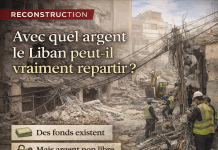
The truce shifted the Lebanese question from the military to the financing. The country has resources, loans and donors, but most of all lacks a clear chain of decision-making, cash flow and execution. The immediate reconstruction depends less on promises than on the rapid use of money that can already be mobilized.

Gold, tax and revenue failure: why the Lebanese state is looking for money where...
In Lebanon, the debate on gold reveals a deeper crisis: the state lacks revenue, but tries to tax a refuge that citizens clinged to after the bank collapse. Behind taxation is the whole question of trust, tax justice and financing of the country now.

A billion to avoid the fall: Lebanon seeks something to hold before it can...
Lebanon is seeking up to $1 billion to absorb the war shock, finance the budgetary emergency and avoid a further economic fall. It is not a recovery plan, but a temporary net to hold, while the damage is estimated at several billions and the reconstruction is awaiting.
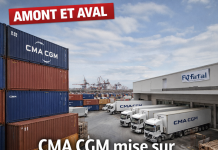
CMA CGM bets on Fattal for downstream
The acquisition of the Fattal group by CMA CGM marks a new step in the transformation of Rodolphe Saadé's group into an integrated player in the supply chain. Beyond maritime transport and traditional logistics, the operation opens up access to a regional distribution platform in eight countries. It strengthens its anchoring in the MENA region, brings the final markets group together and gives Lebanon an explicit place in a long-term industrial strategy.
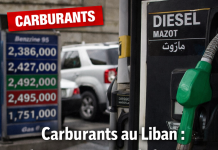
Fuels in Lebanon: Fuel oil leads up
The new fuel grid in Lebanon draws a very uneven movement. Gasoline 95 and 98 octane increased by 10,000 pounds, while fuel oil jumped by 53,000 pounds. Gas is down 20,000 pounds. Behind this tariff update, the most important signal is diesel, a central product for generators, part of transportation and many economic activities. For households, reading becomes more complex: slight increase for mobility, limited relief on gas, increased pressure on fuel oil uses.
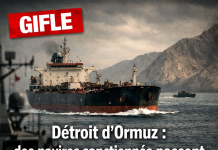
Strait of Ormuz: sanctioned ships pass
The passage of the US-sanctioned Rich Starry and the approach of the Washington-targeted Murlikishan put the Ormuz Strait at the centre of a new credibility test. The U.S. system officially targets ships linked to Iranian ports, without fully closing transit to non-Iranian ports. This legal and military nuance already weighs on insurers, shipowners and energy markets in a corridor where a decisive share of world oil and LNG is still passing through.
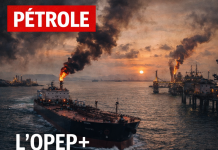
OPEC+ increases production against oil shock
The OPEC+ announced a production increase of 206 000 barrels per day as early as May 2026, but the oil shock caused by the war around Iran and tensions in the Strait of Ormuz limited its real reach. More than a massive contribution, this decision appears to be a strategic signal to global markets.
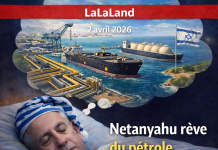
After the war, Netanyahu wants to transit Arab oil and gas through Israel
Netanyahu wants to transport oil and gas from Arab countries through Israeli ports after the war, but the project faces serious obstacles.
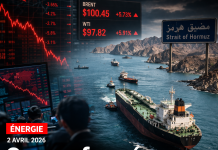
Ormuz closed, oil climbs in Asia
Strait of Ormuz: Asian markets falling and oil above $100 after Donald Trump's threats against Iran.

Tourism in Lebanon: the rebound of 2025 already threatened by the war
Tourism in Lebanon rebounded in 2025, but war is already threatening flights, reservations and a vital source of currency.
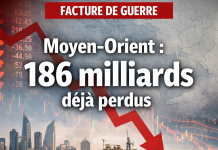
Middle East: 186 billion already lost
The conflict in the Middle East could already cost Arab economies $186 billion, according to UNDP. Regional GDP, employment, poverty and human development are at risk. The Gulf and the Levant appear to be the most exposed to this shock, which already exceeds an entire year of growth in the region.

Conflict in Lebanon: GDP goes back
The current conflict in Lebanon is causing another major economic shock. The available projections suggest a contraction of real GDP from 12% to 16% in 2026, combined with the collapse of tourism, damage to infrastructure, pressure on agriculture, rising energy bills and declining demand. Behind this recession, it is the entire economy of services, trade and production that is being weakened, in a country already experiencing six years of crisis.
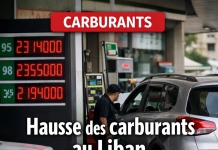
Fuel Increase in Lebanon: Oil Makes Yoyo
Fuel increases in Lebanon: petrol, fuel oil and gas are rising, on a world-wide oil base in yoyo after Trump said.

Trump retreats on Iranian energy, but Tehran denies talks
Trump postponed the strikes against Iran for five days, against the background of Iranian threats against the desalination of the Gulf and debate on international law.



