By striking Lebanon, Israel has already undermined the ceasefire with Iran
The ceasefire between Washington and Tehran is already colliding with the Lebanese front. Israel claims that the truce does not apply to Lebanon, but Pakistan, Iran and several European partners argue that it should be part of it. In continuing its strikes on Lebanese territory, the Hebrew State not only challenged this reading, but also revived a history of truce violations, from the post-2006 overflights to the violations denounced after the truce of 2024.
Massive Israeli strikes in Lebanon: a preliminary assessment of at least 200 deaths
The Israeli strike at the Nasereddine supermarket in Hay El Sellom caused a new wave of shock in the southern suburbs of Beirut. In the following hours, many calls for blood donation were circulated to respond to the influx of wounded people. This attack is part of a day of intense bombing of Beirut, Saida, Bekaa and South Lebanon, despite the announced truce between Washington and Tehran.
Series of Israeli strikes in Lebanon: Beirut, Saida, Bekaa and the South targeted
Israel claimed a large-scale operation in Lebanon, claiming to have hit about 100 Hezbollah sites in about 10 minutes in Beirut, Bekaa and the south of the country. On the ground, strikes were reported on Saida, Hey al-Sellom, the southern suburbs of Beirut, the heights of Shamshtar, Arab Salim, Tiri, Jouya, Qlaouiyah, Kunine and Majdal Selm. This sequence confirms that the Lebanese front remains fully active despite the regional truce.
Trump wants to « work » with Tehran on buried nuclear
Donald Trump said on 8 April that the United States would work with Iran to extract "buried" nuclear material, following the two-week ceasefire between Washington and Tehran. This declaration places nuclear power at the centre of the negotiations, but Tehran has not publicly confirmed this pattern. Between the American political display and the vagueness of the concrete modalities, this dossier announced as one of the first tests of the strength of the truce.
Hezbollah evokes a « historical victory » and asks the displaced not to return
Hezbollah claims to be close to a "historical victory" and asks the displaced not to return until an official announcement of a ceasefire in Lebanon.
Zugzwang in the Gulf: when all options lead to loss
Faced with the confrontation between Israel, the United States and Iran, the Gulf monarchies are entering a real geopolitical zugzwang. Whatever the outcome of the conflict, they risk a strategic, economic and psychological retreat, forcing their regional ambitions and revealing the fragility of a model based on externalised security and expansion.
Israel lost the battle of Lebanon
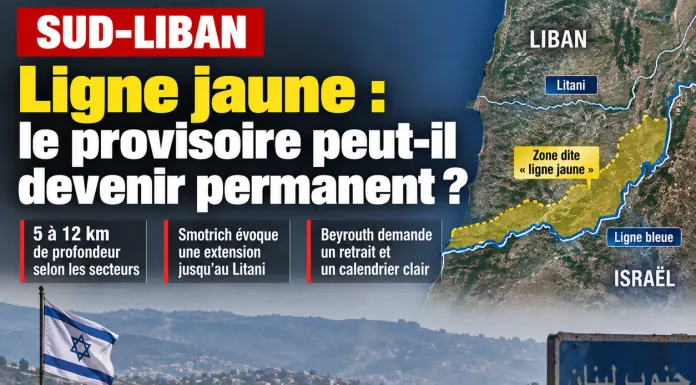
The ceasefire between Washington and Tehran profoundly changed the reading of the war in Lebanon. Israel has struck massively, displaced hundreds of thousands of civilians and sought to impose a strategic depth to the Litani. Yet the Hebrew state neither destroyed Hezbollah nor consolidated a political victory. Worse, the settlement was initiated by Donald Trump despite pressure from Netanyahu and several Arab allies. The Iranian influence, far from receding, comes out reinforced in Lebanon, including in the definition of the ceasefire. The sequence also reveals increasing Israeli wear and tear, both human and defence capabilities.
Israel continues its strikes in Lebanon and is already threatening the ceasefire
The announced ceasefire between Washington and Tehran is already colliding with the Lebanese front. Israel claims that the truce does not apply to Lebanon and directly threatens several parts of the southern suburbs of Beirut: Haret Hreik, Ghobeiry, Lailaki, Hadath, Bourj el-Barajneh, Tahwitat al-Ghadir and Chiyah. Oppositely, Iran suggests that continued Israeli operations could lead to reprisals against Tel Aviv. Lebanon is once again the breaking point of the regional truce.
Why the United States Loses the Gulf War
Why the United States loses from the Gulf War: Ormuz, allies, regional security and diplomatic isolation.
Israel and the Gulf, other great losers of the Iranian sequence
Donald Trump's decision to move towards a settlement with Iran, despite pressure from Netanyahu, Saudi Arabia, the United Arab Emirates and Republican allies, is challenging maps in the Middle East. According to Axios, J.D. Vance and Steve Witkoff pleaded in the close circle to accept the deal. This sequence made Israel and the Gulf the other big losers: they did not get the maximum pressure continued, while Iran, for its part, remains at the centre of the game and imposes its conditions.
The Lebanese authorities, the great losers of the ceasefire
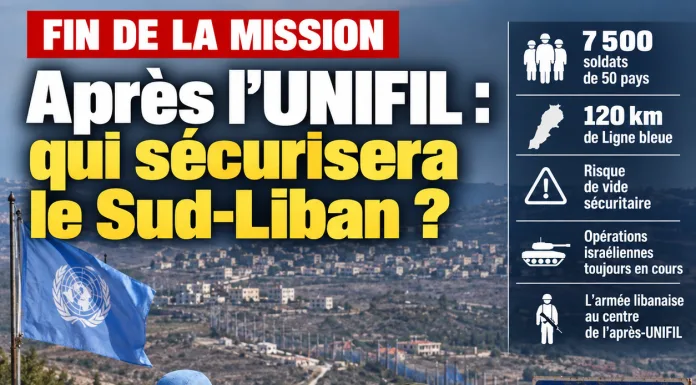
The ceasefire between Washington and Tehran revealed much more than an attempt at regional de-escalation. He mainly exposed the weakening of the Lebanese state. Beirut did not weigh at the centre of the negotiation, Iran more visibly defended the inclusion of Lebanon in the truce, Israel continued its operations, and the Lebanese army did not restore the sovereign credibility promised by its deployment to the south. Disputed by their opponents as well as by their allies, institutions are now more vulnerable than ever.
Lebanon excluded from the truce? The Battle of the Story
Netanyahu excludes Lebanon from the ceasefire, while Iran and Pakistan say the opposite. Tyre becomes again the decisive test of truce.
Hezbollah claims to have respected the ceasefire despite Israeli strikes
Hezbollah claims to have respected the ceasefire despite the continued Israeli strikes in Lebanon, where the truce remains contested.
Stop the fire with Iran: what Tehran is asking for, what Washington is looking...
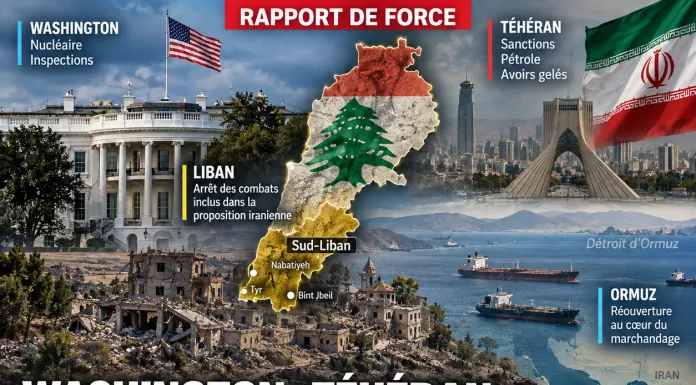
The provisional ceasefire between Washington and Tehran suspended the escalation, without resolving the substance of the conflict. Iran has transmitted a ten-point plan that articulates security, sanctions, Ormuz and the protection of its allies. On the other hand, the famous list of "Trump's 15 points" remains unclear in major international sources, even though US priorities are identifiable. Between military respite, diplomatic battle and exclusion of Lebanon from the recognized perimeter of the truce by Netanyahu, this sequence redefines the balance of power without yet producing lasting agreement.