

Trump’s defeat at the midterms puts Israel ahead of a less predictable American relationship. The Democrats won the House and Senate in the November 3, 2026 election. But parliamentary change does not mean breaking the alliance or stopping arms sales. Above all, it requires a distinction between presidential commitments, voted funding and the conditions for their implementation.
Trump’s defeat from Israel
The first change concerns Donald Trump’s ability to obtain texts favourable to his policy. The second relates to the control of his decisions. A hostile majority can multiply hearings, request documents and challenge credits. These levers are not confusing: blocking a new proposal is often simpler than modifying an existing device.
The new Congress will take office on 3 January 2027. Until then, outgoing parliamentarians retain their prerogatives. For Israeli officials, end-of-year arbitration remains important. A promise negotiated with the White House must be examined according to its status: political declaration, authorization, credit actually opened or contract.
This distinction avoids a personalized reading of the alliance. Proximity to the President remains useful, but it does not replace the necessary votes. Conversely, the retreat of the Republican Party does not erase support for Israel within the Democratic Party. The analysis should focus on possible decisions, rather than giving all elected representatives a single focus.
Military aid, first test of the new power ratio
On 3 November, Trump announced that he would stop in 2027 the annual aid to Israel, which is four billion dollars. Arms sales would continue. This announcement does not prove that budgetary suppression is already being implemented. However, it makes the financing of the military relationship essential in future American debates.
The existing framework provides a precise benchmark. The political agreement signed in 2016 covers fiscal years 2019 to 2028. It provides $38 billion, subject to appropriations voted in Congress. The envelope includes 33 billion military financing and 5 billion missile defence. This mechanism does not constitute an automatic payment that could be eliminated or guaranteed by balloting alone.
The annual average of $3.8 billion also explains why the rounded amount announced by Trump must be distinguished from the detailed framework. Exceptional funding and other programmes are not limited to this single envelope. Presenting four billion as the entire US military cooperation would give an incomplete picture of the relationship.
For Israel, the subject is concrete: who pays for the equipment and according to what timetable? Replace a grant with a purchase can preserve cooperation while moving the expense. The cost must then find its place in Israeli arbitrations. This could increase tensions between military needs, other public spending and levies. This consequence remains conditional, as the final device is not stopped.
Weapons do not depend on a single vote
Congress has procedures for reviewing arms sales. Some transactions must be notified to the Commission prior to their finalization. Thresholds, deadlines and exceptions depend on the equipment and the recipient country. A change of majority can therefore change the intensity of the control without interrupting all deliveries.
Nor does a parliamentary resolution of disapproval constitute an assured judgment. The President may veto it. To overcome this, both chambers must have the required constitutional majorities. An ordinary democratic majority does not guarantee these votes. The executive also has emergency provisions, the use of which may itself become a challenge.
The Israeli stake will therefore be less binary than the choice between support and abandonment. The discussions may cover certain equipment, their use, the guarantees requested or traceability. An enhanced debate can slow down a decision, impose a political cost or promote a compromise. These possibilities should not be transformed into measures already adopted.
The Israeli authorities should document the requests made to Washington. They will have to meet several interlocutors, with sometimes different criteria. The continuity of the military relationship will depend as much on procedures and majorities on each text as on general declarations on friendship between the two countries.
Gaza puts conditions of employment back in the centre
The Palestinian question does not disappear behind the institutional calculations. The 29 October humanitarian report still describes attacks, fire and destruction in Gaza. He also mentioned incidents affecting humanitarian operations. These findings provide concrete evidence to assess the conditions under which US commitments are implemented.
The same document highlights the difficulties faced by displaced families in approaching the rains. It also reports an increase in settler violence in the West Bank. These situations are not consequences of the American election. They constitute the context in which the future Congress will examine assistance, humanitarian access and the protection of civilians.
A democratic majority can demand more frequent accounts. This does not mean that it will agree on a general suspension of aid. The elected representatives will have to choose between different instruments: reports, budgetary conditions, requests for guarantees or opposition to certain transactions. The scope of a measure will depend on its text, support and application.
For the populations concerned, the relevant criterion remains material. A hearing does not guarantee the entry of a convoy. A declaration does not protect a dwelling. Changes will have to be measured through access to relief, personal safety and actual decisions on military equipment.
Iran remains a presidential file, but monitored
The electoral setback does not transfer the daily conduct of diplomacy to Congress. Trump remains President and Commander-in-Chief. However, parliamentarians have levers on financing, authorisations and control of operations. Israel must therefore distinguish between the existence of an American military capability and the political acceptability of its employment.
A hostile majority could ask for more details on the objectives, costs and limits of an operation. It could also challenge the terms of an agreement. These two positions are not contradictory: an elected official may refuse a poorly defined intervention and may find certain diplomatic guarantees insufficient.
It would be misleading to deduce from the Democratic victory an automatic relaxation with Tehran. A negotiation depends on its conditions and participants. The election changes the American framework for discussion; It does not resolve regional disagreements or Israeli security requirements. Any compromise announcement should be evaluated on the basis of its verifiable content.
The Senate will weigh on tomorrow’s interlocutors
The upper chamber also intervenes in presidential appointments subject to its agreement. This power includes ambassadors and several administrative officials. A democratic majority may examine candidates, their statements and their ability to perform their duties. However, it will not have the power to choose the people proposed by Trump alone.
For Israel, this control can make the debate on US priorities more visible. The hearings will ask how officials intend to reconcile military cooperation, regional interests and legal obligations. The result will depend on actual appointments and votes, not just the partisan label of the majority.
The Israeli-American relationship is therefore entering a phase in which continuity must be negotiated more explicitly. The first points to follow are identifiable: end-of-year credits, the content of a possible change in military aid, and then committee presidencies and hearings from January onwards. It is on these decisions that the effect of Trump’s setback for Israel will be measured.
Sources and references
- Results of both chambers, updated on 4 November
- November 3rd announcement on aid to Israel
- CRS: military aid and agreement 2019–2028
- CRS: Parliamentary control over arms sales
- OCHA: humanitarian report of 29 October 2026
- Senate: appointments
- Senate: Beginning of mandates
- CRS: Presidential powers in foreign policy
- Senate: votes and majorities required
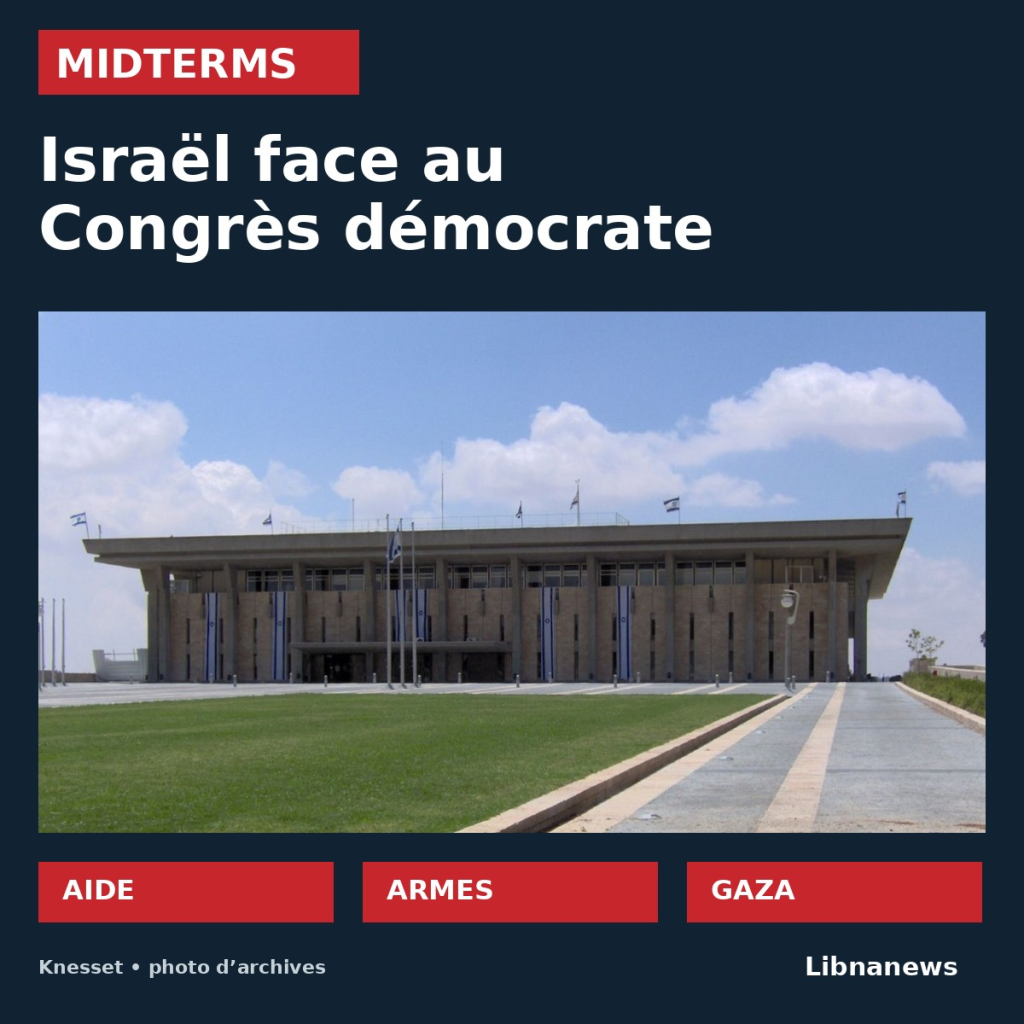
- Photo Knesset, Joshua Paquin, CC BY 2.0






Comments