





The Greek Catholic Melkite Church in Lebanon is a branch of the Eastern Catholic Church that follows the Byzantine rite. It represents the country’s second largest Christian community after the Maronites, with about 425,000 faithful in Lebanon in 2009, representing nearly 10 per cent of the Lebanese Christian population, and a global total of about 1.6 million members in 2023. It plays a pivotal role in the religious, social and political life of Lebanon, due to its historical heritage dating back to the early Christians of Antioch, and its unique position as a bridge between Eastern and Western Christian traditions. Based on an Arab and Byzantine identity, it influenced the formation of the modern Lebanese state, notably by advocating for the inclusion of Christian regions during the creation of Greater Lebanon in 1920.
The origins of the Melkite Church in Lebanon
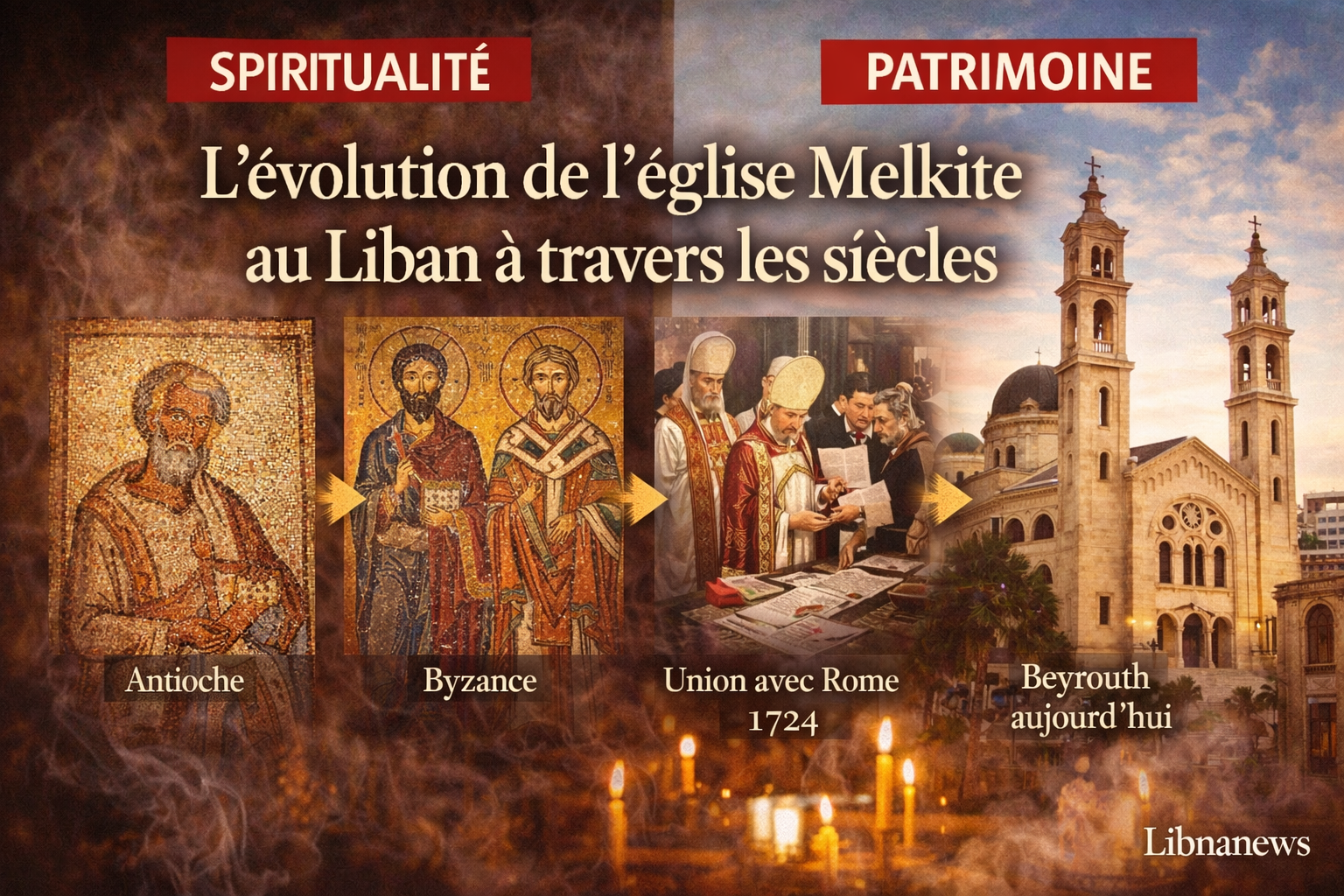
The roots of the Melkite church date back to the early centuries of Christianity, within the patriarchate of Antioch, traditionally founded by the apostles Peter and Paul in the first century AD, where the disciples were called « Christians » for the first time according to the Acts of the Apostles (11:26). The term « melkite » derives from the Syriac and from the Arabic « malka », meaning « king » or « emperor », and was originally used in the fifth century to designate the loyal Christians to the Byzantine emperor who accepted the decisions of the Council of Chalcedon in 451 affirming the dual nature of Christ (divine and human), as opposed to the monophysites that insisted on a unique nature. This distinction emerged in the patriarchates of Alexandria, Antioch and Jerusalem, where the Melkites were a minority loyal to imperial orthodoxy, often in conflict with the monophysitis majorities in Egypt and Syria.
In Lebanon, Melkite communities were present from late antiquity, integrated into the Roman province of Syria-Phoenicia. The Arab conquest in 636, following the Battle of Yarmouk, marked a major turning point: the Arabic-speaking Melkites became part of an emerging Islamic society, preserving their Byzantine rite and their liturgical Greek language, which was gradually Arabized from the eighth century onwards to better adapt to the local population. Influenced by Ghasanid traditions, a Christian Arab tribe allied with Byzantium in the sixth century, the Melkites maintained a Christian Arab identity, serving as a cultural link between the Byzantine Empire and the Arab Caliphates. Figures like Saint John Damascene (675-749), a Melkite theologian from Damascus, defended faith against Byzantine iconoclasm and emerging Islam, deeply influencing Melkite theology.
The Melkite church in Lebanon during antiquity
The Melkite church, known as the Greek-Catholic Melkite Church, emerged in the Middle East, especially in Lebanon and Syria, from the first centuries. She played a key role in spreading Christianity, with Antioch as the major apostolic centre. The first missionaries, like St Paul on his journeys (c. 45-58 AD), propagated the faith, adapting local traditions and liturgies, including the use of the Aramaic and Greek. In the second century, communities settled in Phoenician cities like Tyre and Sidon, mentioned in the Gospels (Matthew 15:21-28), where Jesus healed the daughter of a Canaanite woman.
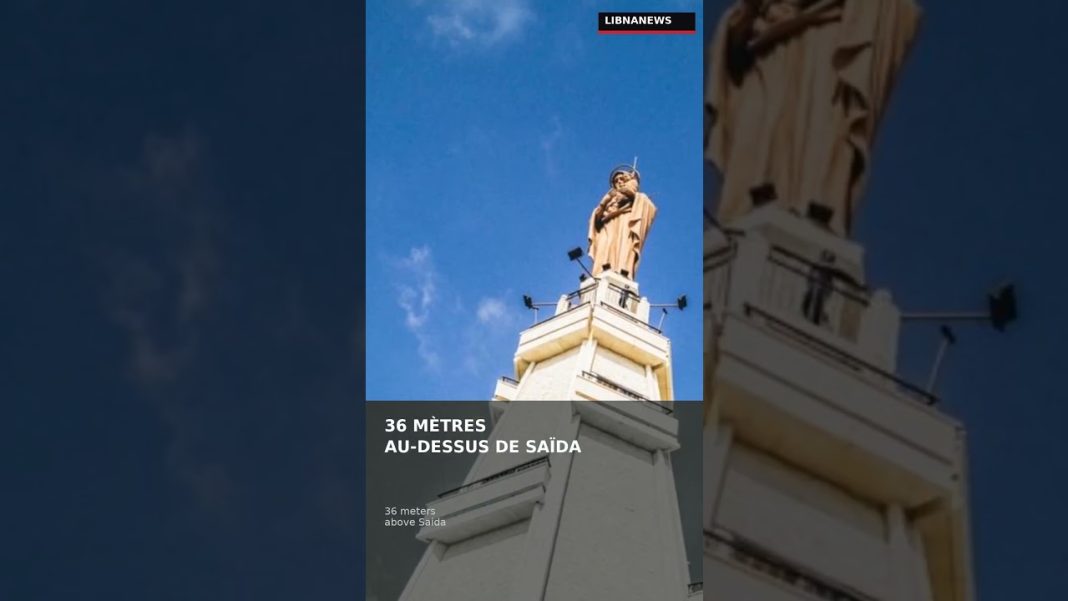
Influenced by the theological schools of Antioch (historical and literal approach to the Bible) and Alexandria (allegorical interpretation), the church adopted the liturgy of St John Chrysostom (347-407, originally from Antioch, which became the Byzantine norm, and incorporated Alexandrian elements into his Christology. In the fifth century, the Melkites defended Chalcedonian orthodoxy against the Ariane and Nestorian heresy, strengthening their Byzantine identity at councils such as Nicaea (325) and Constantinople (381). In Lebanon, monasteries such as that of Saint-Sauveur near Saida became learning centres, preserving theological manuscripts and promoting the progressive Arabization of the liturgy under the Omayyads (661-750). Despite sporadic persecutions under caliphs, the Melkites often enjoyed the status of dhimmi, paying for jizya to practice their faith.
The influence of the Melkite church in Lebanon during the Byzantine era
During the Byzantine Empire (IVth-Xth centuries), the Melkite church flourished in Lebanon, recognized as an official church and aligned with Constantinople. The bishops participated in ecumenical councils, contributing to the trinitarian and Christological doctrine. Antioch became a major theological centre, with figures such as St John Chrysostom and Theodore of Mopsueste (350-428) developing an influential biblical exegesis. The Byzantine reconquest of Antioch in 969 by John I Tzimiskès strengthened imperial ties, but isolated the Melkites after the Arab conquest of 636, placing them under Islamic domination while maintaining their religious autonomy under Umayyad and Abbasid caliphs.
In Lebanon, the Melkites developed monastic networks, as in Qannubin in the Qadisha Valley, which served as spiritual and cultural refuges. Emperor Justinian I (527-565) promoted the construction of churches, like that of St.Elie at Zahlé, strengthening Byzantine influence. However, the iconoclastic controversies (726-843) divided the community, with Melkites like St.John Damascene defending icons from the monastery of Mar Saba in Palestine, influencing neighbouring Lebanon. The Arab Melkites played a role in translating Greek texts into Arabic, contributing to the intellectual revival under the Abbasids.
The challenges of the Melkite Church in Lebanon during the Crusades
The Crusades (1095-1291) were a hostile period for the Melkites in Lebanon. The Latin Crusaders, who arrived in Antioch in 1098, imposed a Latin patriarchy, exiled the Melkite hierarchs to Constantinople and persecuted the Eastern Christians considered schismatic. In Lebanon, in the counties of Tripoli and Antioch, the Melkites had to navigate between Byzantine loyalty and Latin pressure, preserving their rite despite attempts to Latinize by military orders such as the Templars. This deepened East-West tensions, culminating in the bag of Constantinople in 1204 during the fourth crusade, which further alienated the Melkites.
Events such as the capture of Tripoli in 1109 by Raymond de Saint-Gilles forced the Melkites to coexist with the Francs, often through forced taxes and conversions. However, some Melkites collaborated, such as Patriarch Euthymus II (1182), who confirmed union with Rome under cross-influence, albeit temporary. The Melkites found refuge in the Lebanese mountains, preserving their identity in the face of the Mamluk invasions that ended the states crossed in 1291. This era strengthened their resilience, but reduced their numbers due to massacres and migration.
The Melkite church in Lebanon during Ottoman rule
During the Ottoman Empire (1516-1918), the Melkite church was recognized as a distinct « millet » in 1848, granting religious and judicial autonomy under Patriarch Maximos III Mazloum (1833-1855), who obtained the patriarchal title of Rome in 1838. However, restrictions and discrimination persisted, with initial persecutions until the 17th century, including high taxes and bans on church bells. The schism of 1724 divided the antiochian church: Cyrille VI Tanas, elected pro-Rome patriarch, led Catholics to Lebanon to flee the Ottoman and Orthodox persecutions, recognized by Pope Benedict XIII in 1729.
In Lebanon, communities settled in Zahlé, which became a Melkite centre in the 18th century thanks to Jesuit and Capuchin missionaries promoting conversions in coastal cities such as Beirut and Sidon. Euthymios Saifi, Metropolitan of Tyre and Sidon (1683-1723), reformed the liturgy and founded the Order of the Holy Savior, strengthening union with Rome. The Tanzimat reforms (1839-1876) improved the situation, allowing the expansion of Melkite schools and hospitals, such as the Patriarchal College of Beirut in 1865. Sectarian conflicts, such as the 1860 massacres in Damascus and Mount Lebanon, affected the Melkites, killing thousands and forcing migrations to Zahlé. Grégoire II Youssef (1864-1897) promoted education and poached absolute papal infallibility at Vatican Council I (1870).
The Melkite church in Lebanon during the French colonial period
Under the French mandate (1920-1943), the church enjoyed protection, promoting its development and political influence. The French missionaries influenced education and theology, but the church resisted Latinization, preserving its Byzantine rite. Patriarch Cyrille IX Moghabghab (1925-1947) strengthened the institutions, despite internal tensions with the seminary of St. Anne in Jerusalem, and participated in the delegation for the creation of Greater Lebanon in 1920, pleading for a state including Melkite regions such as Zahlé and Bekaa. The Archdiocese of Beirut and Byblos was raised in 1881, becoming a key administrative centre.
The French favored the Melkites by providing grants for schools, such as the Damascus Patriarchal Institute transferred to Beirut in 1930, and protecting Christian minorities from tensions with Muslims and Druzes. However, challenges arose with the Druze revolt of 1925, which damaged Melkite churches in southern Lebanon. The Melkites contributed to independence in 1943, with figures such as the bishop of Zahlé supporting the National Confessional Pact, which reserved parliamentary seats for the Melkites. This period saw population growth, with Melkites moving to Beirut for economic opportunities.
The Melkite Church in Lebanon during the Lebanese Civil War
The civil war (1975-1990) devastated the Melkite church: destroyed villages, damaged churches, and mass exoduses abroad, halving the Christian population in some areas. Events such as the siege of Zahlé in 1981 by Syrian forces caused hundreds of Melkite deaths and the destruction of Christian neighbourhoods. Despite this, she promoted interfaith reconciliation, with ecumenical initiatives such as meetings between Melkite and Orthodox patriarchs. Patriarch Maximos V Hakim (1967)-2000 called for peace during synods and supported refugees through charitable organizations, distributing humanitarian aid to the camps.
The Melkites were involved in political alliances, as with the Lebanese Christian Forces, but pleaded for dialogue, organizing interreligious conferences in Bkerké in 1983. After the war, the church rebuilt sites such as St. Elijah’s Cathedral in Zahlé, damaged in 1982, and promoted education to retain young people. The Taif Accords (1989) strengthened the religious system, granting Melkites key posts in parliament.
Changes and Reforms of the Melkite Church in Lebanon in the 20th Century
In the 20th century, reforms modernized the Melkite church. Gregory II Youssef (1864-1897) founded colleges in Beirut (1865) and Damascus (1875), reopened the seminary of Ain Traz (1866), and adopted the Gregorian calendar in 1857 to align with Rome. At Vatican I (1869-1870), he defended the rights of the Eastern Patriarchs against Roman centralization. Maximos IV Sayegh (1947-1967) was a key figure at Vatican II (1962-1965), defending Eastern traditions, rejecting Latinization and promoting the use of vernacular languages in the liturgy.
In Lebanon, the church promotes education through schools like Zahlé, educating thousands of students, and social development with hospitals and orphanages. Ecumenical initiatives include dialogue with antiochian Orthodox, culminating in the Zoghby Initiative (1995) for a double communion. Under Gregory III Laham (2000-2017), the church committed itself to helping Syrian refugees in 2011, distributing food and medical care. Post-Vatican II reforms made the liturgy more accessible.
The Melkite Church in Lebanon Today: Challenges and Opportunities
Today, the Melkite church faces the massive emigration of young people due to economic, political and security crises, with more than 200,000 Lebanese Christians left since 2019, reducing the community to less than 300,000 in Lebanon in 2023. The demographic decline is exacerbated by sectarian competition and secularization, with an increasing average age among the faithful. However, opportunities are emerging: role in the post-explosion peace of Beirut (2020), where the church distributed assistance to 50,000 families via Caritas. Under Patriarch Youssef Absi (since 2017), digital initiatives such as online masses attract young people, and ecumenical partnerships with Maronites strengthen Christian unity.
The church manages challenges such as political corruption affecting grants to Melkite schools, which educate 20% of Lebanese Christian students. Opportunities include religious tourism, with restoration of sites such as the monastery of Saint-Sauveur, and interreligious dialogue with Shiite and Sunni Muslims via annual forums in Beirut.
The importance of the Melkite Church in Lebanon in the regional context
The Melkite Church serves as a bridge between Catholics and Orthodox, participating in dialogues such as the Zoghby Initiative (1995) for a double communion with the Orthodox Church of Antioch. In Lebanon, it influences denominational politics, with 8 seats reserved in parliament for Greek-Catholics in 2022. Regionally, it maintains links with Syria (patriarchal siege in Damascus), Palestine and Jordan, promoting reconciliation in a context of tensions, such as aid to Christians persecuted in Syria since 2011. Archdiocese such as the one in Tyre (founded in 1683) oversee cross-border communities, promoting peace through interreligious conferences in Amman and Jerusalem. The church plays a role in the diaspora, with churches in Europe and America supporting Lebanese refugees.