

Pastor, silk and French colonial expansion From the Levant to West Africa
Ali Hamdan (Author)
Editorial mark: THE LYS BLUE
Novels and genre news – Historical novels
Text in French
Published : 01/05/2026
Available
16.00 € Taxed selling price (France)
The subject is rarely mentioned in the scientific encyclopedias and publications of the Africanists, much less treated.
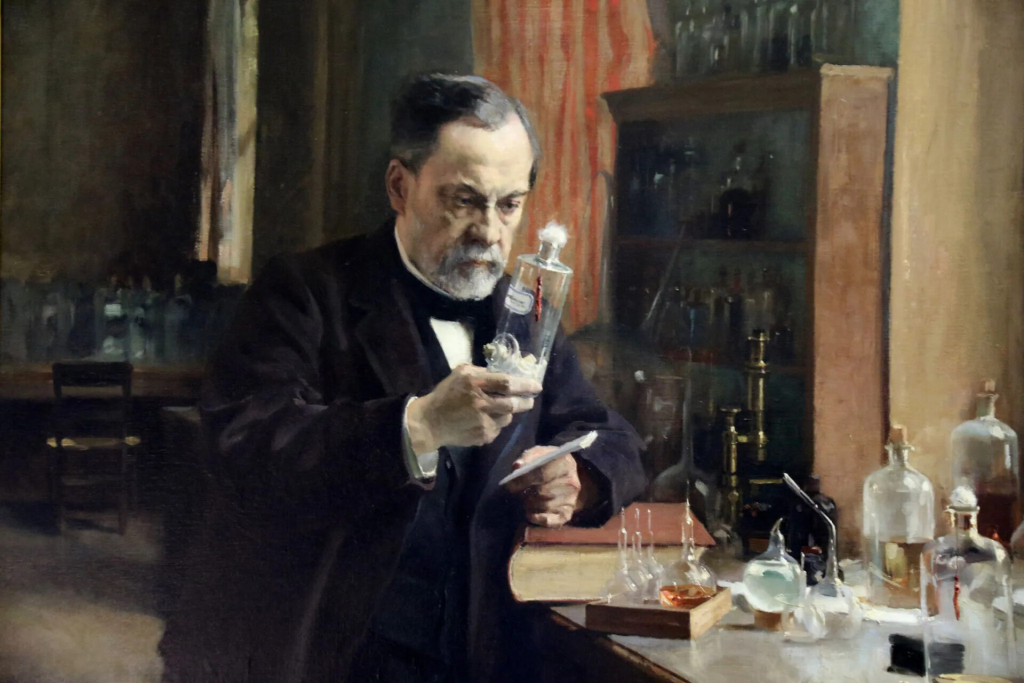
The writings concerning Louis Pasteur celebrate, all of them, the world-renowned scientist for his discovery of the rabies vaccine.
A chemist and physicist, Louis Pasteur had devoted his research to experiments on minerals, insects and then plants in microbiology.
Few looked at this scientist’s contribution to the French colonial expansion from the Levant to West Africa.
A philanthropic doctor, at the crossroads of his two geopolitical blocs (West Africa and the Levant), worked to fill this gap.
In the 19th century, when the pebrin threatened to ruin the French silk industry, Emperor Napoleon III sent Louis Pasteur to save the spinning. But the rebirth of this « white gold » is not only played in the laboratory. From the mountains of Lebanon to the unknown lands of West Africa, it follows the fate of peasant families driven into exile by poverty in 1885. Without luggage, without a common language, but armed with immense courage, these pioneers start from scratch to offer their children a future. A journey between science and survival, from the East to the Atlantic », supports cardiologist Ali Hamdan, a graduate of tropical medicine from the Faculty of Medicine of Rennes and Cardiology of the Faculty of Medicine of La Timone-Marseille.
Ali Hamdan, from Lebanon, a native of Senegal, a Lebanese-Sengalian bi-national, is a pure product of French culture, whose nationality he also carries.
Its singularity is twofold: full-time cardiologist, Ali Hamdan is also president of the Samben Association, a voluntary medical association, founded in 2007 and dedicated to detecting cardiac malformations among Senegalese youth.
Samben is a play of words, in homage to his brother of heart, Sobel, in fact his adopted brother, who is in fact the son of the Doctor’s nurse and who was his best friend. Sobel died of a sudden death, at 17, and whose tragic disappearance led Ali Hamdan to opt for cardiology.
Heart disease is a social problem in Senegal, which suffers from a severe lack of cardiologists on site: 50 per cent of the children of the oldest French colony in West Africa are born with heart defects. To date, 80,000 patients have been diagnosed.
Periodically, Dr. Ali Hamdan is on a tour to Senegalese provinces to treat juvenile heart disease. Free of charge, that goes without saying.
The Institut Pasteur in Dakar has an ancient presence in Senegal. Created in 1924, it works to accelerate equitable, sustainable and affordable access to health in Africa.
The Institut Pasteur, a private, not-for-profit, Senegalese non-profit foundation recognized as a public utility, plays an important regional and continental role through its 12 specialized reference laboratories, notably for WHO as a collaborating centre for viral arboviruses and hemorrhagic fevers, for AFRICA CDC and for ECOWAS, a regional body covering 15 West African countries.
Its syndromic sentinel surveillance network in Senegal (the 4S network), which includes 28 sentinel monitoring sites in each of the 14 regions of Senegal, is replicated throughout the ECOWAS region.
But despite this important contribution to Africa’s prophylaxis, it was beneficial that the less glorious aspects of the character were brought to public opinion to avoid a selective reading of this great French scholar. The credit goes to Dr. Ali Hamdan.
To go further on this same theme
Elise Loilery: France, a burden of black man and not the reverse
Political economy of French colonization in Raphaël Roudaire’s Africa
- https://theses.hal.science/tel-05351870v1/file/These ROUDARY Raphael.pdf
- https://www.lemonde.fr/societe/article/2026/05/20/le-code-noir-en-voie-d-abrogation-after-un-vote-unanime-en-commission 6691755 3224.html
- https://www.lemonde.fr/idees/article/2026/05/21/slavery-for-reconnaissance-fullment-son-role-in-la-traite-transatlantique-la-france-doit-s-engage-sur-la-voie-de-la-justice-reparatrice 6691





Comments