

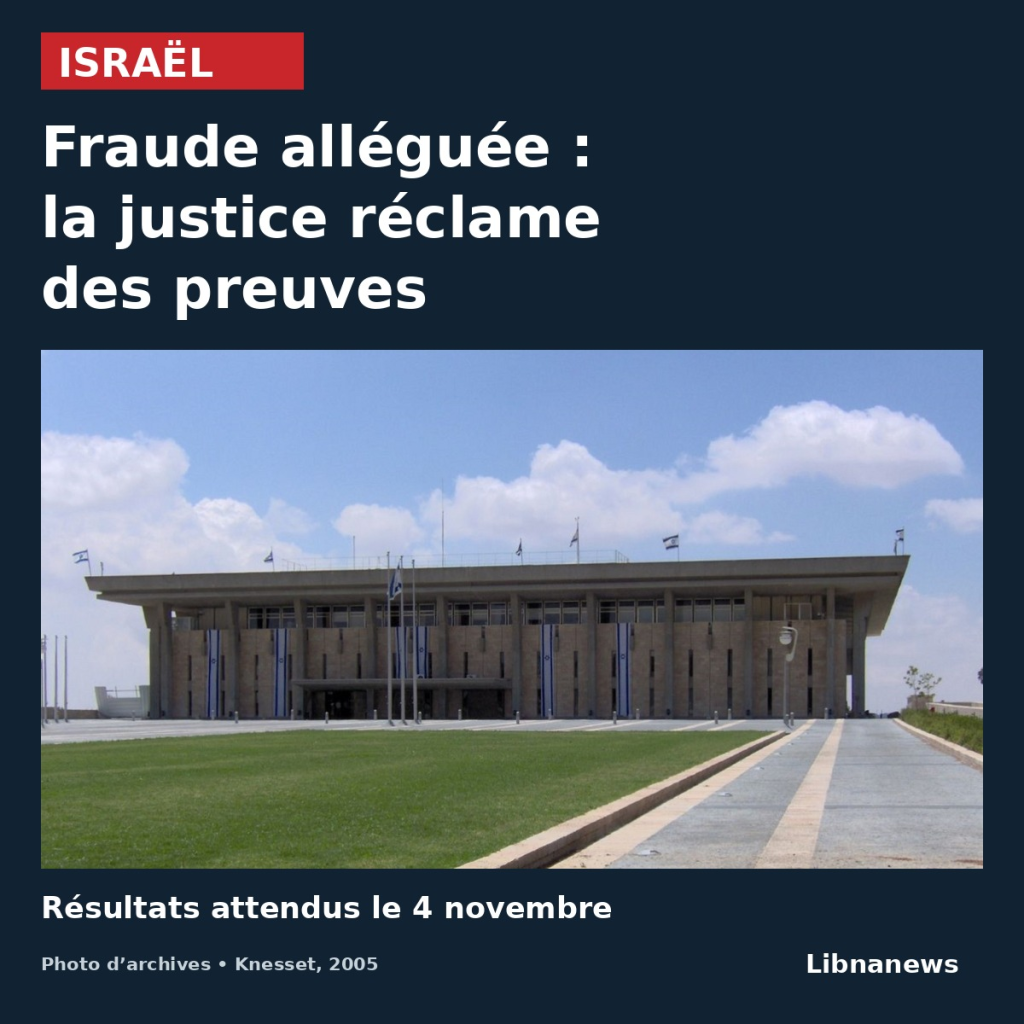
In Israel, accusations of electoral fraud now openly oppose the Attorney General to Likud and Shin Bet. On Tuesday, 3 November, Gali Baharav-Miara called for the evidence justifying possible Arab interrogations. Benjamin Netanyahu’s party accused him of obstructing the investigation. The parties concerned reject these accusations. The results of the October 27 election remain announced for Wednesday, November 4.
Electoral Fraud: Evidence Required Before Hearings
The Attorney General responds to information about a request from Shin Bet director David Zini. He would like to interview several Arab politicians, according to the Israeli press. In his statement, Gali Baharav-Miara recalls that hearings must be based on elements that justify them.
It also blames the Internal Security Service for not having forwarded documents to the Joint Investigation Team. According to his statement, this lack of transmission has lasted for two days. It believes that this lack of cooperation hinders investigations.
The distinction is important: requesting the disclosure of evidence does not amount to establishing the innocence or guilt of the persons concerned. The public information consulted does not lead to a finding of fraud. They document a disagreement on the conditions under which the investigation should proceed.
Likud accuses prosecutor of obstruction
The Likud presents an opposite reading. The Prime Minister’s party accuses Gali Baharav-Miara of blocking investigations and covering a manipulation of the vote. In particular, it calls for the possible intervention of foreign actors. These accusations remain those of the party; they are not judicial findings.
Arab formations reject them. Gadi Eisenkot, a central figure in the opposition, accuses Netanyahu and his party of endangering the institutions. The exchange takes place when no camp has a parliamentary majority alone.
Results schedule maintained
The President of the Central Electoral Commission, Noam Sohlberg, again dismissed on Tuesday a postponement of the publication of the results. According to its response from the Israeli press, the commission does not have the power to suspend this deadline. He refers any disputes to the courts.
Representatives of the Netanyahu bloc had asked that suspicions be discussed before the commission. Sohlberg distinguishes this discussion from the official publication. Therefore, an ongoing investigation alone does not mean that the electoral calendar is set.
At the time of this publication, the presentation of the results to President Isaac Herzog remains an announced appointment. It must not be confused with an event already accomplished.
Coalition negotiations still open
The balance of forces resulting from the recount explains the political importance of this confrontation. The Netanyahu Block has 53 seats, compared with 48 for Eisenkot and 19 for Arab formations. The Knesset has 120 deputies.
Arab parties could thus influence an alternative majority. But a recommendation to the President, external support and government involvement are different commitments. None of these choices automatically result from the number of seats.
Presidential consultations should specify the support available to candidates for the formation of a government. At the same time, the transmission of the material requested by the prosecutor and any decisions to investigate remain to be followed.
Sources and references
- AFP, exchange between the Likud and the Attorney General, November 4, 2026.
- Statement by the General Prosecutor reproduced by the Israeli press, 3 November 2026.
- Response from the President of the Central Electoral Commission, November 3, 2026.
- Libnanews, state of the negotiations published on November 2, 2026.





Comments