

Returning to Iraq does not mean finding his home. The International Organization for Migration recorded nearly five million people returning to their home communities by the end of 2025. Its count does not indicate whether they live in their former housing, have basic services or received compensation.
A return is counted on a locality scale
IOM Monitoring Report No. 135, published in March 2026, included 4,954,518 persons returning to their home communities and 9,97,334 persons still internally displaced as at 31 December 2025. This data, from a network of local informants, has covered travel since January 2014. This is neither the number of returns from 2025 alone, nor an estimate of the situation as at 23 November 2026.
A person is counted as income even if he or she lives with a relative, in another dwelling or in a temporary shelter rather than in his or her former dwelling. Conversely, a trip to another municipality may terminate a stay in a camp without counting as a return to this survey. These distinctions explain why the number of returns is not sufficient to judge living conditions.
Public services do not read in starting figures
To assess the conditions in return areas, IOM and its partners use another tool. The index identifies 16 indicators divided into two groups: livelihoods and basic services, and social cohesion and the perception of security. The following points include market access, the functioning of administrative services and the availability of electricity. It classifies localities, not households, and does not grant any individual rights.
IOM Response Plan 2026 identifies, inter alia, damaged housing, land disputes and the lack of title as obstacles to sustainable resettlement. Difficulties in accessing civil registration documents may also limit the use of services. Two families counted as income in the same area can therefore live in very different conditions.
A claim for compensation follows a separate file
Iraqi Law No. 20 of 2009 provides for a reparation mechanism for certain damage caused by war operations, military errors or terrorist acts. The text was amended, notably in 2020. The compensation scheme covers damage recognized in a case: it is not sufficient to establish a right to payment in a return account. Conversely, an individual decision does not demonstrate that the services required for return work.
In Jurf al-Sakhar, the opening announced on 20 November of a joint command concerned the organization of forces. The documents consulted do not establish collective returns, status of services for displaced inhabitants or local compensation. Information on each of these issues will be required to measure the civilian consequences of the reorganization.
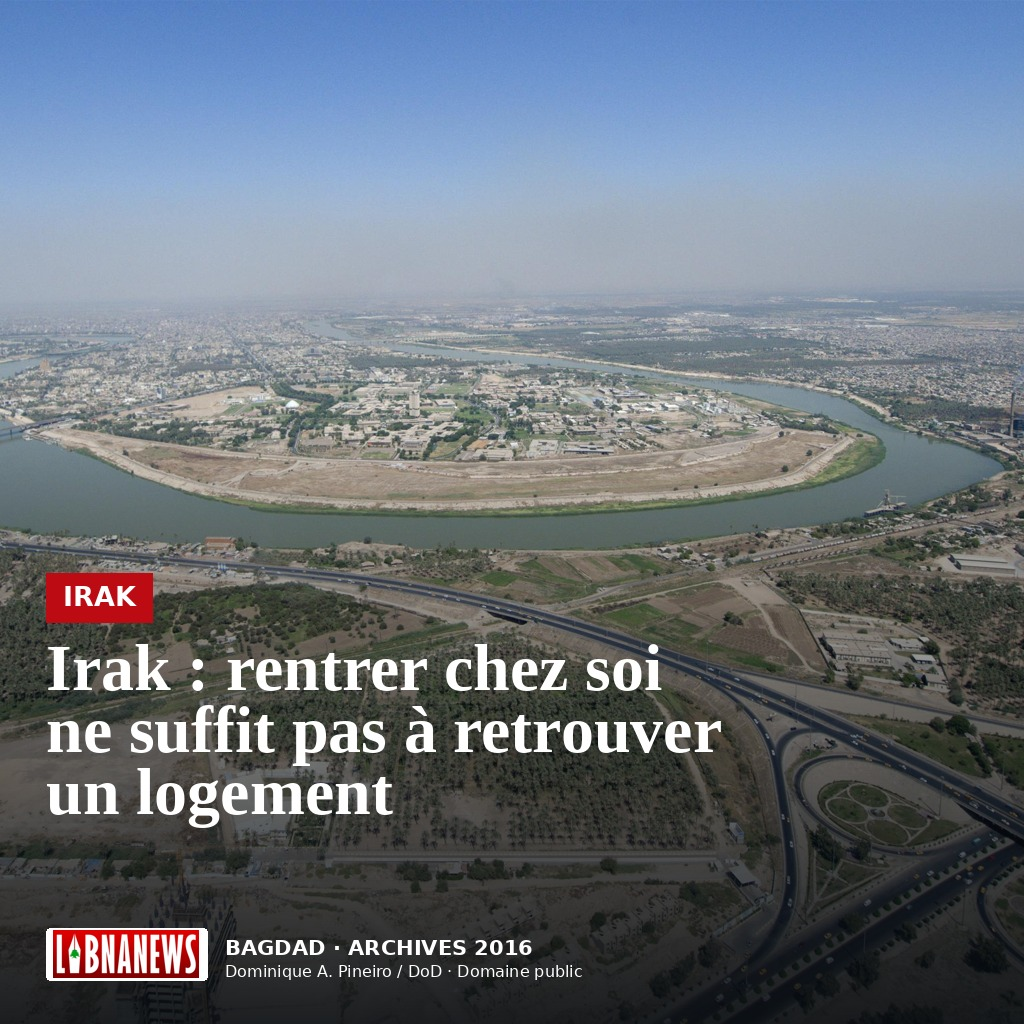
Archive: Tiger in Baghdad, July 31, 2016. The photograph does not show Jurf al-Sakhar. Dominique A. Pineiro / US Department of Defense, US Federal Public Domain. Boxing and composition Libnanews.





Comments