

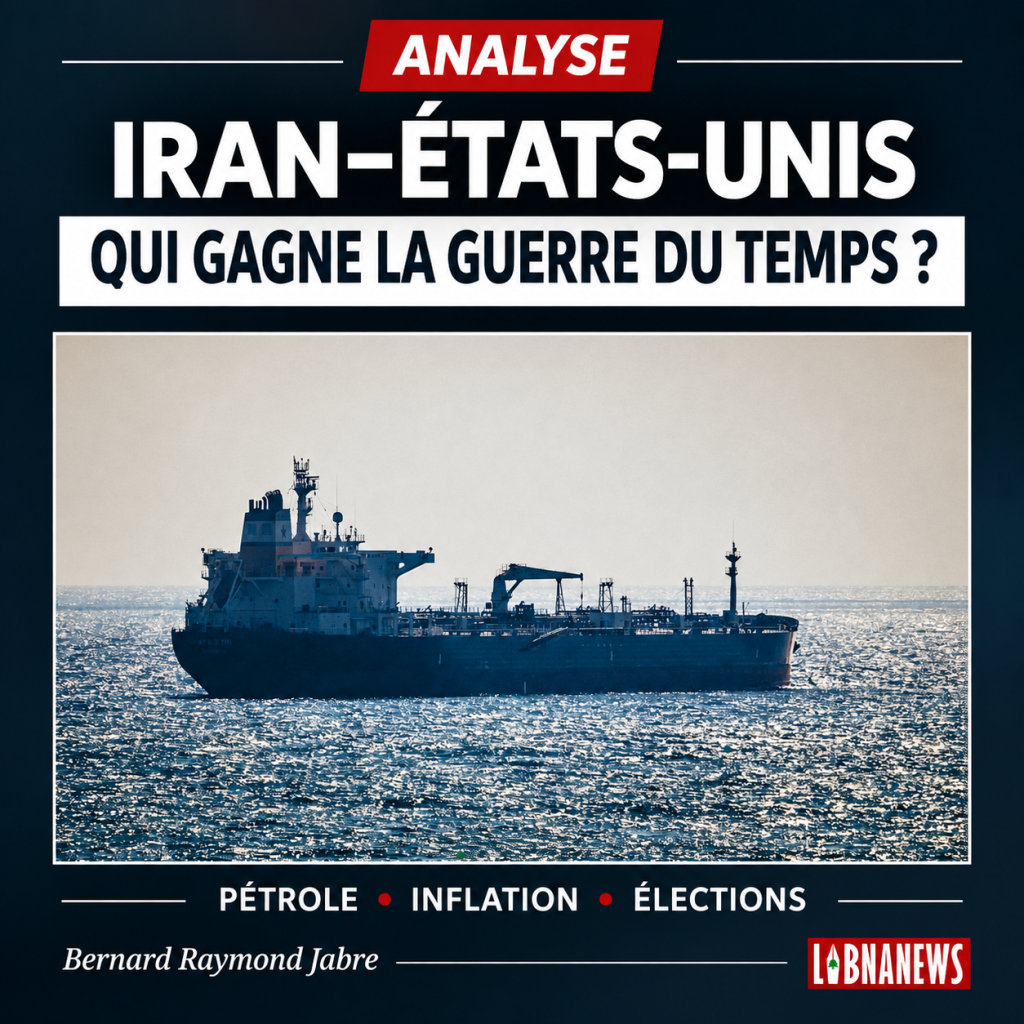
American power could hit Iran. She could weaken, isolate, strangle her economy. But could she wait longer than him?
5 november 2026
There is a dimension in all wars that staffs do not measure: time.
There are planes, missiles, ships, financial reserves, industrial capabilities. Military budgets are compared with technology. But we sometimes forget the essential: how long can each opponent continue?
Perhaps this is where the real key to the war between the United States and Iran is now.
On paper, the comparison was absurd. The United States had overwhelming military, technological and financial superiority. Iran could not reasonably expect to win a conventional war against them.
But Tehran didn’t need to win this war.
He just didn’t have to lose it fast enough.
And that difference changes everything.
Two clocks
From the beginning of the conflict, two clocks started.
The first was Iranian.
How long could the economy resist the strikes, blockade, collapse of oil revenues, financial sanctions, the fall of the rial and an inflation that became extremely heavy for the population?
Washington has considerably tightened the ladder. In September, Iran’s annual inflation was 73.6%. The rial had lost about 35 per cent since July and sea exports of crude oil had been virtually interrupted during some periods. (Reuters)
These are terrible numbers.
But they do not yet mean political collapse.
Because there was a second clock: the American clock.
How long would the United States accept a war whose military victory did not produce a political solution?
And above all: how long would the American voter accept to pay the price indirectly?
It’s this second clock that just ringed.
The Iranian weapon wasn’t just the missile
Iran understood something fundamental: its main means of pressure was not necessarily to destroy US forces.
It could pass on the cost of war to the world economy.
The Ormuz Strait has become the instrument of this strategy.
Before the war, about a fifth of the world’s oil supply was passing through this passage. Its disruption has therefore transformed a regional military confrontation into an international economic problem. (Reuters)
The mechanism is simple:
Ormuz → oil → transport → inflation → purchasing power → public opinion → elections.
This is probably the most important strategic chain of this war.
Oil not only fueled the engines. He passed the war on to the US electorate’s wallet.
Since the beginning of the conflict, nearly one billion barrels have reportedly been drawn from global oil stocks. Diesel stocks have become extremely tense in several regions and logistical costs have exploded. (Reuters)
The battlefield had moved.
He was no longer only in Tehran or the Gulf.
He was also at the American gas pump.
And then came the elections
The US mid-term elections are probably the first true verdict of this war of time.
The Republicans suffered a heavy defeat and lost control of Congress. Donald Trump himself acknowledged that the war had contributed to the outcome. Vice-President JD Vance went further by explicitly assigning a significant part of the defeat to the Iranian conflict. (Reuters)
According to election data reported by the Associated Press, about 60 per cent of the voters interviewed considered military action against Iran as a mistake. (AP News)
This is the moment when Iran’s strategy makes sense.
Iran did not defeat the United States militarily.
He couldn’t afford it.
But after eight months of war, Washington did not obtain the political surrender of Tehran. Indirect negotiations continue and both sides remain deeply distant on the terms of an agreement. (Reuters)
Meanwhile, the political cost of the war has crossed the Atlantic and reached American ballot boxes.
So, who won?
You have to be precise.
To say that Iran « wins the war » would be false.
Its economy is deeply bruised. Its military infrastructure was hit. Its foreign trade and oil revenues have been under considerable pressure. Its population faces inflation and shortages whose human cost must never disappear behind geopolitical reasoning.
But if the question is different — who has so far won the war of time? — the answer becomes more disturbing.
Interimly, Iran.
Not because it has become more powerful than the United States.
But because he’s still standing at a time when time is starting to become much more politically expensive for Washington.
That’s the whole difference between power and endurance.
The United States can still inflict considerable destruction on Iran. They can tighten the blockade, strengthen sanctions or resume large-scale military operations.
But each of these options now has a price.
Climbing can cause further oil and inflation.
Maintaining the status quo indefinitely prolongs costly war without guaranteeing any political outcome.
Negotiating means accepting that eight months of military superiority did not produce Iranian surrender.
This is the American dilemma.
The Paradox of Power
Military history contains a lesson that the great powers regularly rediscover: superiority makes it possible to choose the beginning of a war much easier than it allows to choose the end.
A dominant power usually seeks a decision.
A weaker power sometimes only seeks to prevent this decision.
Iran seems to have reasond that way.
It was not necessary to destroy American power. Its use had to be made progressively more expensive.
Turn weeks into months.
Months in inflation.
Inflation in discontent.
And discontent as a political constraint.
That is why the American elections on 3 November may be a more important turning point than some battles.
For the first time, military time and democratic time have met.
But the Iranian clock also continues to turn
However, it would be a serious mistake for Tehran to consider the American result as a definitive victory.
Because his own clock never stopped.
The Iranian economy remains under immense pressure. The financial reserves are not infinite. Inflation above 70%, the weakening of the currency, import difficulties and the contraction of trade necessarily produce social and political tensions. (Reuters)
Washington can therefore still make the reverse bet:
wait in turn.
That is why the war of time is probably not over.
It just changed phase.
At the beginning of the conflict, the question was:
How long can Iran withstand American power?
After eight months of war and the American elections, a second question arises:
How long does America want to pay to find out the answer?
Perhaps that is, in essence, the real war of time.
Not who owns the most missiles.
But know what clock will stop the first.
Bernard Raymond Jabre
Financial Analyst & Cycles Specialist
Aleph Asset Management Ltd
bjabre@aleph.bz





Comments