

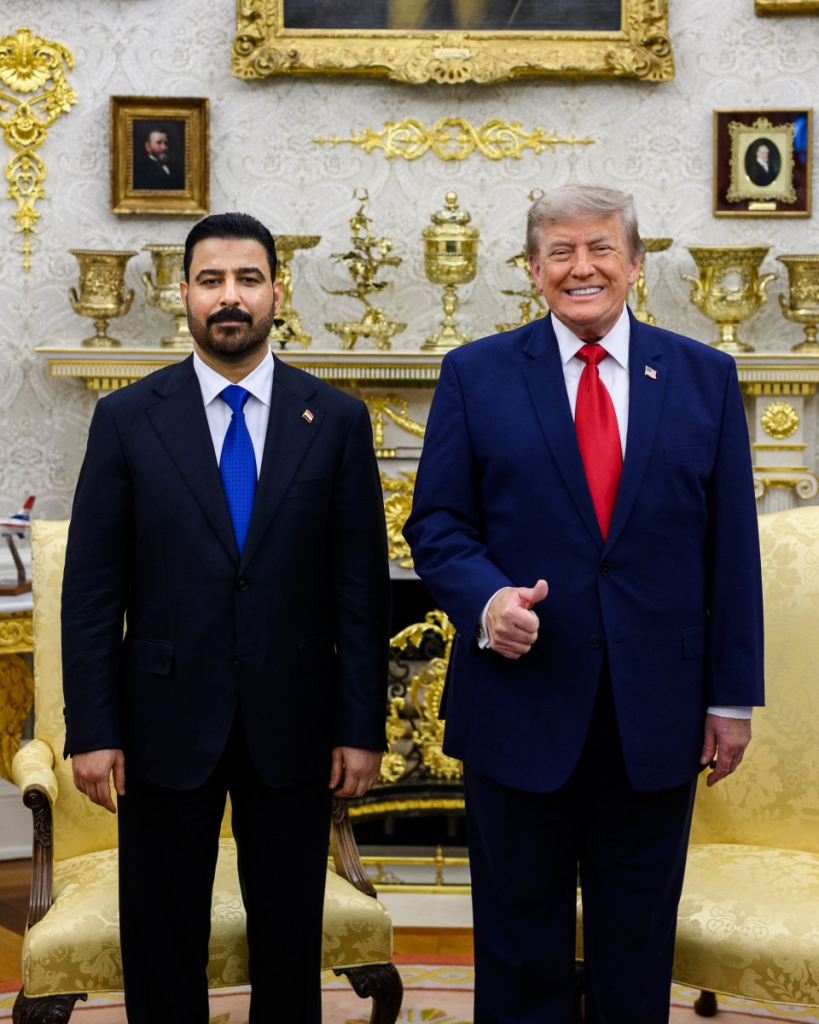
Iraqi Prime Minister Ali al-Zaidi visited Iran to try to reduce tensions with the United States, confirmed on Monday 9 November the Iraqi ambassador to Tehran. Unnamed sources attribute to him the transmission of proposals approved by Donald Trump. The visit is now recognized on the Iraqi side, but the content of the American message and its results are not publicly agreed.
Yasser Abdel Zahra al-Hajjaj, Iraq’s ambassador to Iran, described a particular displacement, organized without prior announcement. According to its public statements, the mission sought to explore ways to defuse confrontation and prevent further regional escalation. He presented this approach as an action carried out in the Iraqi national interest, under the authority of the Head of Government.
This confirmation gives an official basis for the existence of the trip. It alone does not validate all the details of the interviews. In particular, the diplomat did not publish a text of proposals or announce reciprocal concessions. Baghdad thus claims an active role of de-escalation, while maintaining discretion over the content of its approach.
Proposals attributed to Trump, without published text
According to unidentified sources quoted on Monday by a Saudi news channel, Donald Trump approved proposals made by Ali al-Zaidi during telephone exchanges. The US President then reportedly asked the Iraqi Prime Minister to transmit them to Tehran in order to help put an end to the war. The story thus describes an Iraqi initiative supported by Washington, rather than an American plan whose provisions are already known.
An Iraqi government official, also quoted under cover of anonymity, presented the visit as a step requested by Donald Trump to open a channel of de-escalation. It has associated this effort with the concern to preserve Iraq from a wider regional conflict. These indications converge on the role of the intermediary assigned to Baghdad. However, they do not allow for a list of proposed commitments, their timetable or the guarantees envisaged.
An interview with Ghalibaf reported in Tehran
On the Iranian side, an unnamed informed source reported that the head of the Iraqi government had met Mohammad Bagher Ghalibaf, President of Parliament and head of the Iranian negotiating delegation. According to this account, discussions focused on Iraqi efforts to end the conflict between Iran and the United States. Ghalibaf allegedly thanked Baghdad for its initiative and outlined the Iranian proposal organized around a two-day deadline.
According to this source, he would have insisted on the respect of Iran’s rights by the United States as a condition for advancing the negotiations. This is a report, not a public statement by Ghalibaf with a detailed account of the interview.
The precise chronology remains discordant. The Iranian source places the displacement on Friday, November 6th and evokes a few hours’ presence. Two Iraqi officials interviewed anonymously place him on Saturday, November 7. This discrepancy does not call into question the visit recognized by the ambassador, but prohibits presenting its exact date as definitively established.
The appeal of 5 November provides an official benchmark
Prior to this trip, Ali al-Zaidi and Donald Trump had exchanged telephone calls on Thursday, November 5. The Iraqi Prime Minister’s office then announced discussions on the regional situation, security developments and the need to focus on dialogue. The communiqué stressed coordination between the two countries and the prevention of an extension of the conflict.
Ali al-Zaidi reaffirmed the respect for State sovereignty and the refusal of Iraqi territory to serve as a starting point for attacks against neighbouring countries. This position explains Baghdad’s direct interest in mediation: Iraq seeks to maintain its external relations while limiting its exposure to confrontations. The public record of this appeal, however, did not detail any transmission warrant or exit plan.
Disagreement over the terms of negotiations remains
The mission intervenes while Tehran always defends its own diplomatic sequence. On Monday, the spokesman for the Iranian Foreign Ministry, Esmaïl Baghai, argued that a resumption of discussions could take place within a period of seven to two days. It has linked this perspective to preconditions including the cessation of hostilities, the lifting of the naval blockade and the lifting of American sanctions.
This deadline therefore does not correspond to the announcement of a peace concluded in 48 hours. It deals with the chain proposed by Iran to allow the resumption of talks. The difference is decisive: a proposal for a timetable can circulate between intermediaries without the parties having accepted the obligations that must precede it.
On the American side, Marco Rubio declared Sunday, November 8, that he had no diplomatic progress to announce and did not consider a breakthrough imminent. The Secretary of State had assured that Donald Trump preferred a negotiated solution, while finding certain Iranian demands unacceptable. The circulation of messages through Baghdad is part of this persistent disagreement. At this stage, the public elements establish an attempt to mediate, not a compromise accepted by the two capitals.





Comments