

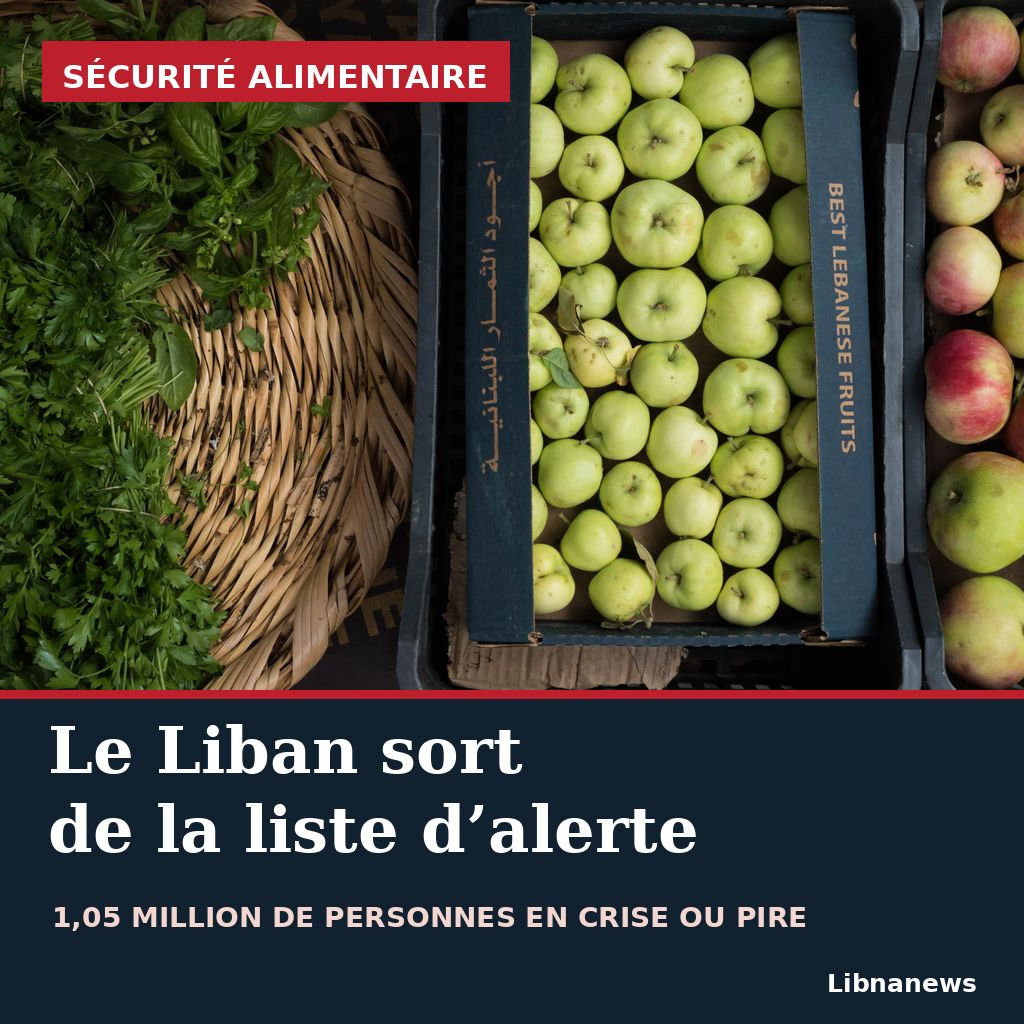
Lebanon is no longer included in the list of food insecurity outbreaks to be monitored as a priority published on Friday, 27 November, by FAO and the World Food Programme (WFP). It appeared in the June edition. The new list covers the period from December 2026 to May 2027 and covers areas where agencies anticipate significant deterioration. In Lebanon, the latest national assessment still estimates that about 1.05 million people are in a food crisis or worse.
The global alert and the Lebanese record do not measure the same thing
FAO and WFP prepare their list based on degradation risks over the next six months. The world ranking therefore does not list all countries where households already lack food. The national analysis of the Integrated Food Security Classification Framework (IPC), published on 5 November, measures the seriousness of the lack of access to food in the population studied in Lebanon.
For the period September 2026 to February 2027, the CPI estimates that 21% of this population is in crisis or beyond. Of these, 52,000 are classified as emergency. According to the CPI, a household in crisis must already reduce food consumption or sacrifice livelihoods to continue to feed itself. The emergency level corresponds to a greater shortage or more costly measures for household survival.
Projected increase in spring 2027
For March to July 2027, the CPI projects about 1.15 million people in crisis or worse, or 24% of the population studied. The number of people in emergency situations could increase from 52,000 to 97,000. Recently displaced Lebanese households and refugees are among the most affected groups. The national assessment links their difficulties with the cumulative effects of two conflicts, rising costs of living and the fragility of their incomes. Spring figures remain projections, not a count of people already in emergency.
Yemen among the most serious situations
The global report identifies 16 degradation outbreaks, compared to 13 in June. Yemen remains among the group of greatest concern, alongside Sudan, South Sudan, Somalia and northern Nigeria. For the Yemeni areas under government control alone, WFP cites a projection of 5.4 million people in food crisis or worse. The use of imports exposes the country to the disruption of cargo in the Red Sea. Palestinian territories are at the next level of concern: agencies consider the improvement in Gaza fragile and anticipate deterioration in the West Bank.
In Lebanon, the figures remain those of the analysis of 5 November: 52,000 people in emergency phase over the current period and 97,000 projected between March and July. The Global Report does not publish a new national count that replaces this estimate.





Comments