

The Lebanese CNRS estimates that 1,996 hectares of olive groves required rehabilitation at the end of August. This does not measure the number of trees removed or the fall crop lost.
The statements of World Olive Day on 26 November put on the table three different questions: how many trees were affected by the fires, how many were torn up, and how many crops could not be harvested. A survey prepared by the National Council for Scientific Research of Lebanon (CNRS-L) and the Ministry of Agriculture, in collaboration with FAO, estimates that direct damage to olive groves in the studied districts is estimated at nearly $58 million until the end of August 2026. It is neither an inventory of the trees removed nor an inventory of autumn harvest.
Marjayoun concentrates the most important numerical damage
The report estimates the area of olive groves to be replanted or rehabilitated at 1,996 hectares. In the eight districts studied, these orchards account for almost two thirds of the estimated direct damage to perennial crops. Marjayoun leads with $14.7 million, followed by Tyre with 11.7 million and Nabatiyah with 10 million. These amounts are estimates of damage, not aid paid to farmers.
The researchers crossed Sentinel-2 images, crop data and field observations. The first survey was based on images with a resolution of ten metres per pixel. The report aggregates its results at the district level and does not contain tree-by-tree records. It distinguishes the lasting damage, which requires the restoration of an orchard, from the decline in production that a farmer can also suffer without losing his trees if he can no longer access his plot.
The number of trees removed remains to be established
The Speaker of the Chamber, Nabih Berri, accused Israel of tearing up thousands of olive trees from the South, without presenting any inventory by commune. Prime Minister Nawaf Salam referred to about 254,000 affected trees in the areas burned as a result of attacks he attributed to Israel. His announcement does not detail the part of the trees destroyed. These figures do not refer to the same damage, and the CNRS-L report does not add it up.
In Baabda, President Joseph Aoun asked to make olive protection a « shared national responsibility », combining support for producers, modernization of the sector and quality control. The August assessment does not estimate the volumes of olives or oil lost during the autumn harvest. The amounts weighed and pressed should be compared with comparable seasons, separating inaccessible plots from destroyed or damaged orchards.
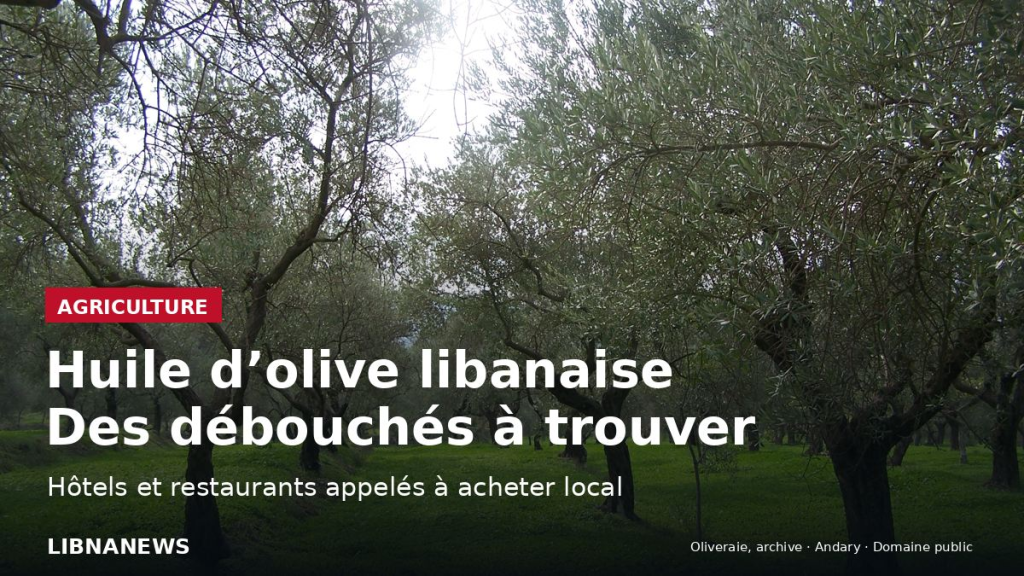
Cover: olive grove in Lebanon, archive released in 2008, unrelated to the damage of 2026. Andary / Wikimedia Commons, public domain; cropping and titration Libnanews.





Comments