

What can we share with neighbours whose faith is not shared? Georges Khodr’s writings ask the question in two different places. In a theological intervention, he questions what a Christian can recognize in other traditions. In a text on citizenship, he asked what people of different denominations could decide together. Both approaches start from disagreement, without making him an obstacle to a common life.
In 1971, reading other traditions without removing differences
In Addis Ababa, before the central committee of the Ecumenical Council of Churches, the Metropolitan of Mount Lebanon speaks of the action of the Spirit beyond the visible boundaries of the Church. His intervention does not put all beliefs on the same plane. It proposes an explicit Christian reading: for Khodr, one can recognize in others signs of the presence of Christ without asking them to adopt first the language of the Church. The meeting therefore does not imply that one tradition becomes the copy of another.
In institutions, write the law together
On 11 February 2012, in a text on religions, confessions and secularism, Khodr moved the question. A believer can obey spiritual requirements in conscience; As a citizen, he participates equally in the drafting of laws with others. The number of the faithful of a confession is not sufficient, in its argument, to legitimize the imposition of its rules on all. It is no longer a question of a theological reading of the faith of others, but of the conditions for a common public decision.
From education to public texts
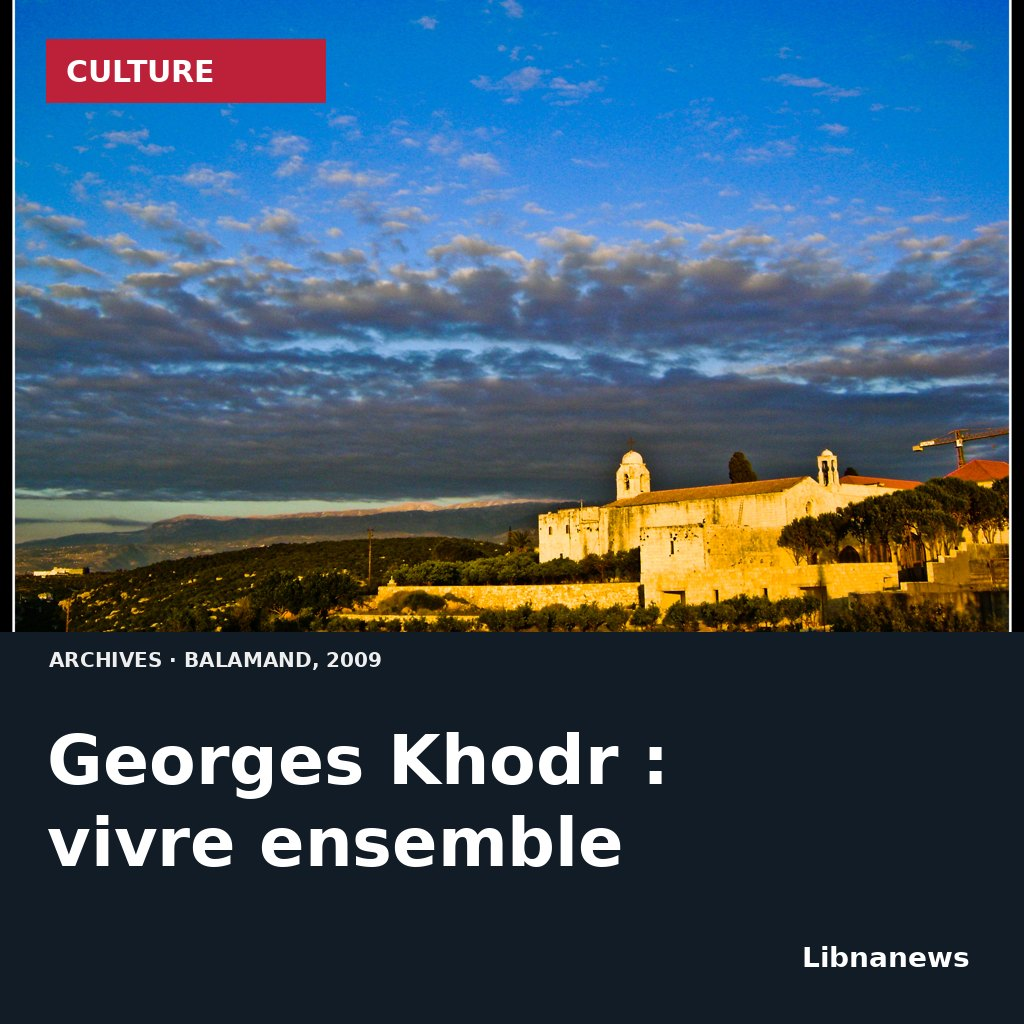
A former teacher of pastoral theology and Islamology at the Institut Saint-Jean-Damascene in Balamand, Khodr carried these questions in several settings, from teaching to public writing. VolumeChristian in a plural society, established by Olga Lossky and published at the Editions du Cerf in 2025, offers a point of entry in French. Reading the two texts side by side makes it possible to distinguish what Khodr has from his tradition from what he asks of citizens who do not share it: not to believe in the same way, but to decide on an equal footing.





Comments