

Modernizing U.S. air control is not just about replacing cables. It is also necessary to coordinate thousands of construction sites, plan their maintenance and distinguish between buildings and equipment. The $50.1 billion request to Congress on November 17, 2026 illustrates this diversity: only part of the proposed envelope relates to computer and operational systems.
A request for funding, not an adopted budget
The letter signed by Transport, Federal Budget and Federal Aviation Administration (FAA) is divided into five blocks. It reserves $10.1 billion for the modernization of air traffic control. The remaining 40 billion are shared equally between airport infrastructure, terminal programme, en route control centres and control towers.
In the first block, 7.2 billion have to finance a common automation platform and workstations for controllers. Two billion relate to cloud computing and telecommunications, 600 million to strategic flow management and 300 million to consolidation of terminal control facilities. So the whole thing is not about buying new radars.
The document includes up to five new consolidated en-route control centres and up to 140 FAA towers. These objectives remain tied to a demand for appropriations. The letter does not prove their adoption by Congress or the launch of each project.
Replacements already announced
The equipment renewal does not await this new envelope. In its press release of 5 November, the FAA announced that it had replaced 69% of copper links, installed surveillance devices on the ground in 143 towers, passed 26 turns to electronic flight logs and installed 226 voice switches using Internet protocol. These are indicators declared by the Agency at that date, not an independent measure of the reliability of the entire network.
The Agency also presented the deployment of a unified system to display operational information. It is to replace four systems dating back to the 1980s, some of which were based on diskettes. The first five facilities announced include Atlantic City, Nashville and Greater Rochester airports, as well as Atlanta and Salt Lake City data processing centres. The target is 435 sites by the end of 2028.
These displays include alerts, weather information and advice to controllers. Their installation does not mean that all air traffic control components have been replaced. Communications, monitoring, display and flow management remain different functions.
The purchase cost is not enough
An audit of the Government Accountability Office (GAO), published on September 14, 2026, was already reviewing the modernization program. It distinguishes the 12.5 billion voted in July 2025 from the share for systems, about 9 billion. The cost of building the facilities was not part of its review.
The report acknowledges progress. At the May 2026 survey, the FAA reported that it had replaced 2,560 of the 5,170 old copper links. This previous measurement point should not be presented as the November progress. The auditors also stated that they could not fully establish the reliability of the monitoring table data due to the lack of visibility on the systems that supplied them; However, they considered them sufficient to describe approximately the state of the programme.
Their criticism focuses on estimating the full cost. The estimate of 10.6 billion for the first phase systems did not cover all administrative costs or the bulk of operation and maintenance after the first years. Nor did it integrate the second phase. Buying equipment and financing its operation throughout its lifetime are two separate commitments.
Thousands of calendars to coordinate
Another difficulty noted in May was that 11,389 project schedules were not yet a general planning process that correctly linked the interventions. Several teams could plan successive visits to the same site without optimizing their dependencies. In air traffic control, this lack of coordination may affect facilities that must continue to operate during their transformation.
The Administration partially accepted the two GAO recommendations. It claims to have updated estimates and detailed schedules, and to work with its integrator on a tool using artificial intelligence to better coordinate operations. The OAG maintains that the elements reviewed did not yet demonstrate a reliable full cost or a truly integrated schedule. This disagreement concerns the evidence and methods of pilotage, not the need to modernize.
The letter of 17 November invoked the national disruption of the previous week to demand a financial acceleration. This does not transform the September audit into technical expertise for this breakdown: it is prior to it and does not establish the cause. To judge the continuation of the programme, the useful indicators will be the appropriations actually adopted, the equipment put into service, the maintenance costs and the coordination of the work. None of these elements is deducted from the sole amount claimed.
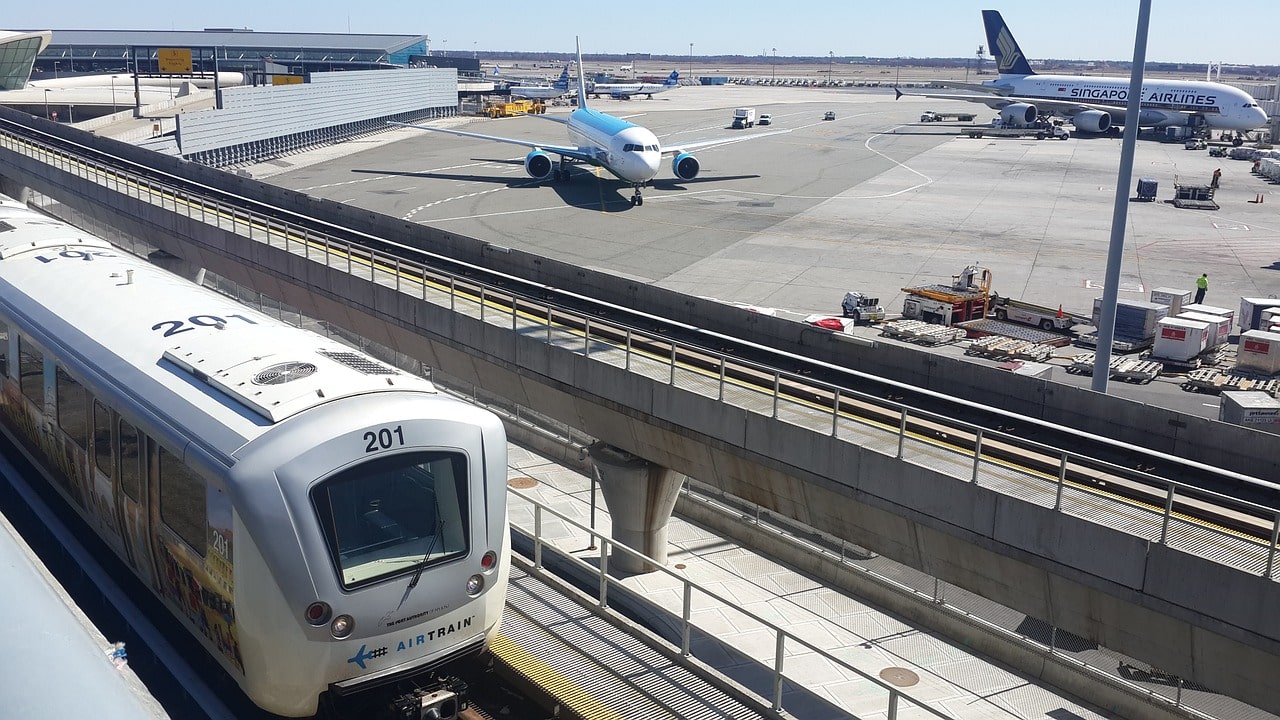
Illustration: JFK airport archive photograph, published in the Libnanews media library in September 2019; date of shooting not provided. It shows neither the November 2026 breakdown nor the new equipment described. Credit: Pixabay / Libnanews archive.





Comments