

A visit to his village is not a sustainable return. The independence rallies, on 22 November in Nabatiyah district, recalled the residents’ demand to find their homes. No official notices consulted on this occasion announced a general reopening. To understand what has really changed, it is necessary to distinguish between access, the state of services and the return of families as measured by the International Organization for Migration.
Return to South Lebanon: three informations not to be confused
Residents of Nabatiyah al-Fauqa marched to their locality on Sunday. Those of Zawtar al-Sharkiyah requested their return at a rally in the neighbouring village of Zawtar al-Gharbiyeh. These two events document a mobilization. The first does not demonstrate that housing is habitable; The second does not mean that the authorities reopened Zawtar al-Sharkiyah.
Both Zawtars are not interchangeable. Following the framework agreement announced in June, Zawtar el-Gharbiyé was selected as a pilot area. In his report of 12 November, the Secretary-General of the United Nations reported that the Lebanese army had reported that it had first returned to the area in September, but also that it had again moved from areas previously considered safe. The measure covers a specific date and village. It does not provide information on access to Zawtar al-Sharkiyah two months later.
What local authorities and services can confirm
A communiqué dated from the competent authorities may specify whether access is open and under what conditions. Army orders are not a condition of housing. The municipality or service concerned may, for its part, confirm the resumption of a service or condition of a public building, without this meaning that the whole municipality is accessible or that all dwellings are safe. The exact name of the place, the date and what the notice actually says must be checked.
Older press releases help to understand who publishes these instructions, not to determine their validity today. In April, the army command had asked the inhabitants to postpone their return to villages in the South due to ceasefire violations. This directive is dated: it does not allow the common situation to be established by commune in November. A one-time presence, ceremony or late publication does not replace a recent notice.
Mobility figures do not give a green light
The International Organization for Migration recorded 304,520 persons still internally displaced as at 28 October. There were 964,689 people returning to their communities, a 10 per cent increase from the end of September. These national figures are several weeks ahead of the independence gatherings. They do not measure the number of returns to Nabatiyah al-Faukah on 22 November or the possibility of settling in Zawtar al-Sharkiyah.
IOM prepares this photograph with information gathered from local interlocutors, including municipal officials, mukhtars and neighbourhood representatives. Its census does not certify each dwelling. The latest United Nations report on the South included destruction, the presence of unexploded ordnance, barriers to access to services and loss of income among the obstacles to return. A population movement and the restoration of living conditions are not measured in the same way.
The question that remains open after 22 November is not whether people want to return. They said. It is to be known, for each municipality, whether a recent opinion specifies the conditions for access and whether the services necessary to live there have resumed.
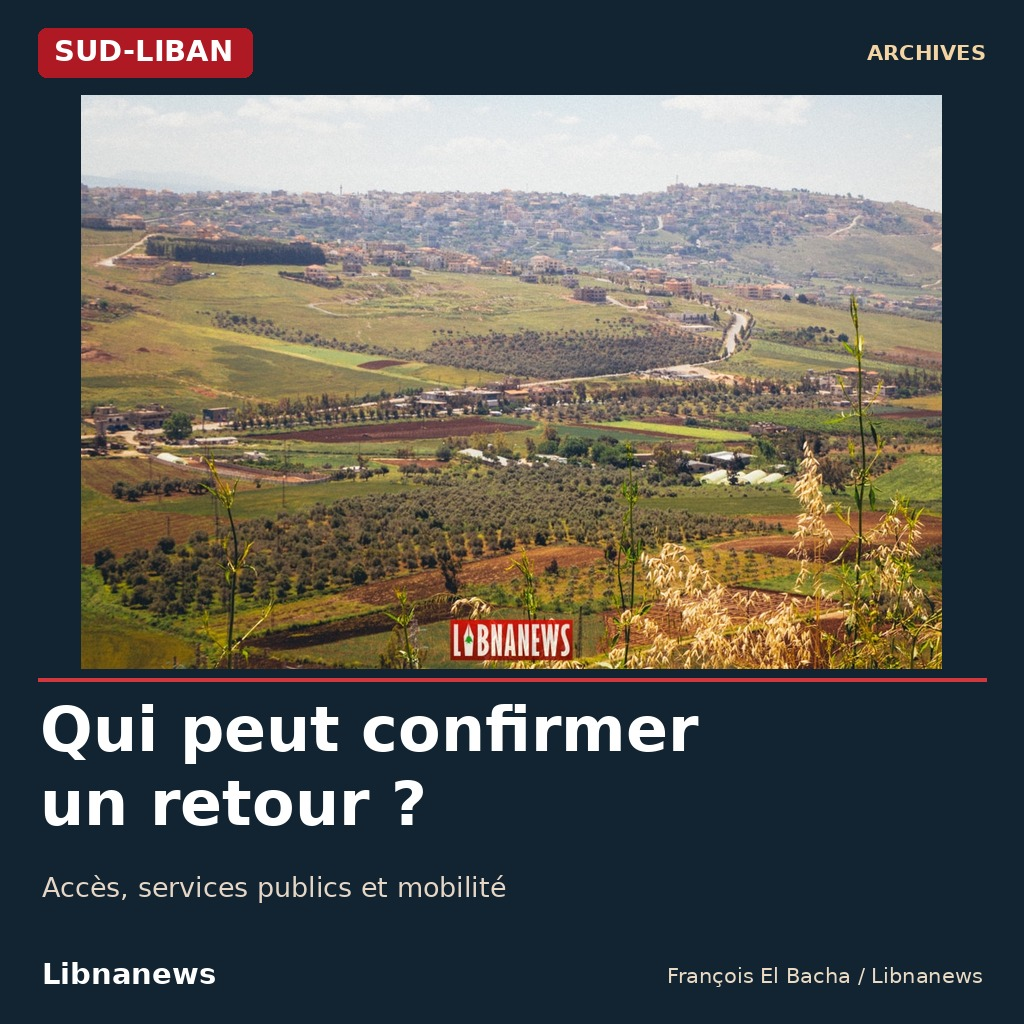
Archives: Khiam seen from Marjayoun. This image does not represent Nabatiyah al-Faukah or the rallies of 22 November. François El Bacha / Libnanews.





Comments