

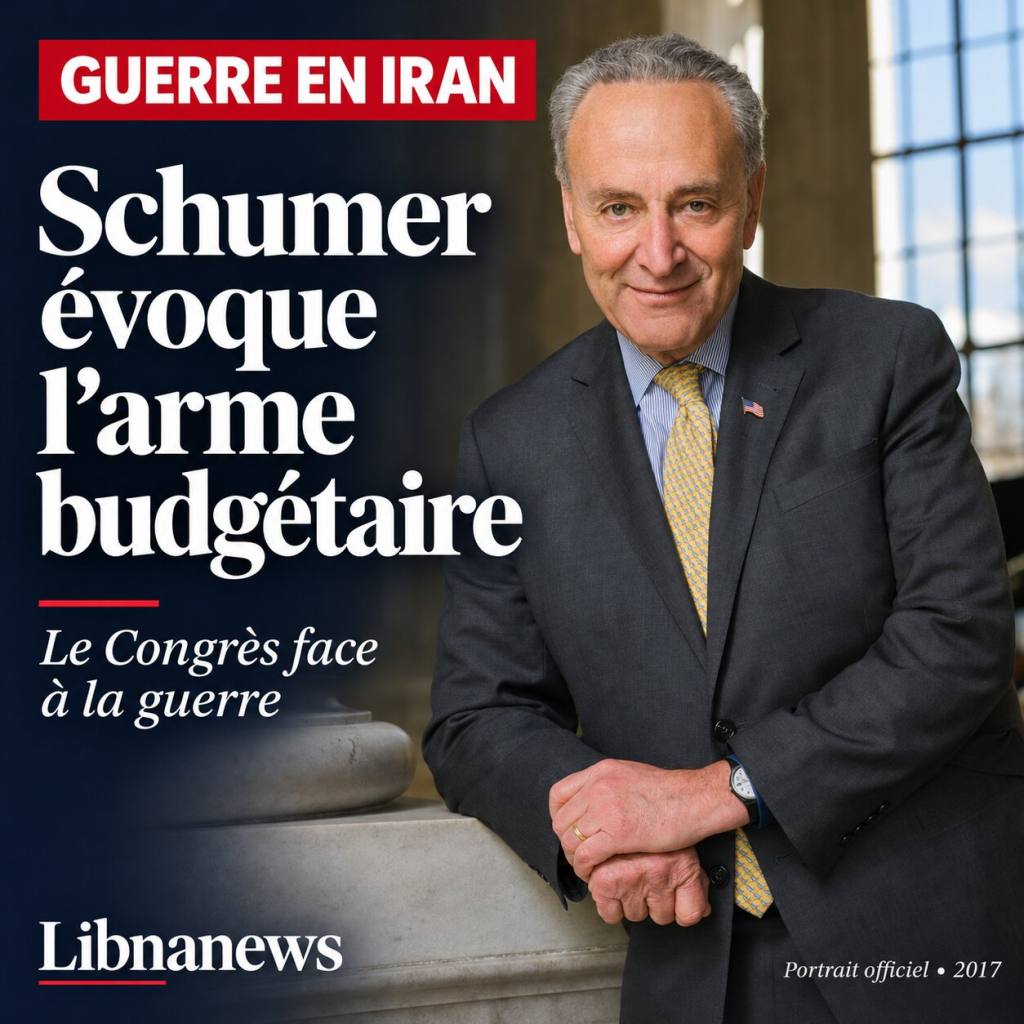
Chuck Schumer wants to end the war in Iran. The leader of the Democrats in the US Senate said on Wednesday, November 4, 2026, in Washington. He referred to the control of federal credits as a means of exerting pressure on Donald Trump, after his party won the mid-term elections.
« This war must end. It must end, » said the honourable senator in front of journalists. He then invoked the « power of the stock exchange », which refers to the budgetary prerogatives of Congress. That power, he said, was a means of deterring a president from conducting a war without the consent of the American people.
The statements, reported by a news agency, give an indication of the strategy envisaged by the Democrats. Schumer presented federal appropriations as a possible instrument to influence the continuation of the conflict. This is not an announcement of an already voted funding restriction.
The war in Iran at the heart of Trump’s power relationship
The Democrats won control of the House of Representatives and the Senate during the November 3 election. They will have both chambers to consider applications for funding from the administration. Donald Trump will, however, retain the presidency, which requires negotiations between the executive and the new majority.
Democratic Senator Kirsten Gillibrand also spoke on Wednesday about working with Republicans to stop the war. She defended this perspective in a television interview. The elected support of the other side could count on overcoming parliamentary obstacles and possible presidential opposition.
This new majority will not immediately take office. The elections will begin on 3 January 2027. The current legislature continues until then. Therefore, the election result alone does not change the available military appropriations or the rules for their use.
Schumer plans to influence financing
The budgetary lever is based on a central competence of Congress: deciding on federal spending and regulating its use. Credit laws may set amounts, designate usages and impose restrictions on administration.
For the Democrats, this competence opens up several possibilities. They may refuse new credits or seek to prohibit the use of funds for certain transactions. The scope of such a measure would depend on its drafting, the expenditure concerned and its entry into force.
The financing of an operation and the authorization to use force answer separate questions. Congress has the power to declare war. It also intervenes on military policy through authorizations, appropriations and parliamentary control. Schumer here focuses on the ability of elected officials to act on the money needed for operations.
Presidential veto and Senate rules
The control of both chambers does not guarantee the adoption of the desired measures. Donald Trump can veto a law passed by Congress. To overcome this, each chamber must have a two-thirds majority. A simple parliamentary majority is therefore not enough to impose a new law on the President against his refusal.
In the Senate, a text submitted to the ordinary legislative procedure may also be obstructed. Closing the debate usually requires three-fifths of senators, 60 votes when the 100 seats are filled. The necessary votes will thus depend on the text and procedure chosen.
These rules explain the importance of the Republican supporters mentioned by Gillibrand. They also give the negotiations on credits a central place: Congress may refuse additional funding, but the adoption of new restrictions follows the legislative procedure.
Schumer’s statements reported on Wednesday do not specify any amount, budget provision or timetable for voting. The next funding documents will help determine what funding the future majority intends to achieve the end of the war.





Comments