

Sanofi announced on Tuesday 24 November that it had signed an agreement to acquire the American company Insmed. The French group proposes $175 in cash per share, or about $41 billion for all shares (€37.6 billion according to Sanofi’s conversion). The boards of directors of the two companies approved the agreement, but the sale is not concluded: it remains subject to the vote of the Insmed shareholders and the necessary regulatory authorizations.
A price of $41 billion for shares
The amount pledged is the value of equity, not the corporate value including debt and cash. The payment for the shareholders is entirely in cash. This does not mean that Sanofi will finance the operation only with its liquidity: it intends to combine its available cash with new loans, for which it claims to have obtained firm commitments.
Sanofi aims to be realized in the first half of 2027, subject to closing conditions. It does not foresee any effect on its financial perspective for 2026. The group anticipates a positive contribution to the net profit per share of its activities by the end of 2028, but it is its own projection, not an acquired result. The announced agreement alone is not a change in the supply or prices of medicines for patients.
Two medicines marketed, one still under study
Sanofi seeks to strengthen its portfolio in respiratory diseases. Insmed’s immediate interest lies in two products already marketed. Brinsupri is allowed in several markets for certain forms of bronchectasia not related to cystic fibrosis. The populations covered differ from country to country. Arikayce is used in some cases of pulmonary to complex infectionMycobacterium avium.
The Insmed accounts published on 29 October show the weight of the first product. In the quarter ended September 30, 2026, the company declared 524.4 million dollars of turnover, including 400.1 million for Brinsupri and 124.4 million for Arikayce. The first represented just over three quarters of the quarterly turnover. At the same time, Insmed published a net loss of $100.3 million, compared to 370 million a year earlier. The increase in sales does not therefore mean that the company has become profitable.
The portfolio also includes TPIP, evaluated for several respiratory indications. He’s a developing candidate, not a marketed product. Its possible contribution depends in particular on the results of tests, regulatory decisions and possible placing on the market. This distinction is central to understanding what Sanofi is looking to buy: current sales concentrated on two treatments and growth opportunities that are not yet revenue.
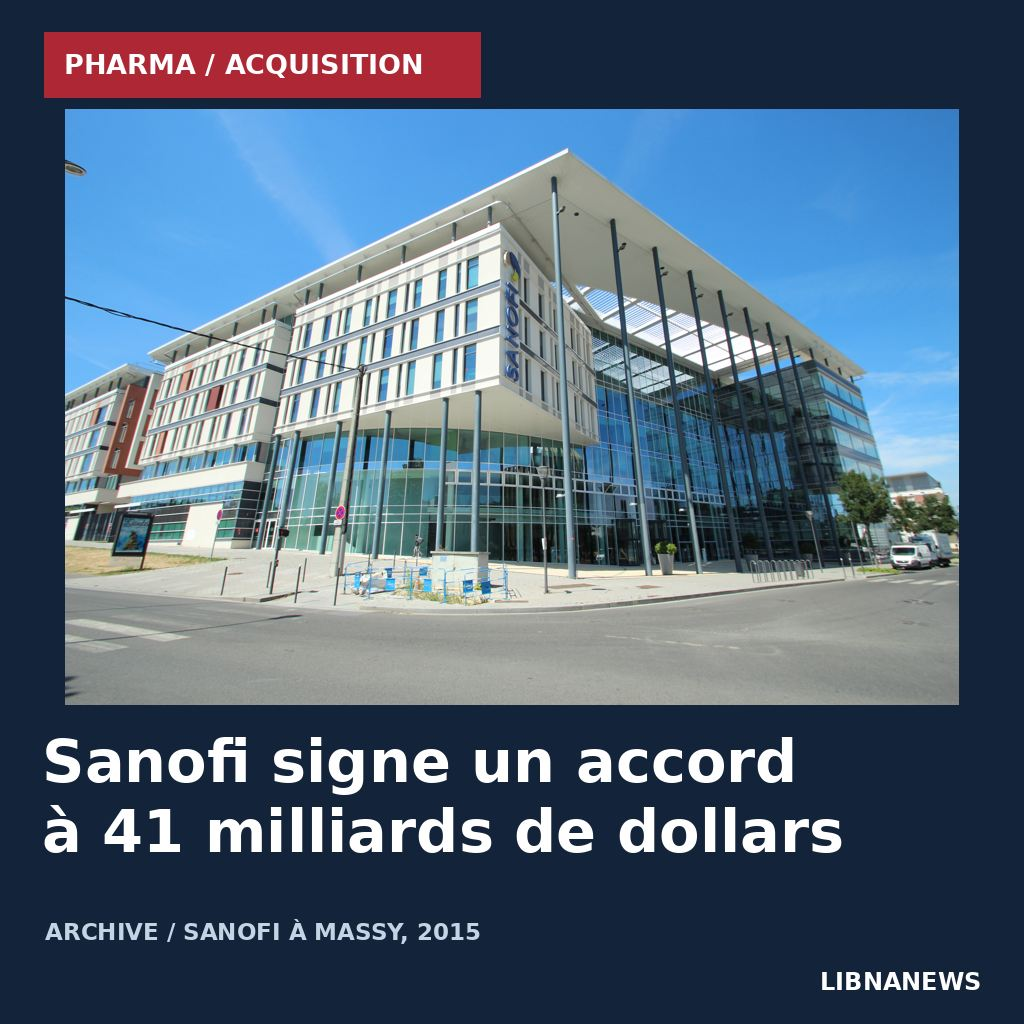
Cover: Sanofi building in Massy in 2015, an archive of illustrations. Lionel Allorge / Wikimedia Commons, CC BY-SA 3.0. Photo editing under the same license.





Comments