

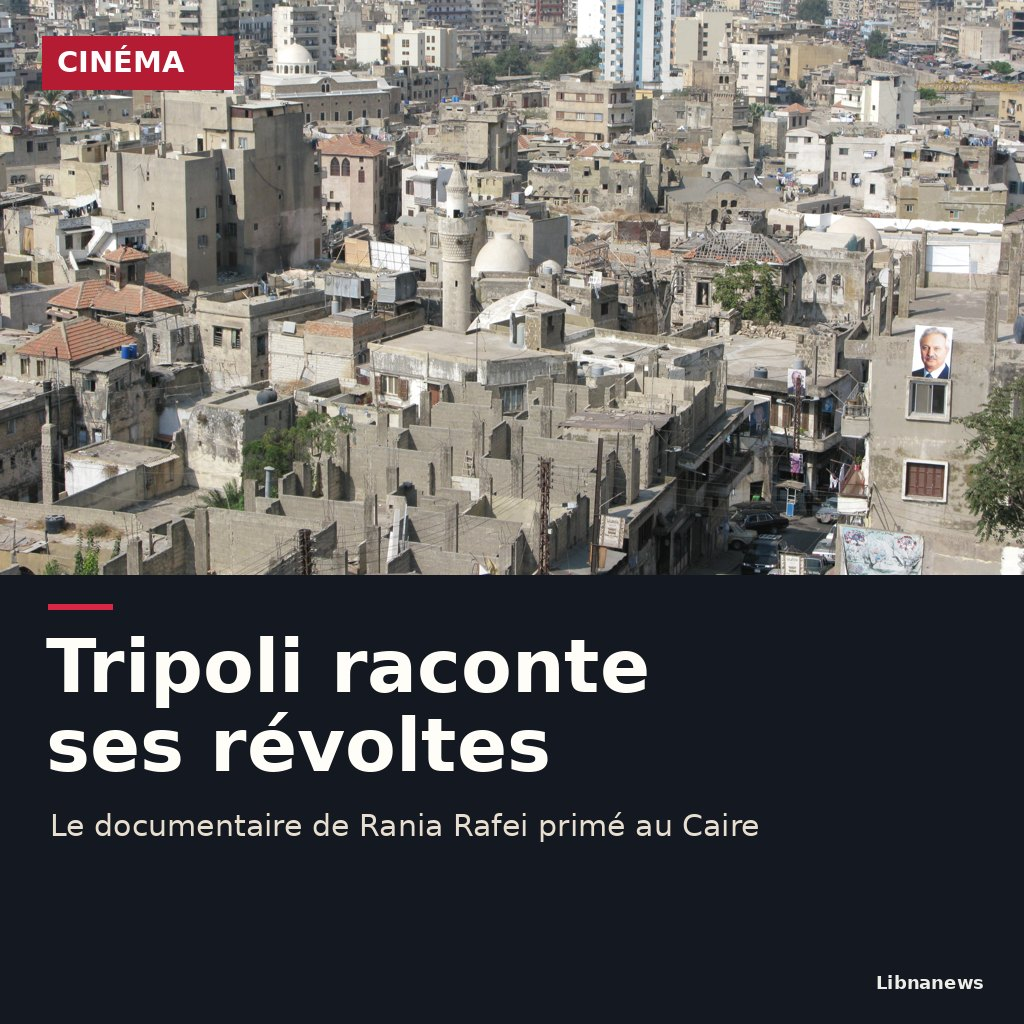
Lebanese filmmaker Rania Rafei’s documentary received two awards at the closing of the Cairo International Film Festival on November 20: the Saad Eldin Wahba Award in the Arab Cinema Horizons section and the Best Documentary Award. Party of student demonstrations of 1943,The Day of Wrath: Tales from Tripolicome back to the mobilizations that marked the city. To tell their story, the director mixes the archives with a family story and entrusts to activists today part of the staging.
From Independence to the 2019 Challenge
The film opens on the student demonstrations of 1943, as Lebanon becomes independent. It then goes through the hopes of pan-Arabism in the 1960s, the Arab defeat of 1967 and the formation of rival groups during and after the civil war. The protests of 2019, against corruption, the religious system and economic collapse, are another milestone in this history. These episodes do not tell of a single revolt that would have repeated itself identically. From one generation to another, demands, opponents and alliances have changed.
The point of departure of the documentary puts at the forefront a less often told aspect of independence: mobilization in cities, far from negotiations between leaders. From Tripoli, Rafei gives this national episode a geography and its own actors. This is also what distinguishes its approach from a retrospective which would make the city the mere setting of Lebanese crises.
A letter to the father, scenes written to several
The film’s intimate thread is a letter from the filmmaker to her missing father. Family memories are accompanied by archival images. For some scenes, Rafei also invited five Tripolitan activists of different generations to work with her on real-life events. So it’s not just a matter of gathering testimony in front of a camera: participants take part in the way the past is represented.
This distinction counts. An archive shows what a camera could record at a given time; A reenactment also says what people choose to remember and replay after the fact. One does not replace the other. The device gives the film a way to deal with the shortcomings of public memory without turning the replayed scenes into period documents.
From the Berlin Forum to the Cairo Summit
This two-hour documentary, shot in Arabic, brings together Lebanese, Saudi and Qatari production partners. Produced by Jinane Dagher, with images of Jocelyne Abi Gebrayel and music by Fadi Tabbal, it was presented as a world premiere at the Berlinale Forum in February. For Rafei, who had already explored the reconstitution in74: The Reconstitution of a Struggle, directed with Raed Rafei, this new film brings the method back to its original city.





Comments