

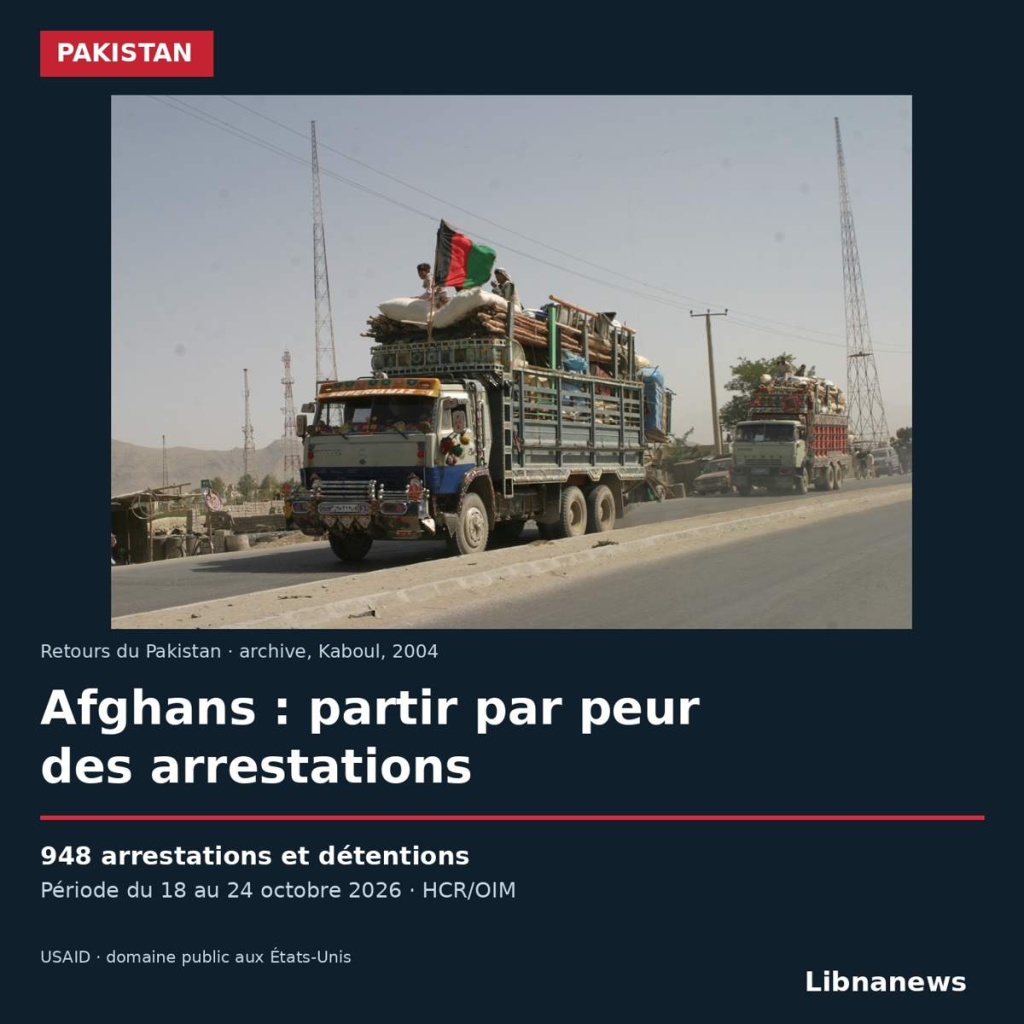
The joint bulletin of 29 October by the Office of the United Nations High Commissioner for Refugees and the International Organization for Migration documents a resurgence of Afghan arrests in Pakistan in mid-October. Published on the UNHCR portal on 30 October, it recorded 948 arrests and detentions between 18 and 24 October 2026, an increase of 83 per cent over the previous week. This review covers a specific period, not the first days of November.
Afghans in Pakistan: Fear of arrests
The two agencies estimate that there were 4,648 returns during the week, of which 856 were expelled. They indicate that fear of arrest remains the main reason for leaving the country, as reported by 95% of those without documents or holders of an Afghan Citizen Card interviewed, compared with 68% of those holding a PoR refugee card.
These results show why a departure without administrative expulsion is not sufficient to establish a free choice. The bulletin also recalls UNHCR’s call to protect persons in need of international protection and those with particular vulnerabilities from involuntary return.
Statistics to read with their perimeter
The UNHCR/IOM regional table distinguishes returns from evictions. In this consolidated series, which was stopped on 24 October, returns from Pakistan have reached approximately 721,700 people since the beginning of 2026. Expulsions are a more restricted category, with approximately 70,500 people. These numbers should therefore not be added together.
The return section covers several situations: assisted voluntary repatriation, expulsion and other movements of persons with different documents. It excludes passport or visa holders within the scope described by the portal. A total of passages alone do not measure the conditions under which a family leaves Pakistan, nor the actual possibility of rebuilding its life upon arrival.
The reception does not stop at the border
The Pakistan-Afghanistan emergency report issued on 8 October describes a lasting pressure on already fragile humanitarian services. For returns since April 2025, children account for 54 per cent of those affected. The document distinguishes this population from the one actually receiving assistance from UNHCR: assistance received is not synonymous with a return identified, and needs are not limited to those already supported.
The organization explains that its support in Afghanistan includes registration and financial assistance, which is targeted at families who sometimes left in a hurry. In her response, she highlighted both the needs of returnees and those of the host communities. The border crossing thus does not stop the movement: housing, income and access to services make it possible to settle in a sustainable way.
The weekly survey published on 1 November covered persons assisted by UNHCR returning from Pakistan, Iran and other countries. Its perimeter includes several countries of departure beyond Pakistan. This distinction between registered, assisted and expelled persons is essential to measure the magnitude of the needs without inflating the numbers or removing the constraints that cause departures.





Comments