





Iran has won a strategic victory, but this victory remains fragile. After the war unleashed by the United States and Israel, Tehran not only survived. It has transformed the Strait of Ormuz into a central instrument of deterrence. This reality changes regional balance. It also exposes the Islamic Republic to a dangerous temptation: to confuse tactical advantage with lasting peace.
In an analysis published by Foreign Affairs, Nate Swanson sums up this paradox into a clear formula: Iran won the war, but could lose peace. The former head of the Iranian case at the US National Security Council believes that Tehran now has a more powerful lever than its arsenal damaged by the strikes: its ability to close, control or monetize the passage through Ormuz. This reading joins a broader concern, shared by energy markets, Gulf capitals and several Western chanceries.
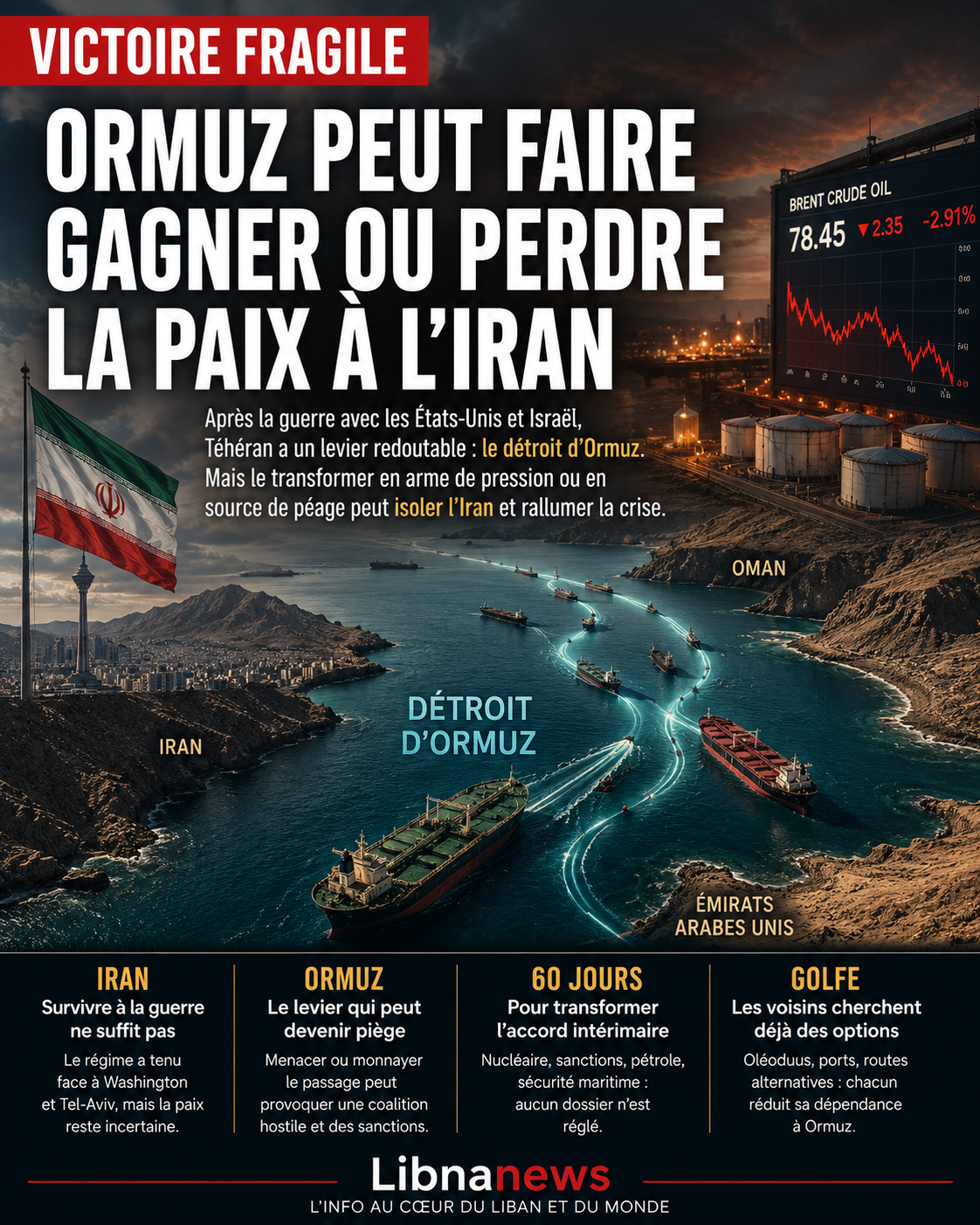
The Strait of Ormuz is not a simple maritime route. It concentrates a decisive part of global hydrocarbon flows. Its closure during the war recalled that global energy security still depends on a narrow passage between Iran, Oman and the Gulf monarchies. The Director of the International Energy Agency called for unconditional reopening, noting that the closure had disrupted more than 14 million barrels per day of regional oil production or flows. That figure was enough to give Tehran a new diplomatic weight.
Iranian victory based on survival
The Iranian victory is not only measured by preserved territories or still standing infrastructure. It is first measured by the survival of the regime. Before the conflict, Tehran seemed weakened. The economy remained strangled by sanctions. Social tensions remained strong. Defensive capabilities had been partially reduced by strikes and wear on regional fronts. The United States and Israel probably thought they could turn this fragility into a strategic surrender.
The result was different. After 40 days of war and two months of unstable ceasefire, the Iranian state remains in place. Its institutions are functioning. Its leaders are negotiating. His nuisance abilities were recognized by his opponents. Above all, the conflict has shown that an attack on Iran could result in an immediate global cost. It is this cost that underpins the new Iranian deterrence.
This was enshrined in the Islamabad memorandum. The text provides for the cessation of operations, the reopening of the strait for a period of sixty days and a sequence of negotiations on the most difficult issues. He mentioned nuclear power, lifting sanctions, resuming Iranian oil sales and maritime security. However, it does not settle any of these matters definitively. He suspends conflicts more than he solves them.
Tehran can therefore be seen as a position of strength. The United States must avoid a new energy shock. Israel did not get the collapse of its opponent. The Gulf countries want to get out of the immediate vulnerability. Europe and Asia are seeking supply stability. In this configuration, Iran may think that time is playing for it. This is precisely where the risk begins.
Ormuz, a dual-edged economic weapon
The Strait of Ormuz has become Iran’s main strategic asset. The formula attributed to US Secretary of State Marco Rubio, who would have described him as Tehran’s « economic nuclear weapon », speaks well of the scope of the shock. Iran does not need to use a nuclear weapon to impose a global cost. It is enough to threaten the road through which the Gulf energy shipments pass.
This deterrence works as long as it remains exceptional. The threat of closure protects Iran because it makes a new war too costly for markets, US allies and Asian consumers. But if Tehran turns this threat into a permanent system of control, tolls or restrictions, it may reduce its value. A weapon used too often loses its side effect. It also pushes other actors to organize against it.
This is the heart of Foreign Affairs’ argument. Iran can use Ormuz as a security guarantee or as a source of revenue. It will be difficult for him to make both lasting. If it requires rights of way, prior authorizations or environmental charges imposed by an authority dominated by its security forces, it will create a coalition of refusals. Shipping companies, insurers, banks and importing states cannot rely on an agency linked to the Revolutionary Guardians without exposing themselves to sanctions or legal risks.
The mechanism referred to by Tehran as an authority in the Persian Gulf Strait illustrates this danger. According to the US analysis, Iran would seek to regulate the passage, unilaterally expand its maritime area and impose new conditions on commercial or military vessels. Such an evolution would be perceived in Washington, Brussels, Riyadh, Abu Dhabi, New Delhi, Tokyo and Beijing as a lasting break in the status of Ormuz.
The temptation of tolls can isolate Tehran
The idea of a maritime toll may seem rational in the short term. Iran is emerging from the war with heavy economic damage. It must rebuild, stabilize its currency, finance its imports and show its people that sacrifices have produced a tangible gain. Making Ormuz pay for the pass would turn a strategic victory into a budget recipe. It would also be a message of prestige: Iran would no longer be merely a sanctioned country, but the indispensable guardian of a global artery.
But this logic can turn against him. Western companies would hesitate to pay for an entity sanctioned by the United States. Several Washington allied countries could prohibit or discourage payment. Insurers would increase their premiums. Shipowners would pass the risk on to transport costs. Asian importers would request guarantees. Oil markets would remain nervous. Iran may have limited incomes, but at the cost of permanent instability.
This instability would speed up circumvention strategies. The Gulf monarchies have already developed pipelines, terminals and storage capacity outside the Strait. The Emirates has the Habshan-Fujairah axis. Saudi Arabia can strengthen its roads to the Red Sea. Oman can gain in logistical importance. More expensive projects, long considered secondary, would become priorities. The more Iran makes Ormuz unpredictable, the more it reduces the future dependence of its neighbours to its leverage.
The same logic applies to external powers. The United States and France have naval bases in the Gulf. To prevent them from moving freely would be to test their military credibility directly. Iran may want to limit the Western military presence near its shores. He would then risk creating the consensus he wanted to avoid: a coalition determined to reopen the Strait by force or to contain its maritime influence on a lasting basis.
The Islamabad memorandum leaves the problems open
The interim agreement gives negotiators 60 days. This period seems short given the complexity of the files. Iran’s nuclear power remains at the centre of the debate. Tehran reaffirms that it does not want nuclear weapons, but the issue of stocks of highly enriched uranium, future enrichment, international monitoring and the role of the International Atomic Energy Agency remains sensitive. No credible mechanism can be improvised in a few weeks.
The lifting of sanctions is equally difficult. The American system has been accumulating legal layers for years. Some sanctions are nuclear. Others of terrorism, missiles, human rights or Revolutionary Guards. Undoing them requires political decisions, Treasury exemptions, bank guarantees and sometimes Congressional support. Even if the White House wants to move forward quickly, companies will wait for solid evidence before returning to Iran.
Trust is also lacking on the Iranian side. Tehran remembers the US withdrawal from the 2015 nuclear agreement. Iranian leaders know that an American president can sign a compromise, and then a subsequent administration can undo it. After a direct war, mistrust is even greater. irreversible nuclear concessions will therefore be difficult to obtain if economic benefits remain uncertain.
Israel is another factor of instability. The Israeli government can seek to limit, delay or delegitimize an agreement that would strengthen Tehran. It has political relays in Washington, an autonomous military capability and a strong influence on the US security debate. If the final agreement seems too favourable to Iran, Israel could choose pressure, denunciation or clandestine action.
Lebanon as the first field of verification
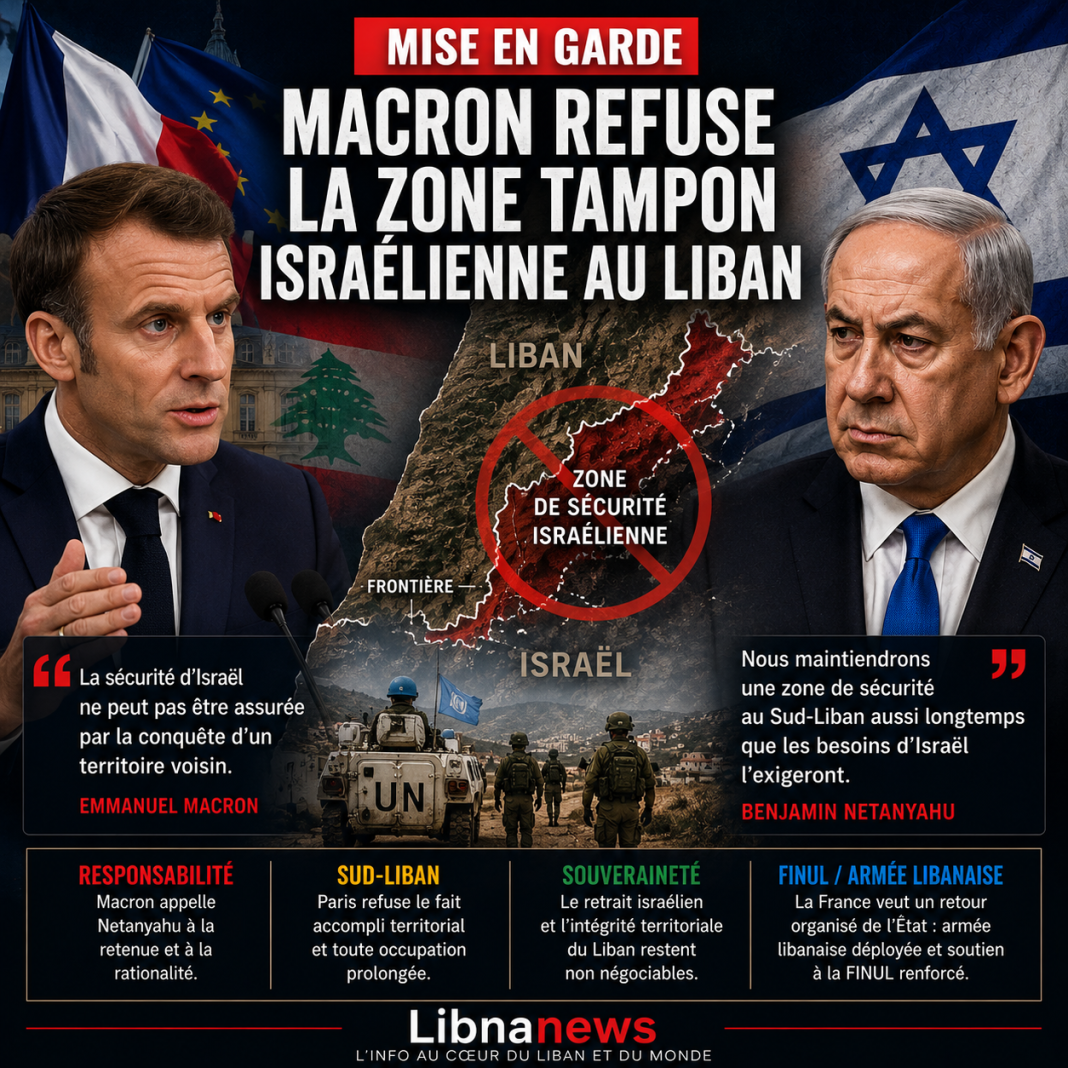
Lebanon is directly linked to this sequence. The memorandum mentions the cessation of operations on all fronts, including in Lebanon, and the guarantee of Lebanese sovereignty. This mention turns South Lebanon into a concrete test. If Israeli strikes continue, if Israeli positions remain in Lebanese territory or if the border area remains militarized, Tehran will be able to assert that Washington does not respect the spirit of the agreement.
For Iran, the Lebanese front offers a diplomatic lever. Hezbollah can be described as a force responding to Israeli occupation or violations. This allows Tehran to maintain indirect pressure without relaunching a frontal war. But this card also carries a risk. If Iran encourages its allies to exploit too strongly the political victory, it will give Israel arguments to resume escalation.
Lebanon would then pay the price of a poorly consolidated peace. Villages in the South need reconstruction, return of internally displaced persons, daily security and the resumption of services. They do not need a prestigious competition between regional powers. Real stabilization requires Israeli withdrawal, the deployment of the Lebanese army, the cessation of strikes and a clear monitoring mechanism. Otherwise, the ceasefire will remain an armed pause.
Tehran must therefore decide whether it wants to use Lebanon as proof of its victory or as proof of its responsibility. The first option feeds confrontation. The second can strengthen its regional status without immediately triggering a new war.
The Gulf countries facing new dependency
The Gulf monarchies observe the sequence with concern. They did not want this war, but they suffered the economic and security effects. The United Arab Emirates, Qatar, Bahrain, Saudi Arabia and Oman know that their prosperity depends on open sea routes, functional ports, predictable energy markets and a minimum relationship with Iran.
An Ormuz controlled by Tehran under new rules would change their calculation. The Emirates, already exposed by its role as a financial and commercial hub, would fear a lasting increase in risk premiums. Qatar, a major exporter of liquefied natural gas, is closely dependent on the passage. Bahrain hosts an American military presence and is in a delicate political position. Oman, along the strait, could be asked to co-manage a maritime mechanism, but it should avoid appearing as the guarantor of a disputed Iranian device.
Saudi Arabia would likely seek to accelerate its alternative roads and Red Sea infrastructure. This strategy takes time. It’s expensive. It does not immediately replace Ormuz. But it becomes more attractive if Iran gives the feeling that it wants to turn the Strait into an instrument of rent.
China and India will also have a decisive role. They import a significant part of Gulf energy. They have relations with Iran, but they do not want an unstable strait. If Tehran imposes too heavy costs or restrictions, Beijing and New Delhi could exert discreet pressure. Iran needs these buyers. He can’t afford to worry them long-term.
A lasting peace requires restraint
The main issue is restraint. The United States and Israel overestimated their advantage by launching or expanding the war. They probably thought they could impose a deeper capitulation on Iran. They end up with an intact adversary, a reinforced Iranian deterrent and an interim agreement that postpones key issues. Tehran could make the same mistake in the opposite direction.
A victory can blind. It pushes to test the limits, to demand more, to humiliate the adversary or to transform a temporary lever into permanent law. Iran must resist this temptation. The complete reopening of Ormuz without toll would not be a free concession. It would preserve Iran’s leverage for future crises. She’d reassure the markets. It would reduce the risk of a hostile coalition. It would offer Tehran an argument of responsibility.
On the other hand, a strait subject to costs, political authorizations or lasting military restrictions would maintain the region in chronic instability. It would give American and Israeli hawks a cause of mobilization. It would justify further sanctions. It would push the Gulf neighbours to invest heavily in circumvention. It could even make a future war cheaper for Iran’s opponents if they manage to reduce their dependence on the Strait.
The Islamic Republic therefore has a strategic choice ahead of it. It can convert its survival into relative standardization, reduction of sanctions and prudent reintegration into energy trade. Or she can seek to immediately maximize the gains of her victory, at the risk of closing the diplomatic window. In the first case, it consolidates its deterrence. In the second, it causes the next crisis.
The real test starts after victory
Peace that opens is not an established peace. It’s a post-war competition. The 60 days foreseen by the memorandum will be dominated by three files: Ormuz, nuclear and regional fronts. Everyone can fail the whole. Ormuz is the most urgent, because it affects markets every day. Nuclear is the most sensitive, because it structures Western mistrust. Lebanon and other fronts are the most explosive, as they can rekindle war by incident.
Iran has won one essential thing: it has proved that its collapse cannot be imposed without major cost. But it has not yet gained stability, economic reconstruction, the long-term lifting of sanctions, regional confidence and domestic calm. These gains will not come from a toll in Ormuz. They will come from a balance between firmness and prudence.
The lesson of this sequence also applies to Washington. The war did not produce the promised security. She moved the centre of the power ratio to the Strait of Ormuz. It offered Iran an argument of deterrence more immediate than nuclear. If the United States wants to avoid repeating its mistake, it will have to negotiate with patience, guarantee the promised economic benefits and obtain verifiable mechanisms, rather than seek a further demonstration of force.
So the most difficult one starts now. The ships must pass. Sanctions must be clarified. The International Atomic Energy Agency must regain credible access. Lebanon must emerge from secondary status. The Gulf monarchies must be reassured. And Tehran must understand that his best weapon is perhaps the one he doesn’t use.
References and links
- Foreign Affairs, Nate Swanson, Iran Won the War but May Lose the Peace, 18 June 2026.
https://www.foreignaffairs.com/iran/iran-won-war-may-lose-peace - Reuters, « IEA.
https://www.reuters.com/world/middle-east/ieas-birol-says-strait-hormuz-must-reopen-without-conditions-2026-06-18/ - Reuters, « The 14-point U.S.-Iran pact as read by U.S. official, » 17 June 2026.
https://www.reuters.com/world/midddle-east/14-point-draft-us-iran-deal-2026-06-17/ - Axios, early signing of the agreement between the United States and Iran, 17 June 2026.
https://www.axios.com/2026/06/17/iran-deal-signing-text-release - The World, an analysis of Iran’s strengthened position after the ceasefire with the United States, 18 June 2026.
https://www.lemonde.fr/en/opinion/article/2026/06/18/iran-emerges-in-position-of-strong-after-ceasefire-signed-with-us 6754630 23.html