

A drop of water, a dose of medicine and a place in school can be a source of true happiness
The smile is not always the expression of a moment of temporary happiness. For many people around the world, it can be a sign that they have regained security, overcome a crisis or have a new chance to live. On the occasion of World Smile Day, celebrated on 2 October, the importance of efforts that enable people to regain the essential conditions of smiles is clearly evident: food, medicines and drinking water, as well as education, shelter and health care.
We met with Dr. Shourouq Alnakdi, a community relations specialist at LIFE for Relief and Development, who placed third this year according to Charity Navigator’s assessments among the best organizations working to address poverty-related challenges. Here’s the interview:
– What does smiling mean for humanitarian and charitable organizations in general?
For us, it means raising a smile on the faces of the most vulnerable, through humanitarian and development programmes implemented in 61 countries around the world. For us, the smile is about children, families, the elderly, people with disabilities and communities affected by crises and wars.
Orphaned children are among the categories that need continued support, not only to meet their basic needs, but also to ensure their continued education, access to health care and development in a more stable environment. Through its Orphan Sponsorship Programme, launched by LIFE in 2002, thousands of children in different countries are receiving support to help them meet their basic needs and continue their education, including through the provision of school supplies, the construction and rehabilitation of schools, and university scholarships to enable young people to continue their education despite economic difficulties.
– Do you really have the ability to make orphans smile in war zones?
Absolutely. They are children whose smile is not only on the face, but comes from the heart. They cling to the slightest hope of security and return to a normal life.
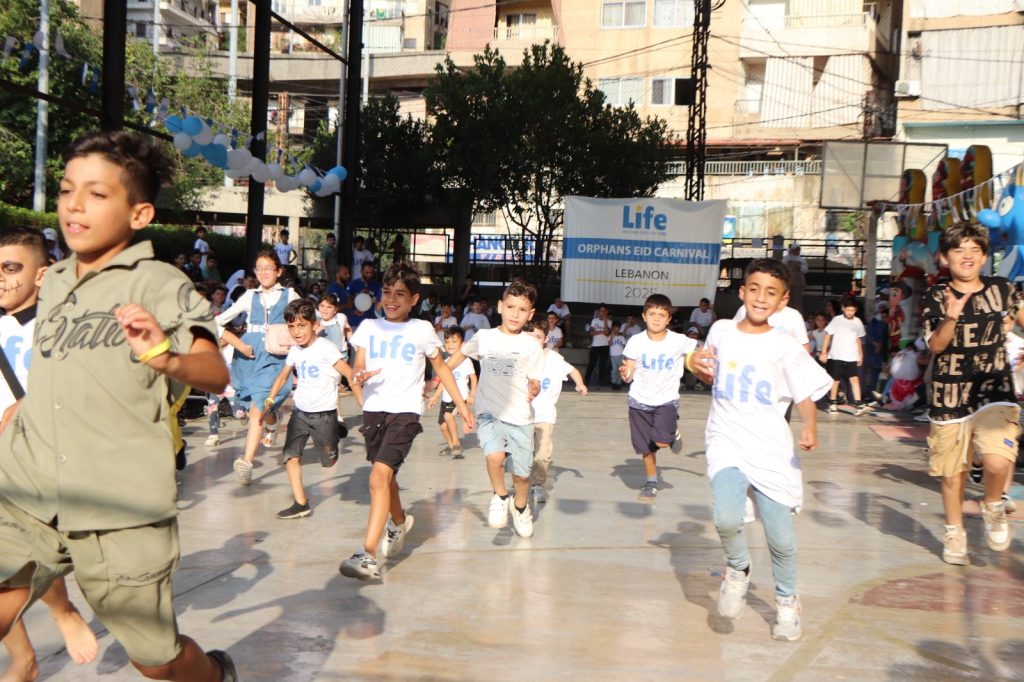
In Lebanon, for example, children flock to our team as soon as a psychosocial support activity is announced. In Gaza, providing school supplies and a place in an educational tent can bring immense happiness to a child. In Sudan, providing medicine to an orphan’s mother can make him smile, because he feels that we have protected his only safety mark in life: his mother. The same applies to the border between Afghanistan and Pakistan, as well as to Yemen, Iraq and Somalia. The smiles of these orphans are a source of motivation that helps us overcome all difficulties.
And this is not just about war zones. Last year, the transfer of families living in tents to homes in Syria brought happiness to widows and their orphans. These homes protected them from the risk of dying of cold during the winter. The provision of clothing, food and shelter to people displaced by floods and earthquakes can also restore a sense of security.
– Is poverty a cause of misfortune and loss of smile?
Not always. Poverty does not just mean running out of money. It may sometimes mean having difficulty accessing food, medicine or education. This is why LIFE programmes include food aid and financial assistance that enable families to meet their daily needs according to their circumstances. Financial assistance provides more flexibility for families to determine their priorities, while food aid helps alleviate a critical burden for low-income families, especially when food prices rise or income sources are interrupted.
In many cases, the smile that appears on a mother’s face after having received enough food for her children reflects the feeling that a heavy burden has just been removed.
Older persons and persons with disabilities, in particular, also face increasing needs in times of crisis, especially when health and social services are declining or families are forced to move.
Food and medical aid, as well as the provision of basic necessities, help to reduce some of their concerns and further preserve their humanity and dignity.
Hearing and vision services are also of particular importance, whether they include medical examinations, glasses, assistive devices or therapeutic interventions. They can help children continue their education, adults to work, and seniors to better communicate with their families and communities.
– Why do we always hear « laughs of laughter » during well drilling projects, both for children and women?
That’s right. Projects to provide safe drinking water are one of the most important forms of sustainable aid. Well drilling and the creation of water sources do not only provide water; They also reduce the time and effort of families to collect it and help to reduce the health risks associated with unsafe water.
For children, having a nearby water source can mean more time to go to school, while for women and families, it can reduce one of the most difficult daily burdens.
During drilling operations, especially in African countries, we often hear bursts of laughter when water begins to flow and its clear drops appear. This welcomes the hearts of those who contributed to the financing of the well and encourages them to continue to do good for those in need.
Our work also taught us that one of the most striking smiles comes from access to medical care for children. A widow may suffer because her child is ill and unable to relieve her suffering, or because her child does not see or hear and needs help. That is why LIFE is implementing worldwide medical programmes through the provision of medicines and medical supplies, support for hospitals and health centres, and health programmes in communities in need.
– Why is the greatest suffering always associated with people living in the camps?
In areas of conflict and disaster, families can lose their homes and income, and their needs for shelter, food, water and medical care become urgent. LIFE participates in humanitarian emergency response by providing emergency aid, shelter materials, food, water and medical supplies to support displaced and affected families.
The first smile of a child after the arrival of his family in a safe place can simply express the return of a part of the sense of security he had lost. This can happen after a war or any other environmental disaster.
– Can you tell us some of the stories that have left a trace in your hearts?
The smile begins with basic needs, things that may seem simple: a meal, a medicine, a glass of drinking water, a book, a school, a university scholarship, a hearing aid, glasses or a safe place to sleep.
Behind every humanitarian project we have implemented over 34 years is a different story. In Senegal, for example, food aid can enable a mother to offer better meals to her children. In Sierra Leone, educational support can provide an opportunity for students to continue their studies instead of leaving school. In Bangladesh, a new pair of glasses can allow a child to read, while a medicine for an elderly person in Indonesia can offer him the opportunity to live more comfortably.
These stories, despite the differences between countries and situations, come together around the same meaning: humanitarian aid concerns not only what is provided, but also what it allows a person to do — to continue his life with dignity and hope.
The real smile is not built with words only. Sometimes it starts when a person finds what they need to feel safe, preserve their dignity and look to the future with more hope.
Tasneem Elridi
Independent journalist
For more information:





Comments